Happy birthday to me, celebrated with old classics!
Welcome to my birthday blog! As I blow out 45 candles today, it is my pleasure to treat you on something special. You see, maybe I am a weird one when it comes to whisky, but more than anything else, I always loved the continuity of standard core range bottlings of the well-known and lesser known distilleries. I think today’s session mostly holds whisky from the former category. We saved it up for a decent tasting! This will also be the last blog of 2025, so from this place I thank you for following this little corner of the whisky world. All the best for 2026! We will return on the 2nd of January with delight from Campbeltown, and pick up the normal rhythm soon.
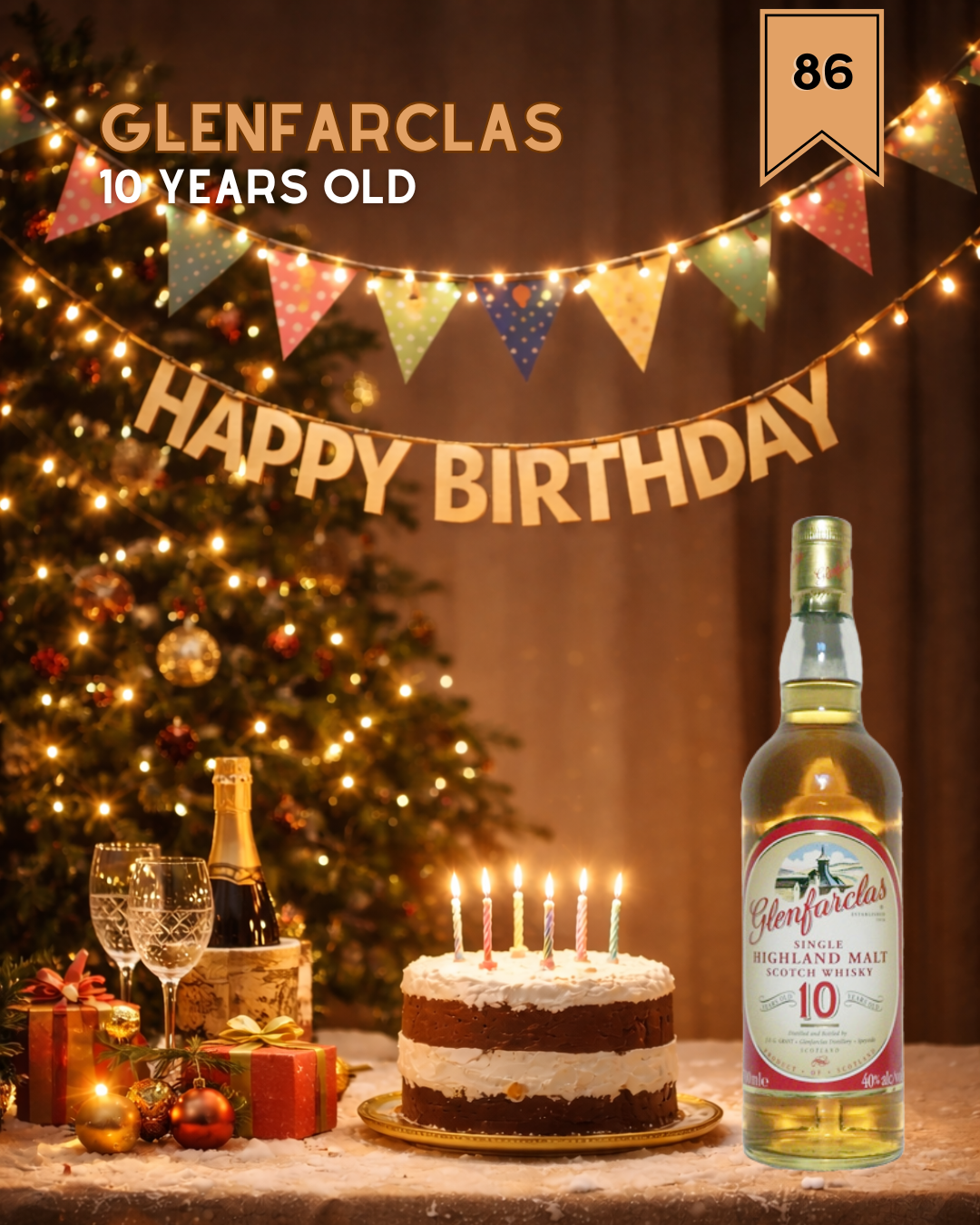
Glenfarclas 10 years old, bottled at 40 % abv
First things first: The tube mentions Glenfarclas’ dedication of the time-honoured craft of making whisky, something they have been doing “for over 150 years”. That would place this bottle somewhere around 1986, but seeing this is a 70 cl, probably an early 1990s bottling.
Upon Sipping: I am not so sure any longer about how sherry-driven the bottlings of Glenfarclas are nowadays, but this older expression is a classic. Lot of red fruits, strawberry syrup for kids that you mix with water, hints of apricot and maybe a small metallic off-note, but nothing too drastic. This is small perfection, proving once again that the old “40 % abv” packed a lot more punch some 30 years ago. The mouthfeel is creamy and supple, with a beautiful caramel and sugar coating. With time, the nose starts to slide towards the metallic influence, but the taste remains focused.
Word to the Wise: I love it how this modest Glenfarclas displays the perfect sherry maturation any modern producer would die for. That it was more or less standard when this 10 years old was produced is something to be melancholic about.
Score: 86 points.
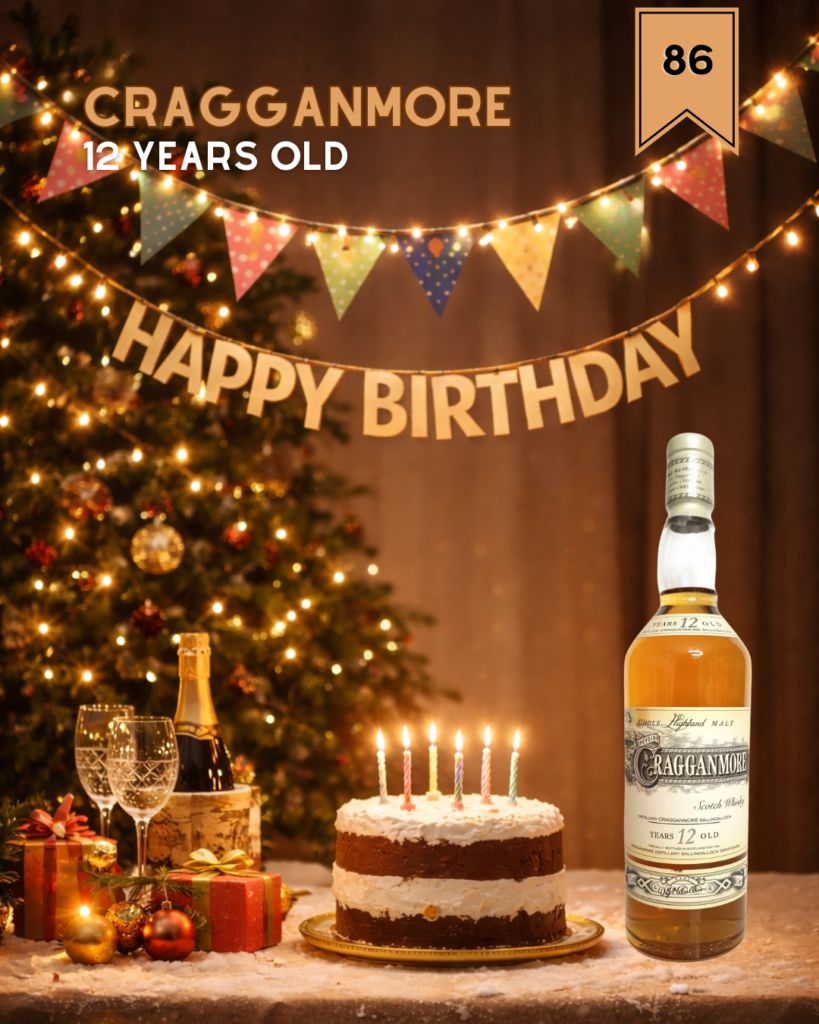
Cragganmore 12 years old, bottled at 40 % abv
First things first: In Whiskybase it is mentioned as the “two part label”, but that does not mean anything to me. The number 12 has a green hue, also important. I date this late 1980s or again, like the Glenfarclas above, early 1990s.
Upon Sipping: Cragganmore is situated very close to Glenfarclas, so it seemed logical to pick this whisky as the next step in this birthday blog. Sticking my nose in the glass, I am surprised about how much more complex this Speysider is! Fruity, meaty, fresh water over round rocks in the river bed, the plants and trees on the banks of the River Spey, autumnal woodland. I love it. Again a blast from the past, but way more diverse than the very straightforward pleasures of Glenfarclas. With time, hints of ozone and old dusty books. Truly a classic malt! The taste is tad austere, sadly, full focus on the barley notes. I am missing some fruitiness that seems to be promised on the nose. The palate is dry and the finish continues a dry wheat all the way down. With water, a more creamy mouthfeel, light vanilla with a dark and dry undertone. Brooding complexion.
Word to the Wise: Incredible nose, not entirely followed by the palate, but Cragganmore is deserving of its reputation as one of the more proud Speyside single malt whiskies.
Score: 86 points.
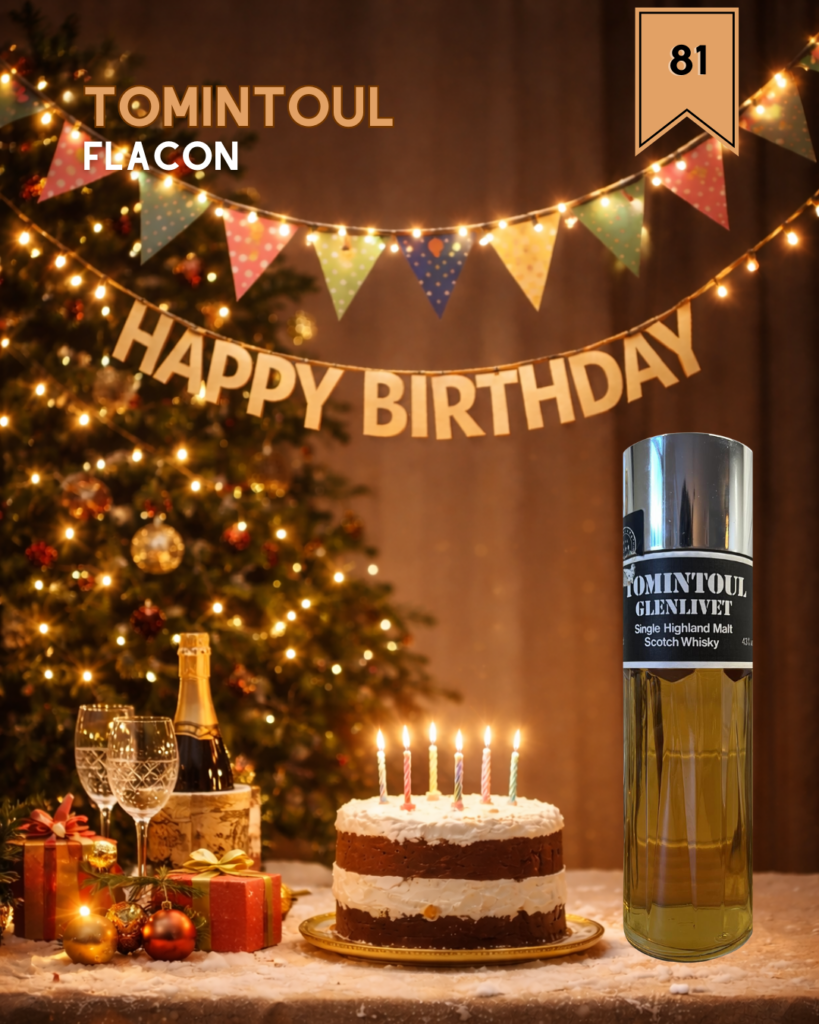
Tomintoul Flacon, bottled at 43 % abv
First things first: Probably the weirdest bottle shape out there, this Tomintoul. Still, there are some 15 entries of it to be found in the Whiskybase, so they were around for a while. Tomintoul is quite a young distillery by whisky standards, build in the 1960s. This might well have been one of their first official bottlings.
Upon Sipping: Even though this silly bottle looks like a perfume flacon, the smell is way more fruity than perfumy. Tropical fruits dominate on the nose, lots of mango, peach and pineapple tin can juice. The can itself smells a little metallic too, but not disturbingly. Also, very recognizable as a whisky by Tomintoul. Light, pure, laidback Speyside malt. Fantastic! Taking a sip, there is some obvious youth to be found, but the years in the bottle certainly did not hurt. In fact, it probably made for an above average time travel to my glass, here at the brink of 2025/2026. This Tomintoul Flacon even has some hot alcohol punch on the finish. I am rather charmed by the nose. I think I tasted this expression many years ago, and do not remember it at all. But today, somehow, it has gained a lot of charm. Only after some more minutes, it turns a tad cardboard in character, with a bitter hint towards the finish.
Word to the Wise: A fun time machine whisky now. These bottles must have been good, because the whisky feels well-preserved to still drink today. Perhaps a little young, but all in all it still carries some character that makes it interesting.
Score: 81 points.
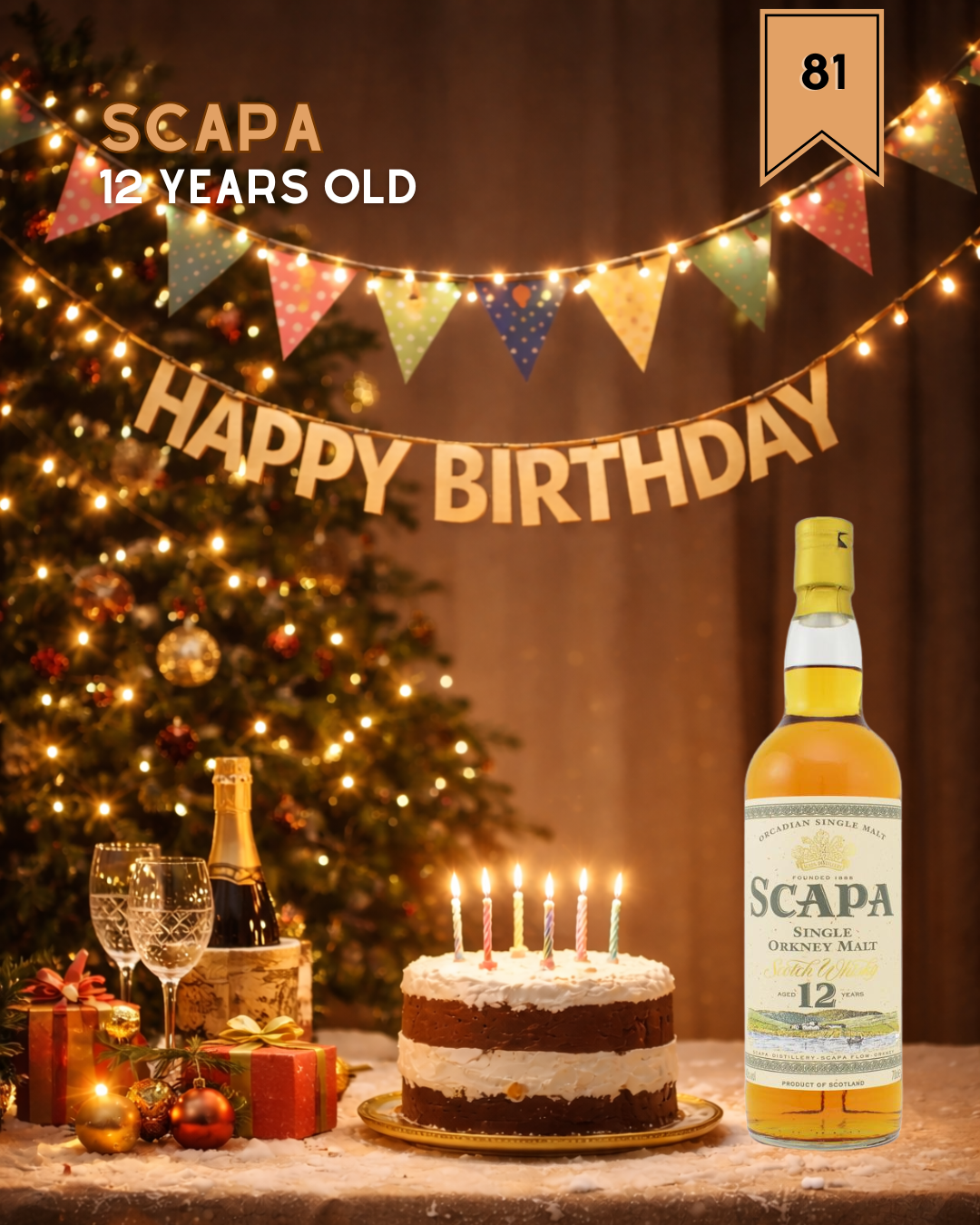
Scapa 12 years old, bottled at 40 % abv
First things first: For a while, Scapa bottlings progressed in age, starting with this one, then flowing past 14 years old and eventually a 16 years old, before stocks were depleted and we got a NAS. This one should be from the late 1990s, early 2000s.
Upon Sipping: We leave Speyside behind and move on to Orkney. Dark, bronze colour. This whisky shows some signs of being in the bottle for too long. It needs some time to shake off weariness, but when it does, it starts to bloom. Rather grassy with hints of sea spray. Light cinnamon and wood spices. Maybe a bit too modest. Soft and sweet arrival on the tongue, old vanilla pods, with maybe some notes of sherry casks used in the expression. There is a soft Fino like touch to it, or maybe a softly sizzling white wine. This Scapa suffers from the low abv, that has clearly hidden away some of the exuberant notes that are surely to be found in this whisky.
Word to the Wise: The potential is seemingly here, but it does not comfortably come out. One has to scrape the bottom of the barrel for some hints of maritime whisky that are certainly there.
Score: 81 points.
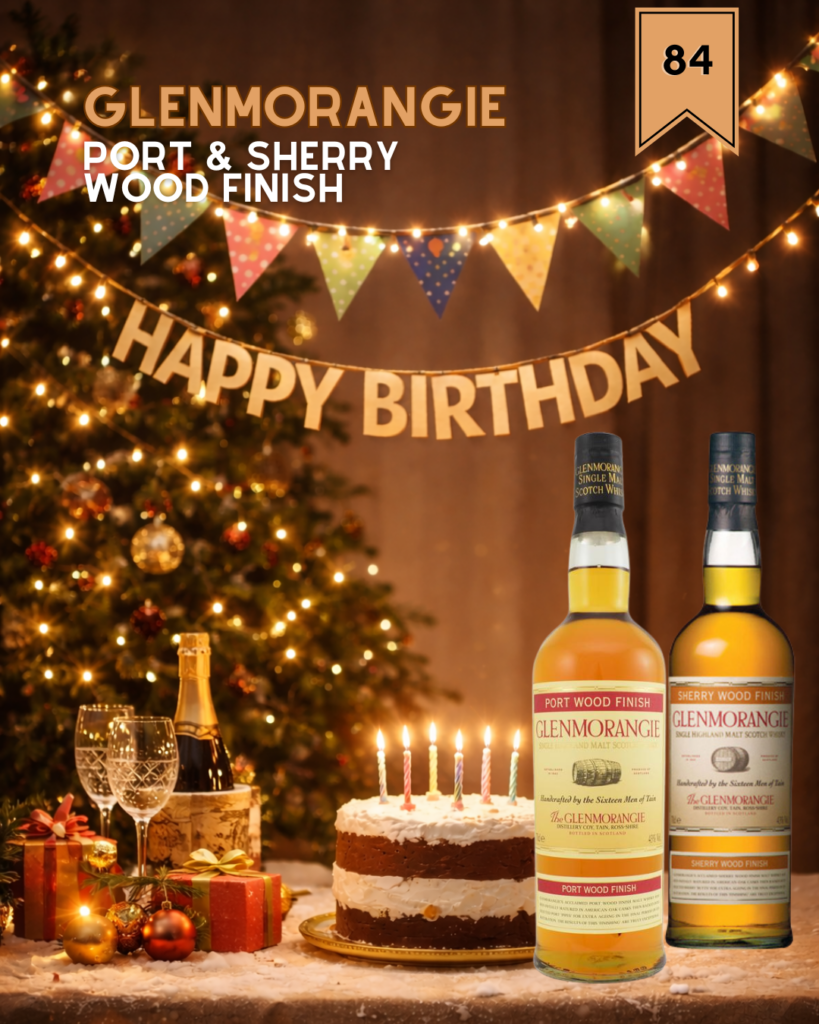
Glenmorangie Port Wood Finish, bottled at 43 % abv
Glenmorangie Sherry Wood Finish, bottled at 43 % abv
First things first: These two golden oldies we do head-to-head in one tasting. Glenmorangie was one of the earliest pioneers with wood finishes, back when whisky was straightforwardly only matured in one cask for its entire life until the bottle called. These Glenmorangie expressions came out in the 1990s. The range more or less still exists till this day, in different livery of course.
Upon Sipping: Whiskybase numbers 58 and 59, my oh my, this is early stuff eh? The nose on the Sherry Wood reveals that these were powerful, classic casks, because it certainly did rub off on the traditional vanilla driven Glenmorangie. Lots of raisins and wet wood, bung cloth, concentrated red fruit juice, lots of depth and complexity. The Port Wood has more difficulty being fragrant and happy, this is more a brooding character. Darker red fruits, blackcurrant, but after some breathing it creeps closer to the Sherry Wood, with distinct hints of minerals you can sniff in a dunnage warehouse. The sherry takes the lead, let’s have a taste.
Sherry Wood: Soft, sorbet like arrival on the tongue. Lots of creamy notes, apricot, bitter wood, with a lingering finish on coffee and chocolate. Port Wood: Similar on the palate, but with more sour notes and a pronounced lavender finish. With water, the Sherry Wood turns even more fragrant, but the low abv brings it closer to a funky edge, with some light sulphur. The taste gives more caramel, but does not improve.
A bit dryer, the oak tannins very loud, the overall feel now adds a slight nuttiness. Nice to chew on. The nose on the Port Wood has become more attractive with a drop of water, releases mint and butterscotch. Very solid, try throwing a drop of water in a 43 % abv bottle these days and the whisky collapses. This Glenmorangie (both of them) swim! The mouthfeel turned rather dry but the body remains firm. Here too, a nice nuttiness on the finish. The dry character is something of a surprise.
Word to the Wise: Very solid offerings for these old classics. Wood finishes are very normalised these days, but back then, it probably offered an extra layer on top of the original maturation and therefor a new experience for the whisky consumer that wanted something new. Both bottlings are both straightforward in their presentation, so not really high flyers, but extremely well composed.
Score: 84 points each.
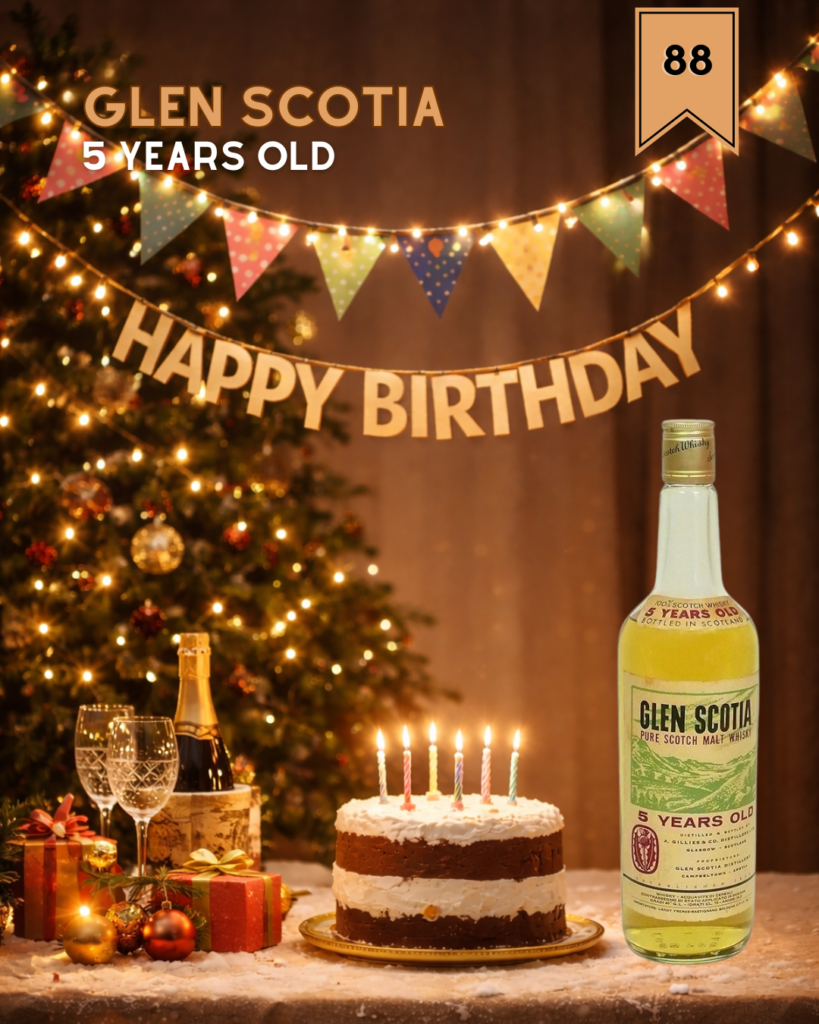
Glen Scotia 5 years old, bottled at 40 % abv by AG&C
First things first: Looks more like an official bottling for an agency. The label mentions this young Glen Scotia was bottled by A. Gillies & Co. Distillers Ltd. Imported by Landy Freres-Rastignano Bologna. Multiple sources state this is a 1970s bottling.
Upon Sipping: Traditionally, I associate malt whisky for the 1970s Italian market as light and very approachable products. This Glen Scotia however seems to carry much more punching power than your average Glen Grant 5 years old. A very industrious, true Campbeltown nose, with lots of engine oil fumes mixed with overripe tangerines, which makes me think of the new Springbank 100 proof at 5 years old that made its debut this year. The whiffs of smoke keep puffing from the glass. There is also a hint of petrichor, or that feeling of walking up to Crosshill Loch, which I hope to do for the first time in a month from now. This is the main water source for both Glen Scotia and Springbank/Glengyle, which creates a common demeanour for all distilleries in Campbeltown. The taste opens with a ton of sugar, not really shaken off the new make character yet, before it turns towards a barley note. Nice candy, some fruity pastille to suck on for a sore throat. Strong at just 40 % abv, displaying the core ingredients perfectly. Barley, fresh water and an open bag of distillers’ yeast. With water, a more supple mouthfeel, but not much change.
Word to the Wise: The most Springbankesque Glen Scotia I ever tasted! A Campbeltown tour de force! Glad we finished in the southwest of Scotland for this birthday session. Thanks for reading with me, and see you on the other side! Happy 2026!
Score: 88 points.