The return of a classic Ardbeg and some experiments
Today, we move to the south shore of Islay to taste samples from the classic Ardbeg distillery. Since that cult whisky was so passionately revived in the late 1990s, after being acquired by Glenmorangie, it has gone from strength to strength. Recently, when looking for something else, I found the beautiful book “Ardbeg: A Peaty Provenance” by Gavin D. Smith and Graeme Wallace. This beautifully presented standard work really takes you on a journey to the rebirth of an Islay icon. If you can find it, it is a perfect gift for under the tree, for yourself or your whisky friend.
Ardbeg is also known for catching some flak for all these NAS-bottlings they started doing. At first, it felt like a gimmick to bridge some years between low stock and new production ageing to a mature level. Now, it seems like the quirky names and at times unlikely (cask) experiments are here to stay. Think of it what you like; Ardbeg will never be a boring brand. Still, to me, as a consumer, I will gladly drink those quirky ones. But when Ardbeg releases an expression with an age statement, I sit up straight and pay attention. Like we did with the Anthology series, and today again with a sip of a stated 17 years old. The latter was supposed to invoke the memory of the classic and beloved 17 years old, and finally we got to taste it properly, after taking a small sip of it at the distillery in January 2025.
Further on the table today, some Ardbeg experimental stuff made by my good whisky friend Joris Dam of Dam Dranken. This Dutch entrepreneur based on the isle of Terschelling, has released very interesting whisky already, and today we taste three variants by them that all utilise Ardbeg single malt as a foundation.
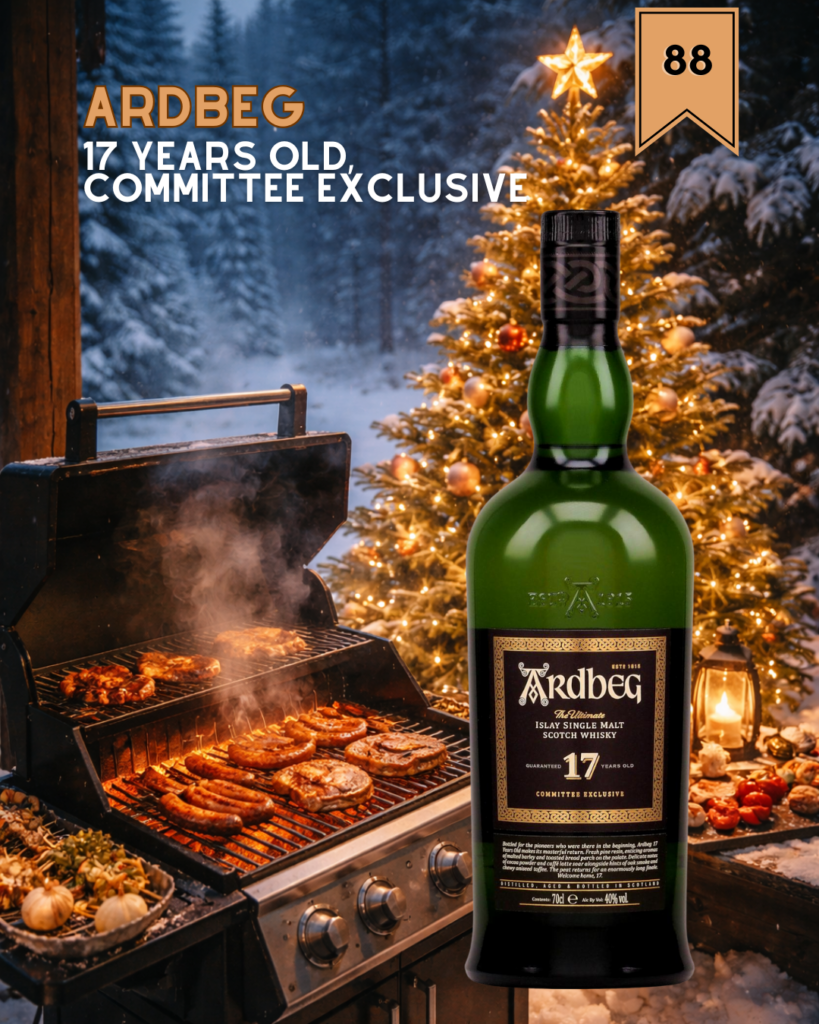
Ardbeg 17 years old, Committee Exclusive, bottled at 40 % abv
First things first: Bottled on the 9th of October 2023 already. How time flies! Bottled at the same alcohol strength as back then, when the Ardbeg 17 was the first release after the distillery reopened under new ownership. Whisky professor Dr. Bill Lumsden tried to replicate the original taste of the Ardbeg 17 as meticulously as he could.
Upon Sipping: Sadly, I have no old Ardbeg 17 in stock to compare, so we have to experience this new addition all on its own! Extremely light in colour, this Ardbeg is fresh on vibrant peat and classic lemons. But when you try hard enough, you might even find some oranges in there. Always covered in smoke, obviously, but from memory it invokes the same fruitiness as the old version. Some kind of weird candylike smell as well. And anti midges repellent. You need that on Islay! This Ardbeg makes me feel like sitting next to the barbecue, waiting for your friends to take off the fish so I can move on to the venison burger. For someone who does not like anything food from the sea, I sure love the smell of it. The nose on this Ardbeg is brilliant.
Sweet vanilla on the arrival, turning into that strong lemon signature of unbothered peated whisky. The palate turns dry very soon, with lots of medicinal notes, like taking a sip from a iodine jar. The palate turns a tad watery after a while, revealing the weakness of the 40 % abv. This results in the finish being really too short for such an amazing whisky, and this costs points.
But my oh my, if there ever was a whisky that could hint at what it would be like to drink seawater, this could be your tipple of choice. Super clean peat is what I like in Islay whisky, and this Ardbeg delivers.
Word to the Wise: A great effort, limited by the choice for the 40 % abv, which makes the finish a tad weaker than it should be. But I do love the purity of this production, all on bourbon casks.
Score: 88 points.
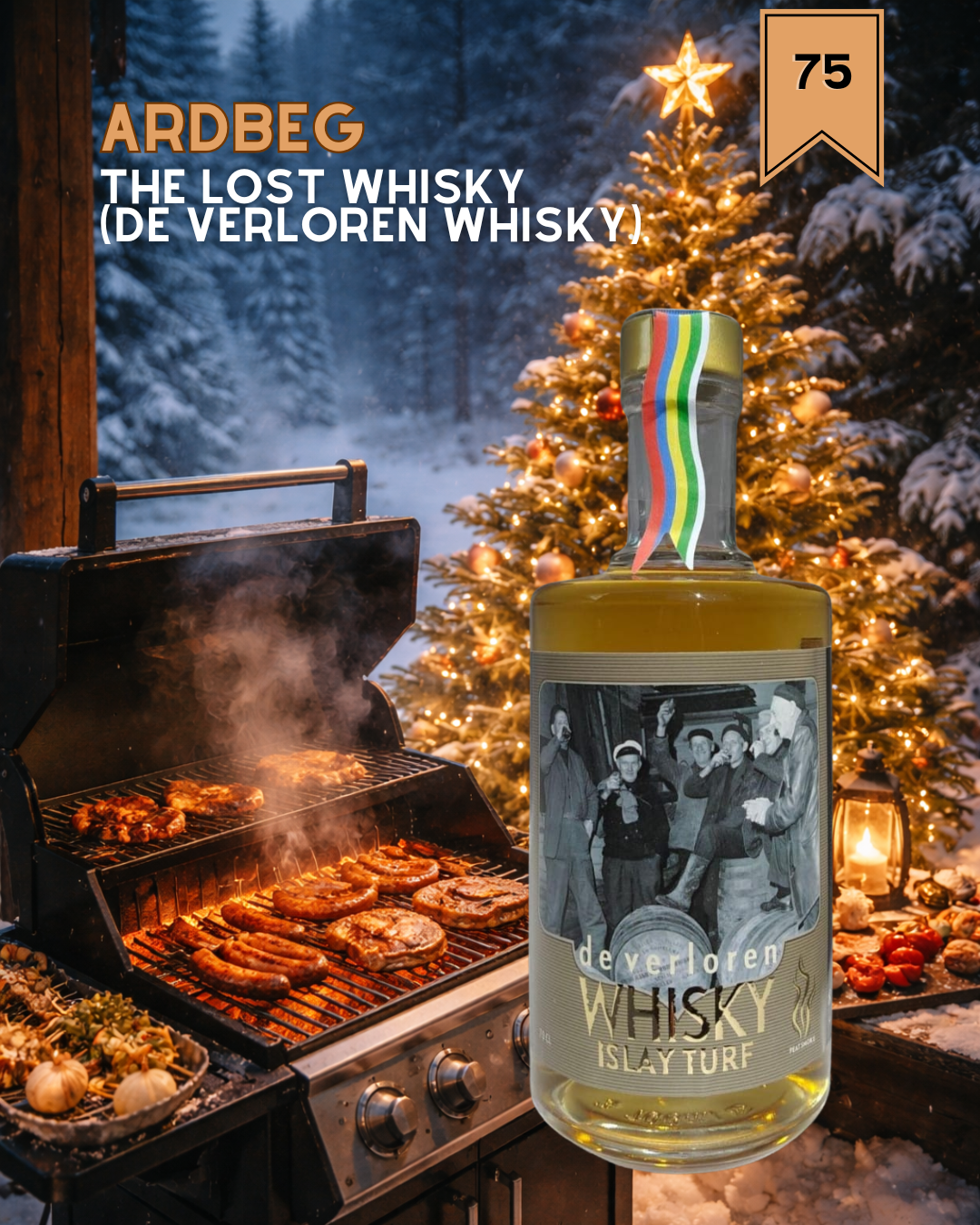
The Lost Whisky (De Verloren Whisky), bottled at 49,3 % abv by Dam Dranken
First things first: A bottling of just 179 pieces. It is a blend of whisky, including 10 % also from the Ardbeg Distillery, all finished on an ex-Ardbeg oloroso quarter cask. This cask actually travelled on board of the Thalassa, the fantastic ship of Joris Dam. When it was emptied, it was used again for this bottling we taste today. (Pictured bottle is a later version.)
Upon Sipping: Strong hints of glue, dry grain husk and in the distance some fruity notes of peaches and the distinct whiff of Chablis Chardonnay. A weird nose, which makes the entry on the palate all the more surprising. Here, a peaty character of medicinal notes and sour lemons opens up a doorway to Islay indeed. A nice and warming alcohol tingle leaves a lasting imprint on the finish. With water, the lemons become even more talkative, but on the whole the experience gets more saline and dare I say, industrial.
Word to the Wise: Interesting offering, but not really my cup of tea. This is a good whisky to pour while telling strong stories about island life.
Score: 75 points.
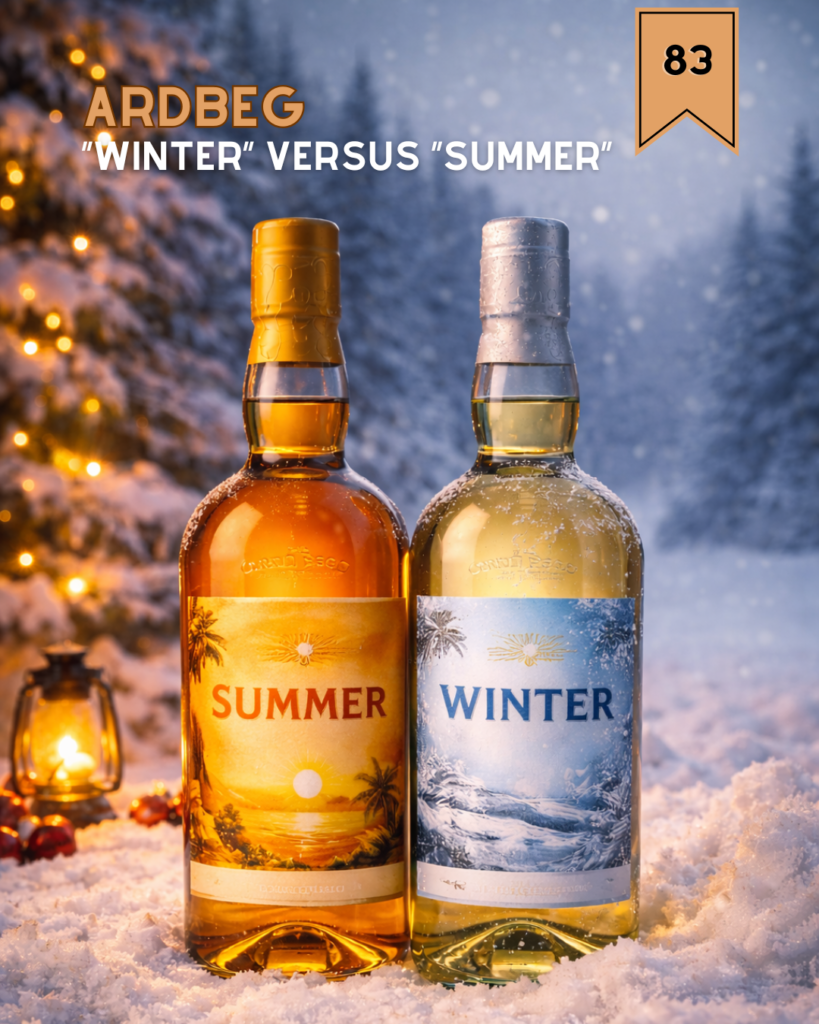
Ardbeg “Winter” versus Ardbeg “Summer“
First things first: We already mentioned the Thalassa ship, and this is important for the next two whiskies, which we will taste head-to-head, since comparison is key in this specific case. In the glasses here we have two (teaspooned) Ardbeg malts, one of which matured in The Netherlands, while the other went on a journey to the Caribbean and Panama and back. The one that stayed at home was named Summer (distilled in summer 2019), while the travelling cask was named Winter (distilled in winter 2018).
Upon Sipping: These samples were kindly gifted to me by Joris Dam during the Whisky Festival Utrecht earlier this year. Filling the glasses, we already notice the winter version being a tad darker in colour, more bronze. A slight difference, but it is there. The summer opens on a very lovely creamy note, with lots of vanilla and modest whiffs of maritime character. Some green notes too, of dry wood and freshly cut grass. The winter version is quite different indeed, with hints of glue, mint and pinewood. The taste of the summer version is quite rough, like a vanilla plant with teeth, raw and dry, smoky barley being at the core. Perfect bitterness on the finish. Nice dry character. The taste of the winter version is a bit more tannic, with the roughness enlarged by a good dose of wood, so these were probably smaller casks (confirmed by Joris). Still, a sweet, satisfying impact. Interestingly, both casks seem to have lost some of the peat signature of Ardbeg. One wonders why that has happened. Especially the cask that travelled had some impact to endure.
Word to the Wise: Difficult to choose a favourite. The summer edition seems more pure and clean, but the winter packs a lot of charm with some extra depth. The winter cask that travelled a great deal, seems to have been subjected to more energy and feels more alive. This dynamic maturing might well be a thing of the future! I decided to draw on the score, both equal. Nerd stuff here!
Score: 83 points.