Brora: the most brilliant mistake in whisky history
Chances are, you are exhausted by the time you get to read this. Christmas Eve is upon us, we gathered a mountain of groceries, the tree is lit and the fireplace is stocked. Time to kick back with a good dram. For this special night of the year, I have selected my most precious sample, one of those holy grails that might well have been the reason I started blogging in the first place. These kind of single malts were just stuck in the back of my cabinet. There, I hold a sacred sample library, and this one I could have slugged back easily on a night like this. Savour the brilliance, close my eyes, and let the finish linger until three Ghosts come to visit me. Instead, I want to share my thoughts and feelings about this whisky, like I do with ALL blogs on Long Pour Amour. Hopefully, to your enjoyment too. So, pour a glass, put a blanket on your knees and the cat on top. I wish you and all your beloved a Merry Christmas!
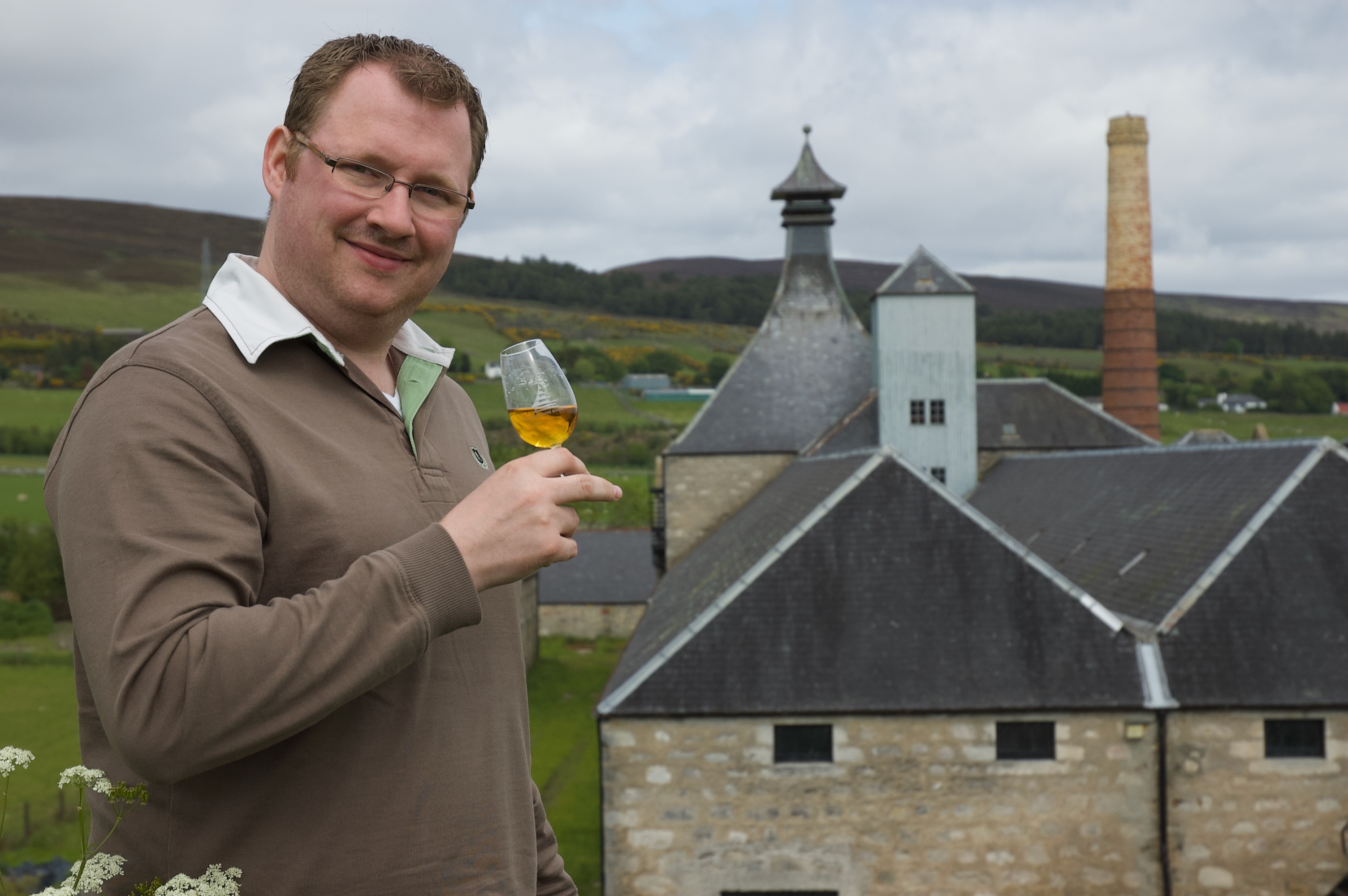
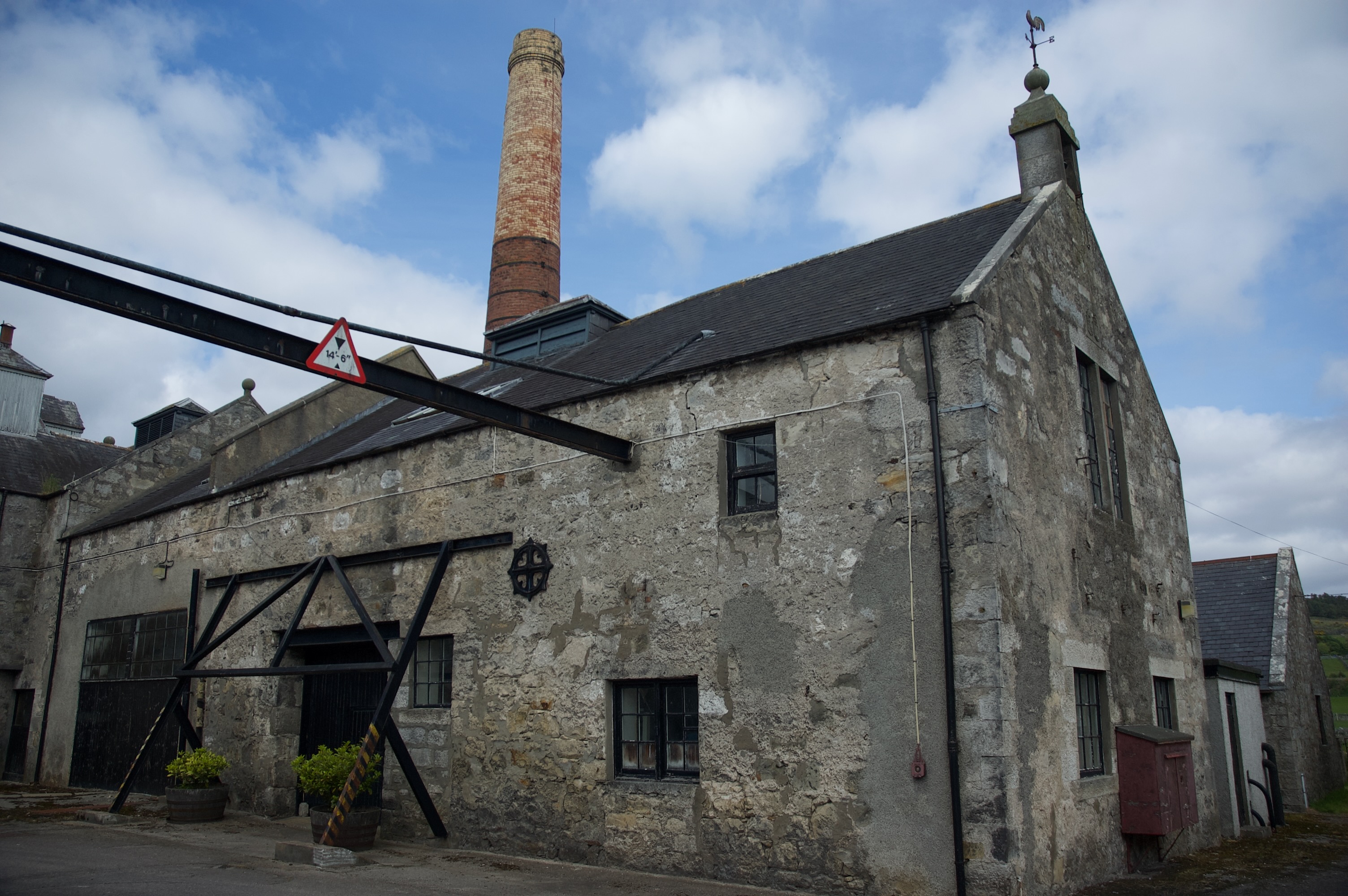
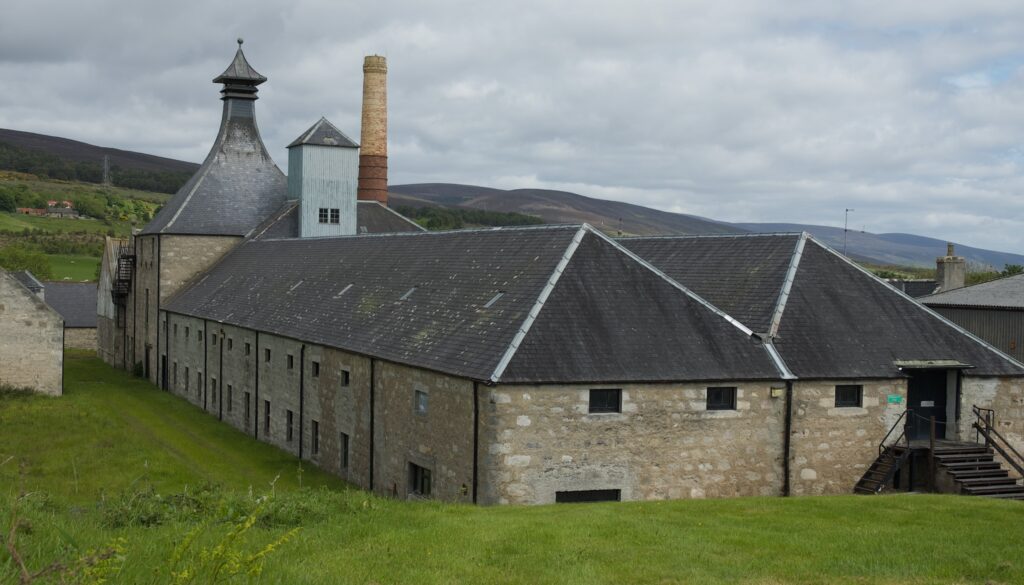
Pictures of a beardless me, and of the buildings, all made in 2011, were kindly provided by © Fulco Bakker
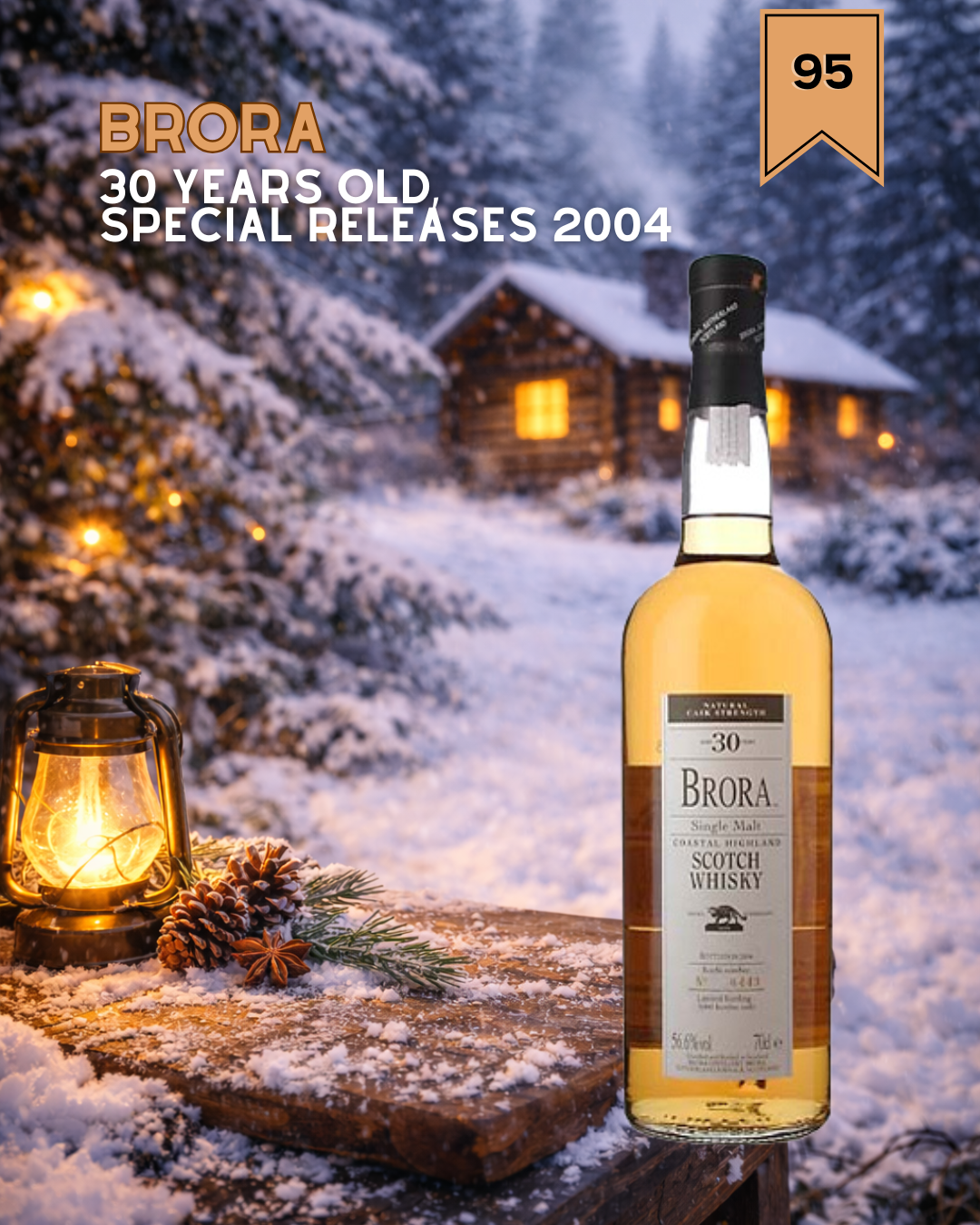
The dram I will be writing tasting notes for today, is the Brora 30 Years Old that was bottled in 2004. That is a long time ago, and this bottle was just entry # 427 in the Whiskybase. My whisky passion started around the same time,
and I can braggingly say I have drunk loads of this Brora (even as a chocolate fudge ingredient) and the other versions that came out at an almost yearly basis, until stocks dwindled. I will probably forever be split on which expression is the best; the 2002 edition or this 2004 we taste today. Many years ago, I participated in a Clynelish versus Brora tasting on a cold and dark November evening in Amsterdam, where all these giants were put into one session (cost me 90 euro for 6 or 8 drams, you probably do not even get 1 cl of any for that these days). This memory remains one of the most beautiful in my entire whisky hobby experience. Tasting a single cask Brora 1972 against a batch 1972 was and remains a highlight. Whisky snobbery without iPhones and Instagram, but not less enjoyed, I promise!
Before we get to tasting, let’s have a look at the history of the Brora Distillery, which was of course originally the first Clynelish Distillery, located next to the little townlet named Brora. The history of this little settlement, and indeed the distillery, is linked to a dark page in Scottish history called the Highland Clearances. Thousands of people were evicted from their homes by the Duke of Sutherland, because of a need for open space for sheep to graze freely. All those who did not flee for America or Australia lived in poor conditions at the North Sea coast. The Clynelish Distillery, it is said, was erected to do something with the little harvest farmers had left to work with. And thus, the Clynelish Distillery saw light of day, and produced throughout the 19th century. Only at the end of that century, something notable happened, when the site was sold to Ainsly & Co. from Glasgow. The new owner gave the distillery a make-over including some new warehouses. The years toughened, and the Pattison Crash put a lot of whisky producers out of business. Clynelish ended up in the hands of James Risk, who had a hand in the Distillers Company Ltd. (DCL), a forebearer of the current day Diageo. From 1916 onwards, John Walker & Sons became a part of the Clynelish legacy, as it is till this day. Those years were not less difficult than those leading up to the Pattison Crash, with two World Wars keeping the stills silent for most of the time. Ulf Buxrud speaks of rumours of small production during the Second World War in his standard work about the Rare Malts Selection, but does not back up his claim.
Production output was not enough in the after-war years. As of the 1960s, some refurbishments took place, but Clynelish in the old setup would soon become a thing of the past. Or would it?
It was decided that a new distillery should be made to produce more whisky efficiently. Work began in 1966 and towards the end of the decade, the stills were purring in a state of the art new building, just a few 100 metres from the old location. Both distilleries worked in parallel, not unlike other locations in the (nowadays) Diageo portfolio, like Linkwood and Glendullan. Stencils on the casks did not show a difference between the make of the old or new distillery, even though internally they were known as Clynelish A (new) and Clynelish B (old). It did not matter much, because the old distillery finally closed in August 1968.
And this is where the Clynelish part of the story ends, and the new name Brora Distillery comes into being. This had everything to do with the fact that Caol Ila Distillery on Islay more or less received the same transformation from leaving the old setup behind and moving into a hypermodern new distillery. To compensate for the incredibly important peated production for blended whisky, it was decided to activate the old distillery again. By now, the Scotch Whisky Association had enough of all these A and B sites, and forced the owners to use a different name. We have seen the same happen to Glen Grant, who operated a near identical twin distillery in Speyside. They renamed that Caperdonich. The old Clynelish turned into Brora Distillery, a name it carried off and on over the ages anyway.
Brora would continue to produce (mostly) peated whisky until its final (well…) closure in 1983. It seems, nobody really cared for what happened between 1969 and 1983, no-one knowing what marvel was created and waiting in the casks. In the very late 1980s and early 1990s, it was thanks to independent bottlers that Brora whisky started to come out. The first one could well have been a release by the Scotch Malt Whisky Association in January 1989, which was a 12 years old from the vintage 1976 (SMSW 61.1). Things really took off when Gordon & MacPhail released their 1972 vintage for the first time in 1992. I looked up my own tasting note from that tasting I mentioned in the beginning of this blog, turns out I tasted a 1993. I write lyrically about the nose, but the taste has suffered from an old practise that has long been abandoned by G&M: colouring.
Checking the Whiskybase, we can see that 1995 was the year Brora as a single malt phenomenon took flight. Having seen just one expression per year before that, 1995 sees 12 releases.
Cadenhead and Blackadder join the party, and there are no less than 4 different releases in the Rare Malts Selection, all with a different abv. The 1990s slowly progressed, with not really a big tsunami of releases. In 2001, the last RMS releases was done, and then we got to see a new version from 2002 onwards: the Brora 30 years old Special Releases. Eight of those were released where it was possible. Where stocks dwindled, the gaps were filled with alternative ages, like a 25 years old in 2008. From 2011 onwards, the ages would start to rise, with the oldest being a 38 years old in 2016. The last Brora bottling in this series was a release of 3000 bottles of a 34 years old in the year 2017. Since then, the brand has been so ultra-premiumized, I did not keep track anymore.
On the table today is the 2004 release of the Special Releases, which was a 30 years old. Why was Brora such a fantastic whisky, you ask? One theory that I would like to share, is that the old stills and old Clynelish condensers were far from ideal to make heavily peated production. This has caused people to state that Brora is one of the ‘most brilliant mistakes in whisky history’. It certainly helped the legend status of the old Clynelish distillery. I visited the site twice in my life. The first time was in 2007, where I could still peak through the windows of the still house, and saw the old copper pots covered in bird droppings. Still, the sight of this magic made me humble and silent in awe. In 2011, I returned with my regular band of whisky buddies, to tour the new Clynelish and have a few stunning old drops from either distillery right there. Times to never forget.
I wonder if it is appropriate to mention that Brora is no longer a ghost distillery. In name, it reopened in 2021, and it felt somewhat as a dream come true. I remember standing in the back of the field in 2007, trying to fit the old buildings in my modest camera lens, to get that shot of history, fantasizing about Brora finding a new leash of life. (Luckily, Fulco’s pictures are much better!) But when the news came, it also felt as if Brora was reopened as a gimmick for millionaire whisky people, with little attention for those who made the name and whisky rise to prominence with pure passion. Let’s hope Brora comes down to earth in time for everyone to enjoy what the new age will bring, with avoiding the saying ‘that some things are best left to the past’.
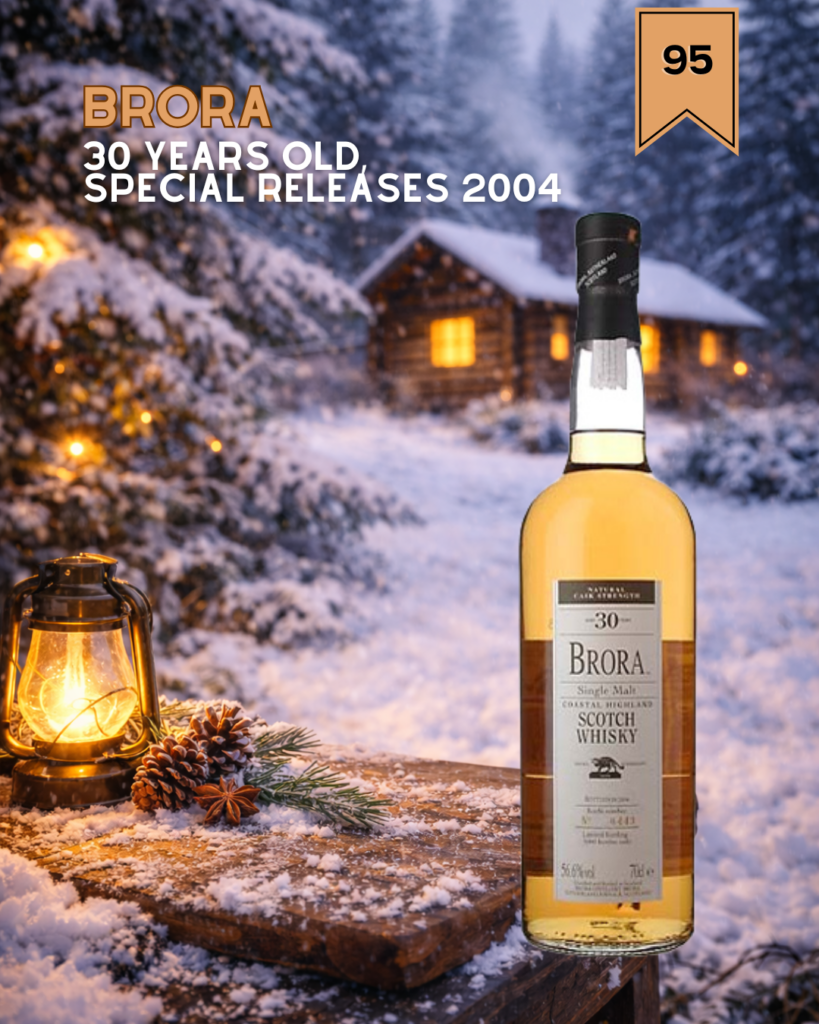
Brora 30 years old, Special Releases 2004, bottled at 56,6 % abv
First things first: Only 3.000 bottles of this in the whole wide world. No information on casks used to create this expression, but with such an output, anywhere around 30 casks would be a reasonable guess. PPM could have been as high as 45 in the early 1970s. Barley used was perhaps Golden Promise or Triumph. Brora single malt was mostly used to create the JW Red Label. After the distillery closed, all these casks were more or less forgotten, left alone to reach a high age.
Upon Sipping: Old McDonald had a farm, hiya hiya hoo, and it ended up in this glass in its entirety! I know we are publishing this blog on Christmas Eve, but the smell is reminiscent of a warm summer day in the farmlands. Dry, peaty mud, the image of turfs drying in the sunlight, even though peat only gives off smell when you burn it, you get a picture anyway. I think the big difference with Islay whisky of any age, but also higher age, is that there is absolutely no ashes in the nose here. It is a very vegetal dram. But given time, I already have to correct myself. A certain soot is undeniably there. To round up the opening salvo of my tasting note, I finally see a waxy profile emerge from the depths of my glass. So interesting to find a Clynelish note in Brora. I remember asking the staff at today’s Clynelish why they would not simply also produce peated malt, but they downright said it was impossible. The new setup, with the stills also being bigger in size, just would not turn out the required quality – hence: Brora, the brilliant mistake.
Taking a sip, is like taking a bite out of a piece of mud. This is fierce stuff, with lots of crushed black peppers and brine, a metallic hint, and very focused. There is not a snowball’s chance in hell to find something that taste quite so similar as this. What is noticeable, is the absence of a fruity element to this Brora 30 years old 2004 edition. Maybe some rotten pumpkin, but why would you taste that? (I googled, a pumpkin is indeed a fruit. Holy smoky pumpkins!) I am taking a break here and come back to this Brora and some drops of water. Normally, I use tap water for my single malts, which is perfectly fine in The Netherlands, but on this occasion I used spring water.
Yes, the shepherd’s dog has now also arrived on the farm. But there are a lot more nuances to be found now, which are at times difficult to pinpoint, a good sign of a well-integrated and complex single malt whisky. A spring indeed, with the water flowing over peaty, muddy rocks, leaving a mineral scent in the air. Also, hard skin of pineapple.
Then, dry bandages that have fallen behind the cabinet in the kitchen and are only discovered years and years later, when you are moving to a new place to life. Dusty Band-Aid, Bowie singing “Do They Know It’s Christmas?” but mixed way in the back of the song. It is mostly that, gauze, without the iodine you would probably find in an old Ardbeg or Laphroaig.
The taste has turned on the charm now, but praise the Lord and Mary and her baby, the peat impact on the finish is like a sniper that shoots you a few times extra, just to make sure the hit is on target. Dryer, with smoky wood influences, but not talkative wood. Just a good bitter note. I am almost afraid to take the last sip of this 3 cl I had left over, but here goes, to all your health! Oh, so waxy, so characterful, and peat power all the way down. I will not brush my teeth tonight! (EDIT: I also did not wash my glass with the special lit on it. Twelve hours later, the glass still smells ab-so-lu-te-ly fabulous, there are the ashes, and hints of peated mash. Tremedous!)
Word to the Wise: The finish of this Brora 30 years old 2004 edition smoulders long after taking the last sip, and would probably last until way into the year 2026, if I was not planning to eat a shameless amount of food during the upcoming holiday season, which also includes my birthday. No difficult conclusion here, just make sure that for once in your (whisky enjoying) life, you get to taste one of the early expressions of the Brora 30 years old. They are sublime.
Score: 95 points.