The Double Barrel experiment by Douglas Laing
Today, we travel back in our time machine to nearly 15 years ago, when Douglas Laing released a few expressions based on the idea of mixing two different single malt whiskies together. These naughty boys and girls even mentioned (whispered!) the concept of vatted malt on their labels. By then, this way of describing it was already forbidden. A “vatted malt” would only confuse consumers, so the SWA changed that to “blended malt”. Of course, this is not at all confusing compared to “blended Scotch”. And heaven forbid that you let brand ambassadors actually educate festivalgoers or their numerous followers on the social media channels. Anyway, we have three such expressions by Douglas Laing on the table today. The series was aptly named Double Barrel with the underline of “Original & Authentic”. I can’t for the life of me remember if I ever tasted them. If I did, they might not have impressed me much. I do remember standing in a shop one day, contemplating if I should buy one. In the end, I choose something else. Let’s see if that was a mistake.
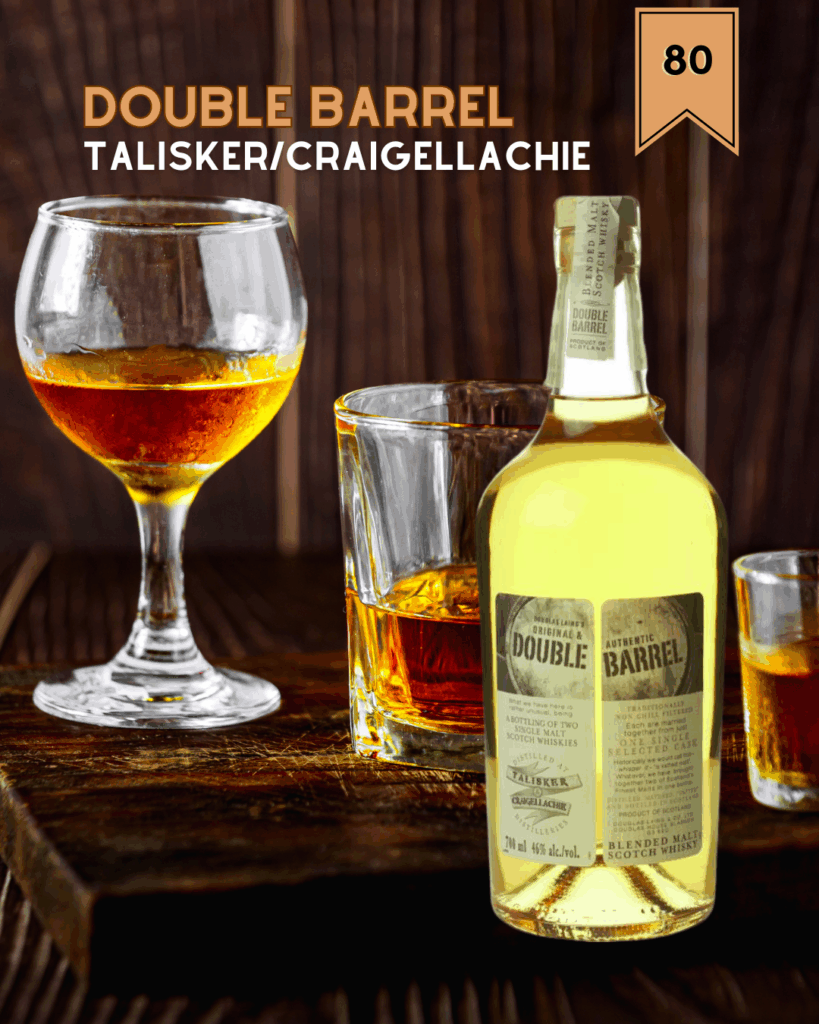
Double Barrel Talisker/Craigellachie, bottled at 46 % abv by Douglas Laing
First things first: No information on the casks used, but emphasise on being traditional. Bottled in 2012.
Upon Sipping: Mostly vanilla and a whiff of smoke, but that’s about it. Very light. One could almost wonder about why these casks are mixed together anyway. Would you spoil a perfect single cask Talisker if you had one (no offense to Craigellachie)? A hint of ozone hits me before giving in to aniseed and smoky bread crumbs. On the tongue, I enjoy this vatting better. It seems that the malty character of Craigellachie became the dominant one the two, while Talisker is kept around for a smoky and almost harsh but satisfying finale. With a drop of water, some fruity notes are released, apples perhaps, but it mostly stays close to the vanilla character. The mouthfeel is a tad more creamy now, with a good dash of brine on the finish, replacing the harsher smoke elements.
Word to the Wise: A rather mature if not unassuming whisky here. The austerity of it all is a bit disappointing. When you use a big name like Talisker in a bottling, you would want that to shine. As it is, this is a fine dram but not winning me over.
Score: 80 points.
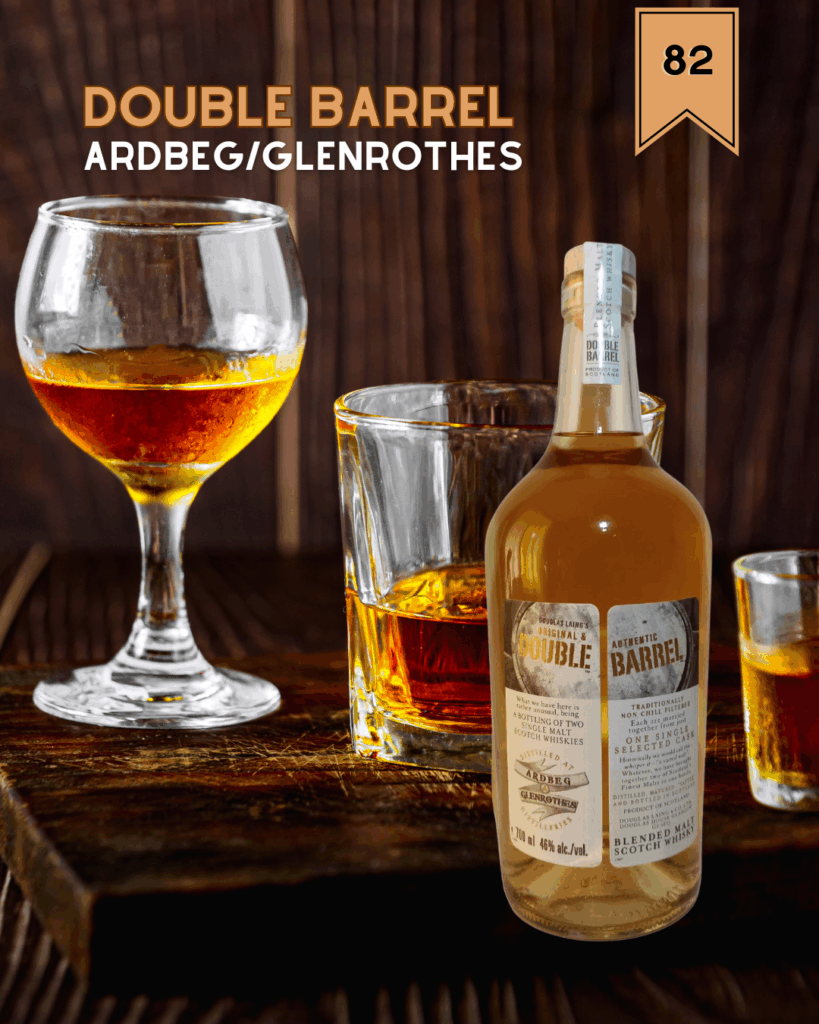
Double Barrel Ardbeg/Glenrothes, bottled at 46 % abv by Douglas Laing
First things first: Bottled in 2012.
Upon Sipping: Once again, you have to ask yourself: who would willingly mix Ardbeg with anything else than Ardbeg? Well, in this case, we might get lucky. The nose opens on peaty notes from the seaside. Yes, Ardbeg is home! By itself, Ardbeg can give off sweet notes, and this seems to click rather nicely with the more fruity character full of oranges from Glenrothes. The peat is nice and lovely, really lingering, not so in your face. But when you take a sip, you notice something is off. The Glenrothes functions as a mute button on the Ardbeg that we actually want to get to. The other way around, the peated Islay malt does nothing to strengthen the Speyside character, simply because it cannot stand up to the might of the iodine and smoke. Oi, oi, oi, I am starting to feel that intentions are good, but that the experiment was a misfire. Water turns everything to ashes.
Word to the Wise: The nose on this Double Barrel was extremely promising, but it just does not work on the palate. In the end, it seems to me a waste of good Ardbeg, because you can notice the potential is there. The Glenrothes is just too bland to make an impact.
Score: 82 points.
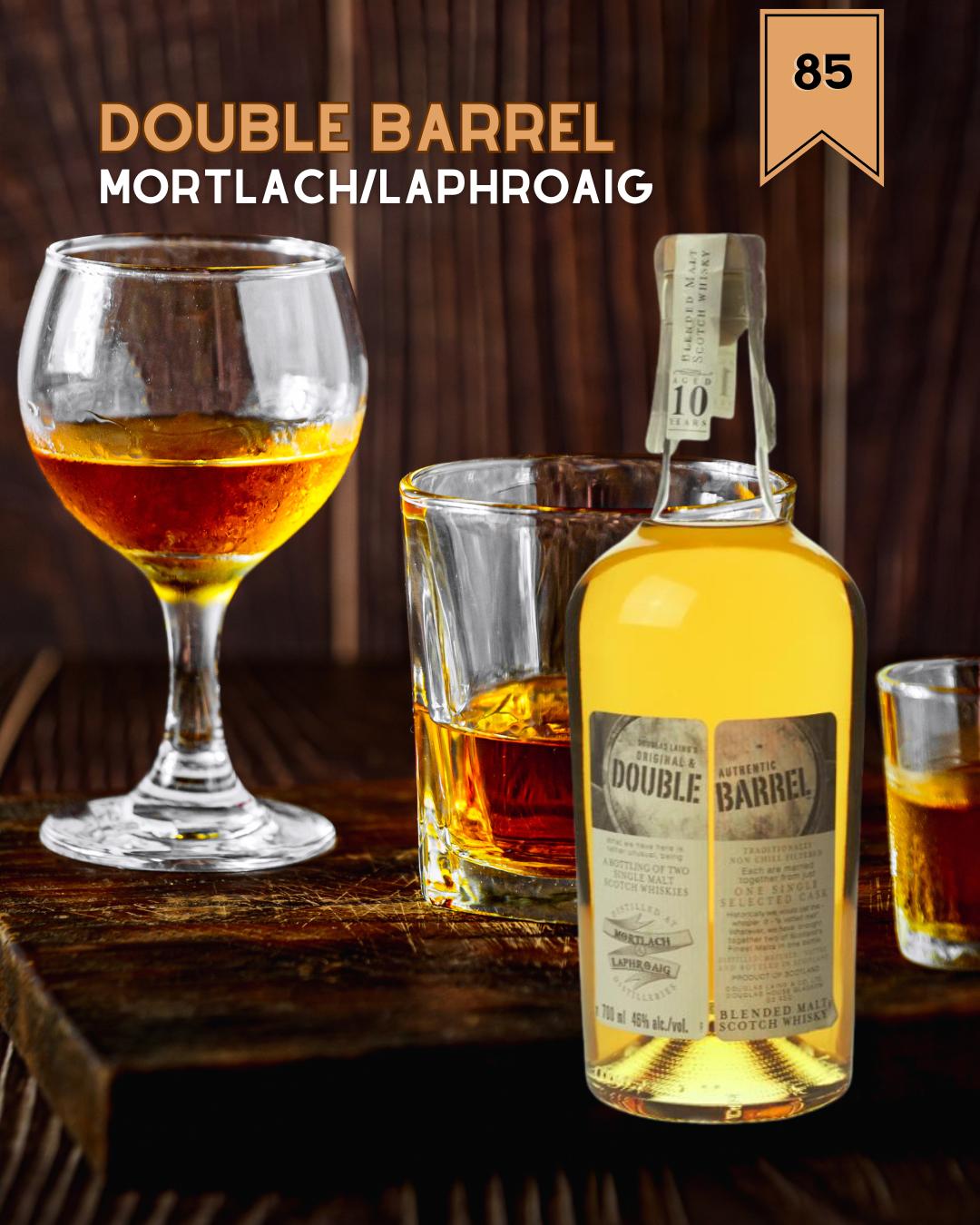
Double Barrel Mortlach/Laphroaig, bottled at 46 % abv by Douglas Laing
First things first: This one carries an age statement, a 10 years old.
Upon Sipping: Just like the Ardbeg, the peat coming from the Laphroaig content is very outspoken. Makes for a lovely nose. Wet rope, tar, iodine, and a floral underlying note that I might as well contribute to Mortlach. To be fair, while Craigellachie and Glenrothes are great blenders’ whisky, Morlach is the true champion of them. After some breathing, I pick up more fruity notes, leaning towards the tropical side. The taste of this 10 years old Double Barrel is more cemented and strong, like a concrete pile in a hurricane. The concrete smells like peat. On the finish, a nice malty hint infused with smoke and sour lemons make for an encore. Yes, this all works.
Word to the Wise: In general, when you go for blended malt where one of the two is a peated whisky, you might want to ask yourself “why dilute this whisky with anything else”. The point of this experiment by Douglas Laing is lost on me. This combination between Mortlach and Laphroaig seems to work best, but it feels more like “even a broken clock is right twice a day”.
Score: 85 points.