
Mortlach 1978 20 years old Rare Malts Selection
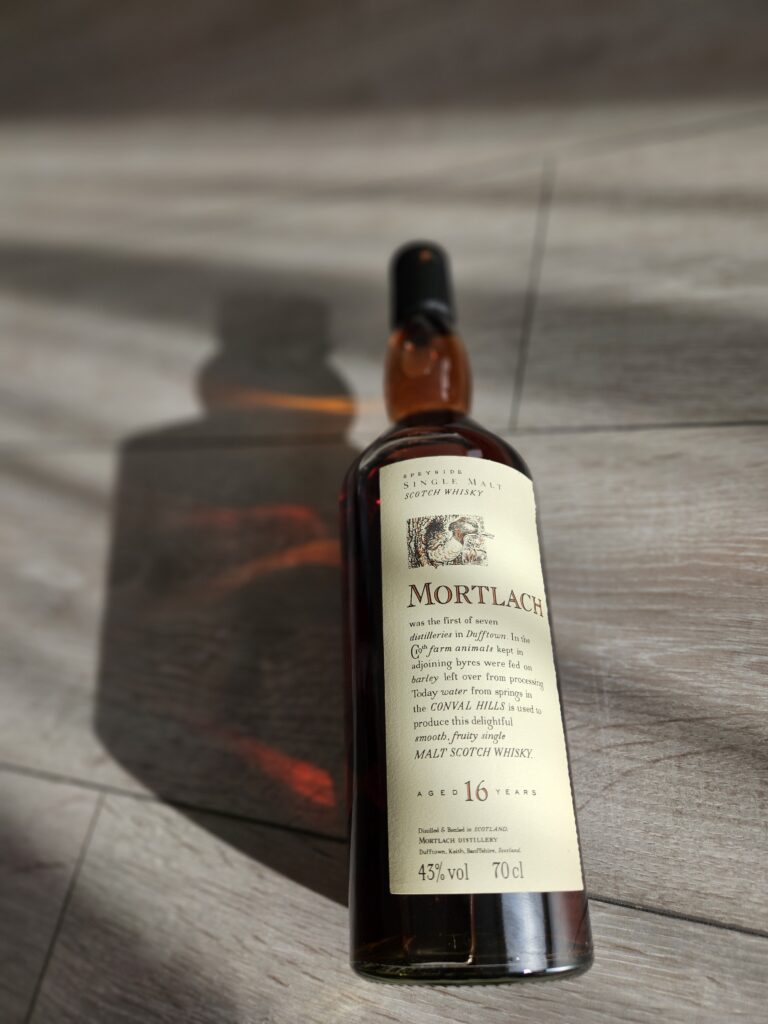
In our periodical series in which we highlight expressions in the Rare Malts Selection, we have now arrived at the “Beast of Dufftown”. This nickname for whisky from the Mortlach Distillery could not be closer to the truth. Big, bold malt whisky with a signature meaty style that is not for the faint of heart. Morlach makes me nostalgic for my early days of whisky enthusiasm, where around every corner would lie a new discovery. I still remember buying my first bottle of Lagavulin 16 years old, and how I just could not stomach it. If I look at my personal collection now, Lagavulin is represented in my top five of distilleries I have most bottles from. Interestingly, I own only two Mortlach expressions, one of which is a fill your own 1999 vintage that I hand bottled myself during the Spirit of Speyside Festival 2019. The other one is the famous Mortlach Flora & Fauna 16 years old (pictured). Now that one, after sipping from it once, became something of a hunt for me. I wanted a whole bottle for myself, but it had run out of stock almost everywhere around 2007. I don’t actually remember where I finally bought mine, but I have it, as a precious gem in the collection. To me, all Mortlach start and end with that bottle, like it is the centre of the universe. A template. Today, we dig into one of the rare releases in the Rare Malts Selection.
I guess that in the time the Rare Malts Selection was relevant, Mortlach was indeed a rarely seen name. There was this Flora & Fauna expression, but the whisky was mostly lifted into stardom by independent bottlers. Its owner Diageo has tried in more recent years to turn Mortlach in a household name, but I think only brand ambassador Georgie Bell really benefited from that. She gave it her all to rise Mortlach into the spotlights, turning into somewhat of a whisky celebrity herself.
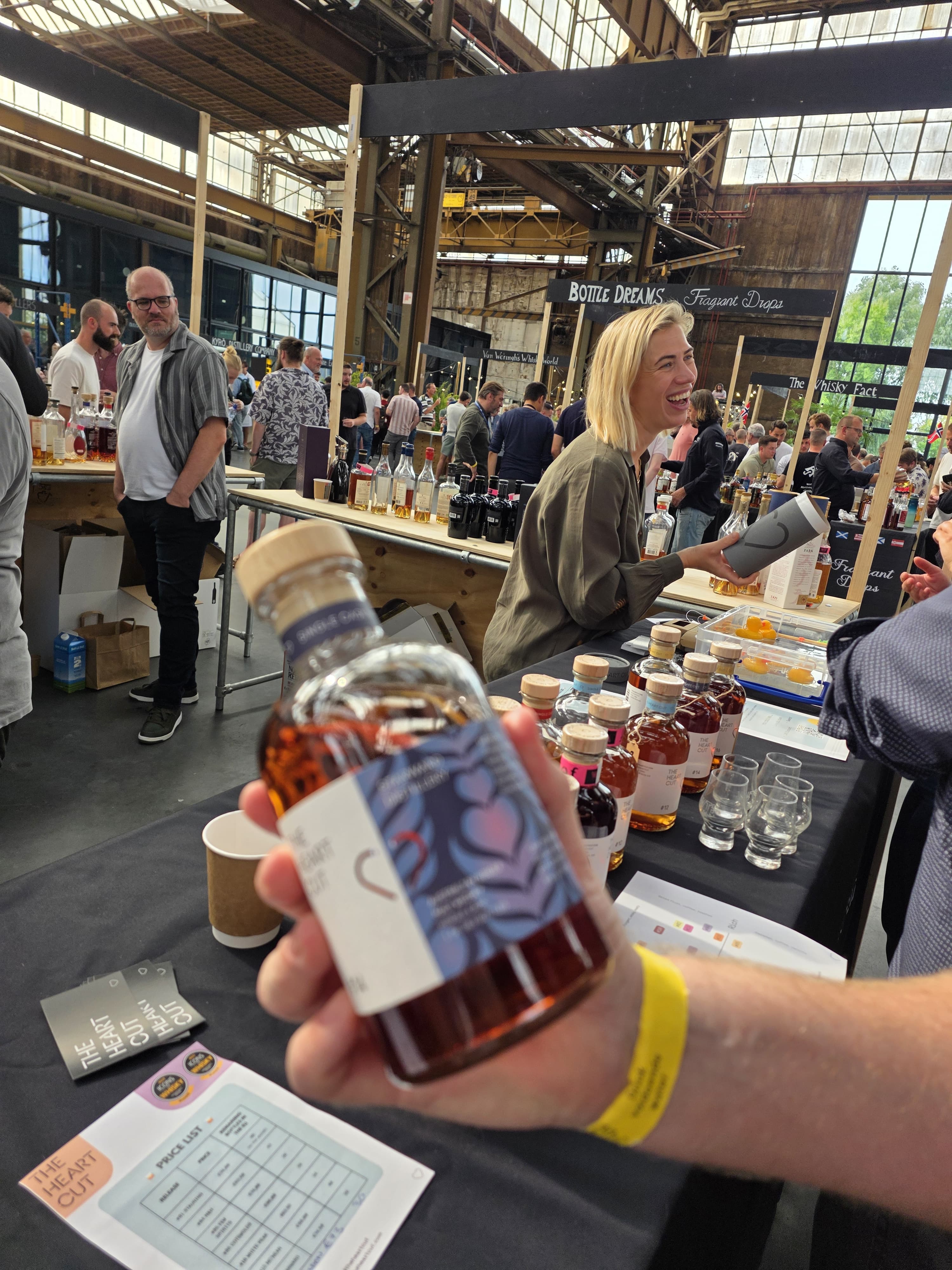
It was great fun to bump into her again recently at a festival in The Netherlands, where she was now highlighting her own brand, the Heart Cut. And Mortlach? Well, back into the shadows perhaps. Maybe the spirit is just not commercial enough to promote on a big scale. I have tasted several of these expressions but they never touched me like the F&F or independent examples like these and these. Maybe Mortlach really shines best when it’s a secret, something to discover along the road into whisky connoisseur maturity.
Mortlach Distillery was in 1823 the first one ever to be built in Dufftown, the little settling that later that century would be the home to famous other names such as Glenfiddich and Balvenie. It was really a Dufftown enterprise constructed by James Findlater and his friends Donald McIntosh and John Alexander Gordon. The distillery did switch ownership a few times in the decades after. Eventually the site ended up in the hands of James and John Grant, who had a link to the Aberlour Distillery. If these brothers ever distilled at Morlach is unknown, but they did take out all the equipment and took it to their new project: the Glen Grant Disitllery, founded in 1840. Mortlach was bought back by John Alexander Gordon and then new life started.
By now, there was a flagship brand called The Real John Gordon. In these days, a partnership was struck with George Cowie, who would carry Mortlach into the future after Gordon passed away. His sons worked in the business, but not simultaneously, as Alexander was actually a doctor in Hong Kong. He had to return to Dufftown when his brother George died. Father George died shortly thereafter, which left Doctor Cowie in control. By then, employee William Grant had already long left Morlach to found the Glenfiddich Distillery in 1886.
Alexander Cowie undertook modernisation of the Mortlach Distillery, with expanding the stills, electric light came in and Mortlach had its own siding into the North of Scotland Railway. But the family’s fate would one day be sealed, when Alexander’s son George died in 1917 at the age of just eighteen. With no male heirs and the economy taking a nose dive, the family sold Mortlach to John Walker and Sons in 1923, establishing the tie to this famous whisky brand. Mortlach was a prize possession, being one of the biggest distilleries in the area. In World War II, there was license to distil, only granted to Mortlach and Macallan and few other sites.
We slowly move into more modern times now, with an extensive rebuilding taking place in 1964. In 1971, all these weird six stills of Mortlach of which not a single one is the same to the next, were moved into one stillhouse. The use of worm tubs was continued. On-site floor maltings had already stopped by then, but luckily the pagoda kiln roofs were kept. Mortlach is nowadays an operation that can be run by one person. This must be one brilliant person, overseeing the rather unusual two-and-a-half times distillation regime not unlike the one carried out at Springbank and Benrinnes (until recently). During the stint as single malt in recent years, Mortlach was promoted as the 2.81 distilled whisky. Output today is close to 4 million litres per annum.
We will quickly dive into a single malt example of Mortlach, but one must realize that today, and has been for a long time, Mortlach delivers the back bone to Johnnie Walker Black Label. It used to do so for the Red Label too, until that brand was taken of the UK market in the late seventies due to legal issues with double marketing tricks. The John Barr blend was introduced, licensed under George Cowie and leaning heavily on Mortlach output. The name and brand has been sold off to Whyte and Mackay, who reintroduced this one-time evil stepbrother of Johnnie Walker.
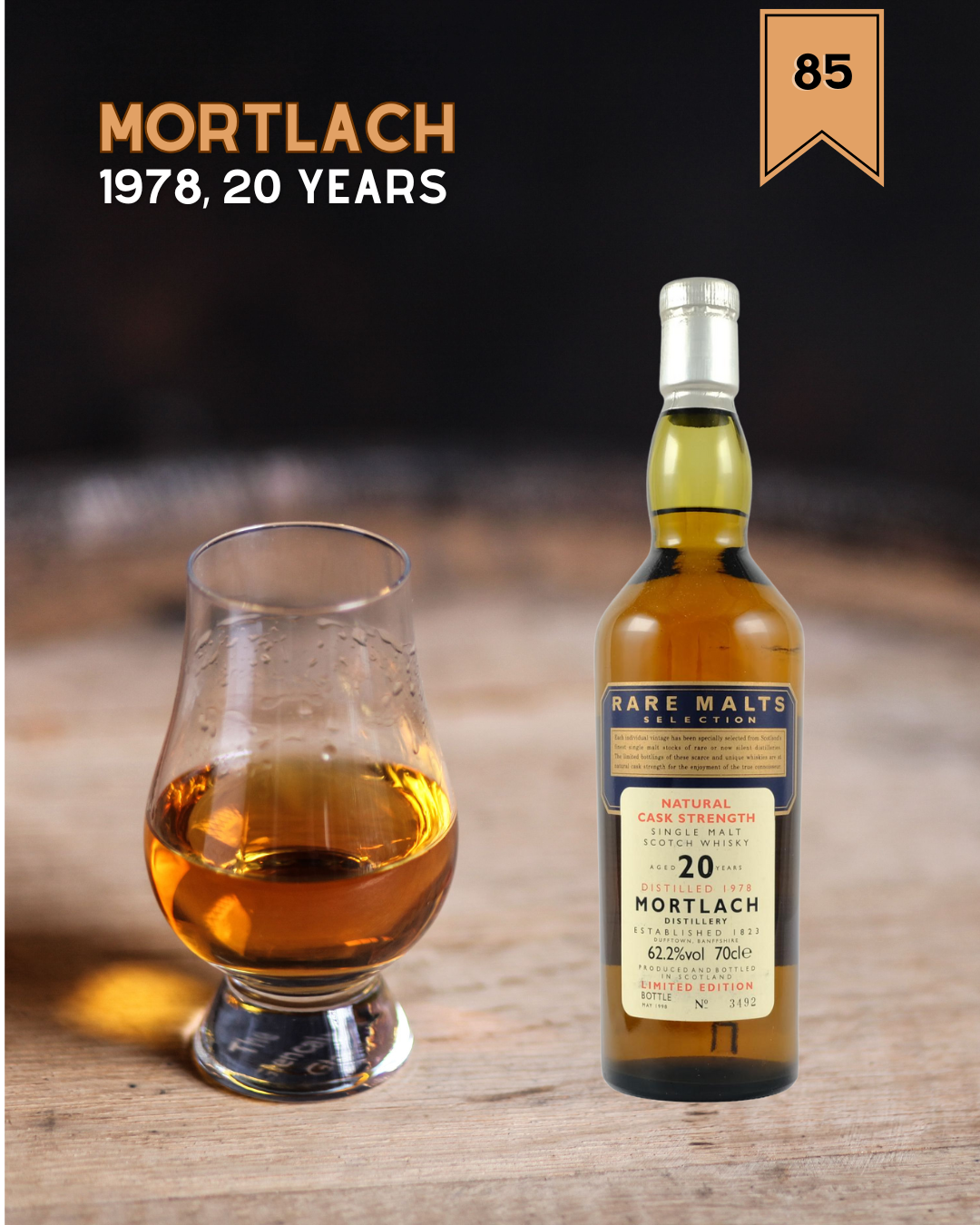
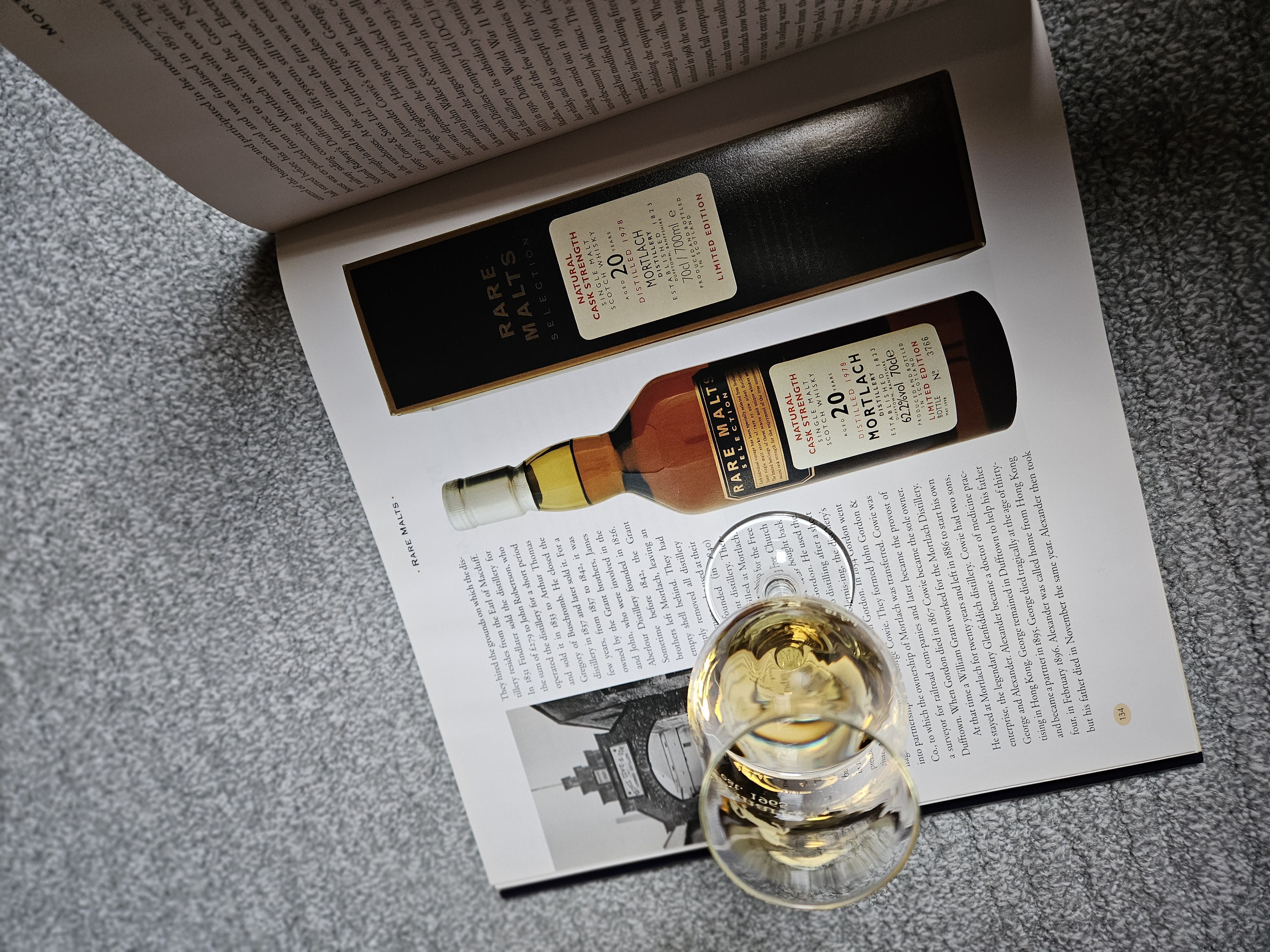
Mortlach 1978, 20 years old, bottled at 62,2 % abv
First things first: Bottled in May 1998, it was the last entry into the RMS for Mortlach, that had previously seen a 22 and 23 years old in glass, both from the 1972 vintage. Maturation regime at Mortlach had been based on a 16 years cycle, with using new and refill bourbon casks and sherry butts. Of the latter, we would love to see the impact on this Mortlach, but the light colour makes me wonder about how much was used. As usual, we do not know anything about this vatting of the 1978 vintage.
Upon Sipping: The famous high abv on some if not most bottlings in the RMS was due to the fact that because of overproduction, producers would save cask space by not diluting their new make to the industry standard of 63,5 % abv, but rather putting it into wood as it came of the stills. Raw! The nosing is a challenge, but we do pick up light hints of apricot and dusty wood. The fruity side is the strongest. We are curious to see what we will uncover when we dilute this rocket fuel. The arrival on the tongue is indeed fruity, like a mixture of all kinds of sorts into a coupe, just the ice cream is missing. Peaches, apples, mango, melon, pear, it is all there. There is not really a hint of sherry content. Surprisingly drinkable, I have to say, even at this strength.
We bring out the pipet to start slowly diluting this Mortlach 20 years old. Mostly, I pick up rotten fruit in orchard grass. Muggy wood branches. Some industrial notes too, petroleum perhaps? Rather difficult to define actually, but like light oil. Perhaps not industrious, but more like a sunflower oil to bake with.
The more water I add, the more the Mortlach departs again from this oily business, moving back to a fruity character. With a final dose of drops, I suddenly get a big hit of vanilla. But it is an older style of vanilla, mixed with burned marshmallow smashed between a cookie. Is it Thanksgiving yet?
Time to taste the diluted result halfway in. Oh my, it has turned quite sour, with hints of copper coins, old tea and a metal finish. This is quickly starting to taste like a medicine that you might have to force-feed down the throat of a patient. You know it is good for you, now swallow. Quite a grassy and herbal style, I have to say I am rather surprised. Tasted blind, you would have a hard time recognizing Mortlach in this, me thinks.
Word to the Wise: A deeply flawed whisky that manages to stand tall still because of a lot of idiosyncratic elements. It is big like you would expect of Mortlach, but it lacks a certain charm that other expressions do have, mostly those that are heavily sherry induced. This is a naked version, with just out of bed hair. We were fascinated, but not amused. Probably one of the weaker entries in the Rare Malts Selection.
Score: 85 points.