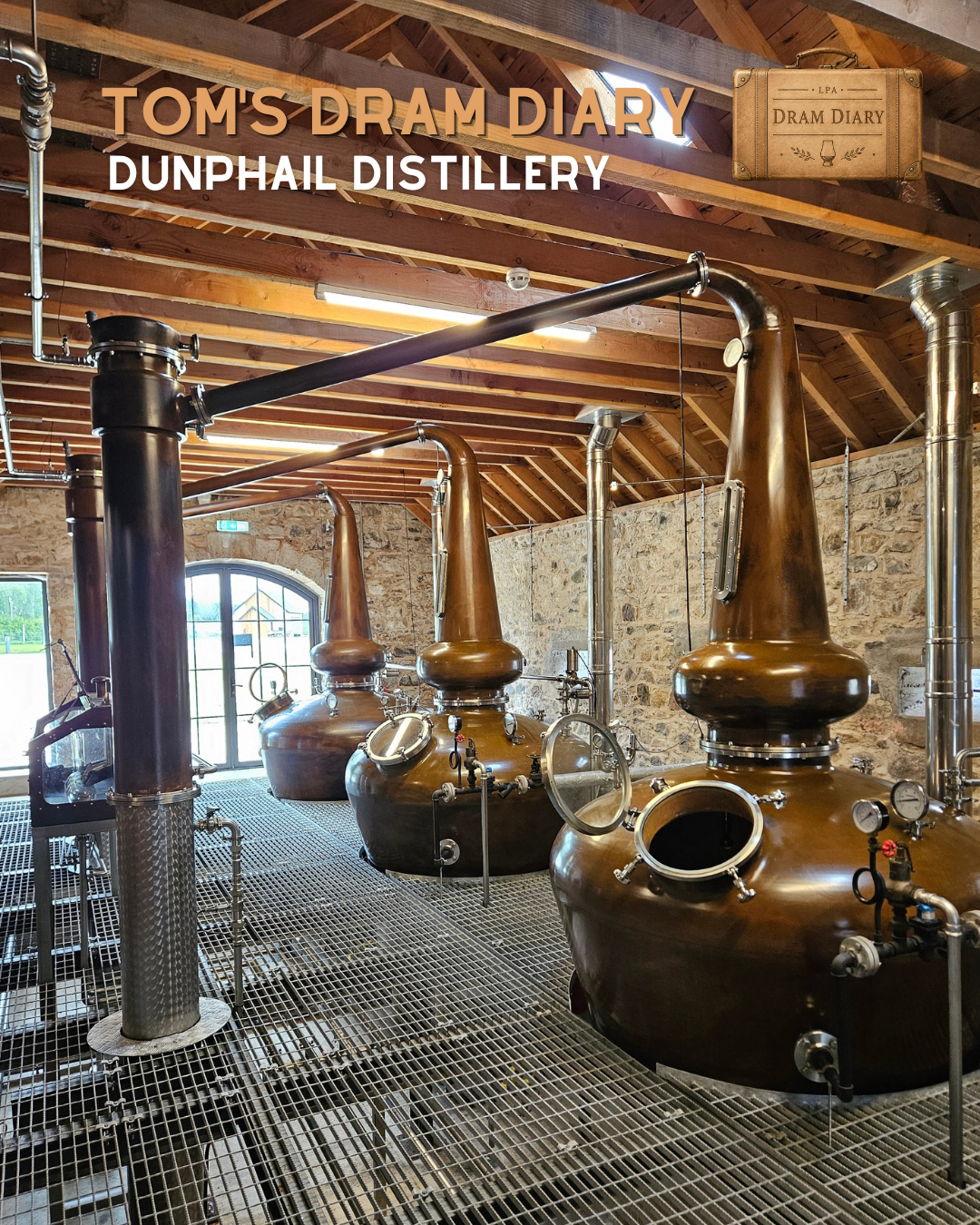
The Dunphail Distillery: the anti-consistency malt whisky
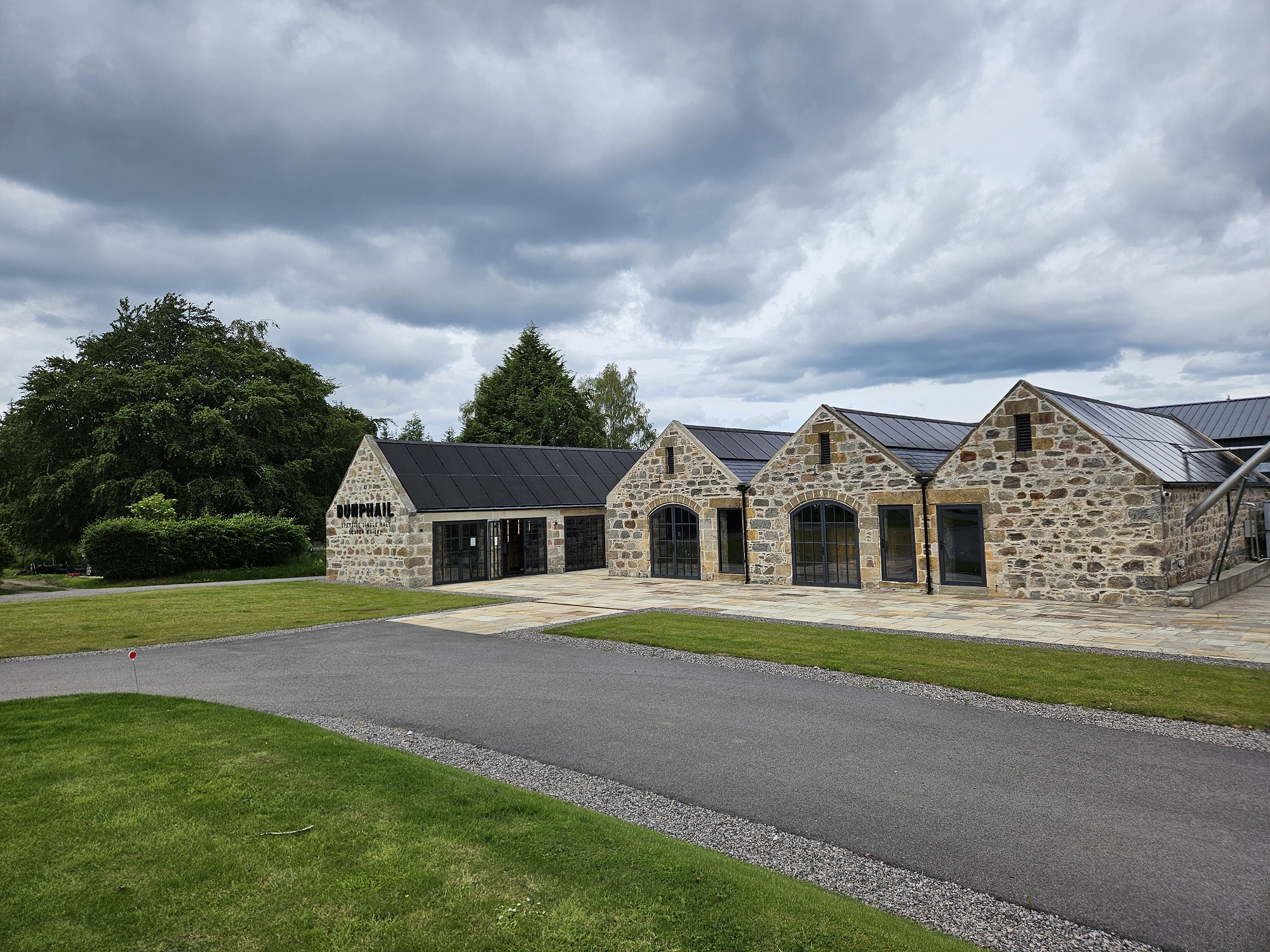
Dunphail is the name of a new Speyside distillery just south of Forres. Here, nobody is reinventing the wheel – quite the opposite, in fact. It is a return to the traditional basics. Just let the ingredients do their thing, and it will turn out fine, even if no two batches are ever quite the same. Dunphail likes to call itself the anti-consistency malt whisky. We paid a visit to discover what that means.
Text and photography: Tom van Engelen – www.longpouramour.com
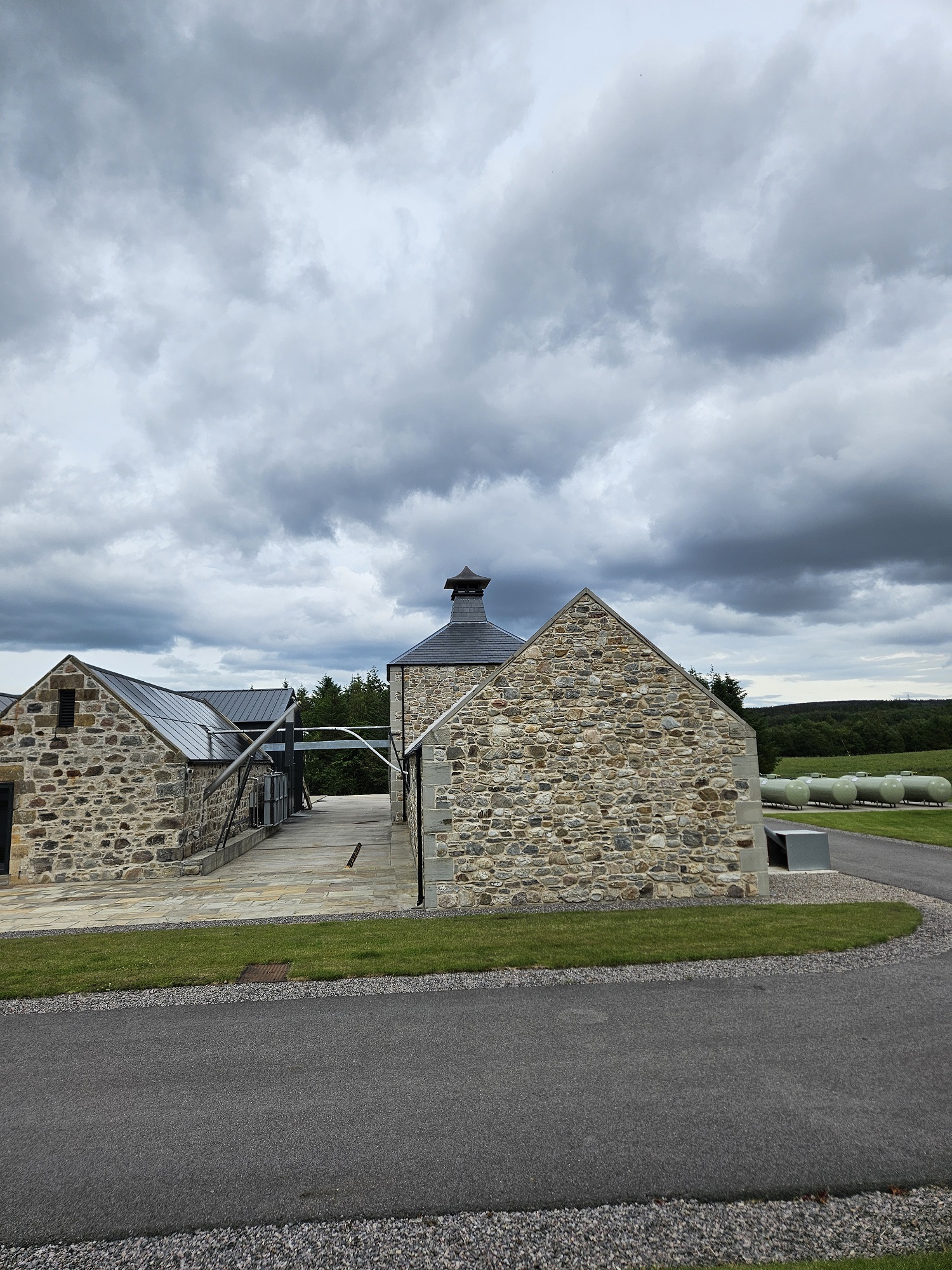
Somewhere along the A940, between Dava Moor and the town of Forres, a narrow lane peels off towards a newly built Speyside distillery called Dunphail. The last 25 years have seen a real boom in new-build whisky distilleries, yet Speyside itself has been surprisingly quiet on that front. The best-known newcomer is arguably Ballindalloch, just by the castle of the same name. The Cabrach is so new that plenty of whisky fans have still never heard the name. Does mammoth distillery Dalmunach count, as the successor to Imperial? Dunphail is the little sister of the well-known Bimber Distillery in London. I drive towards it at a fair clip, running just a touch late for my appointment. A breathtaking humpback bridge on that narrow lane blocks my view of what is on the other side of the rise. If anyone else were approaching at the same speed I am, we would meet head-on. Thankfully, that does not happen – you rarely run into another car on a single-track road. After a sharp bend past the Logie Wind Farm, I set course for Tomnamoon, and halfway there a sweet little building suddenly appears, its name spelled out in big black letters.
Floor malting and drying with peat
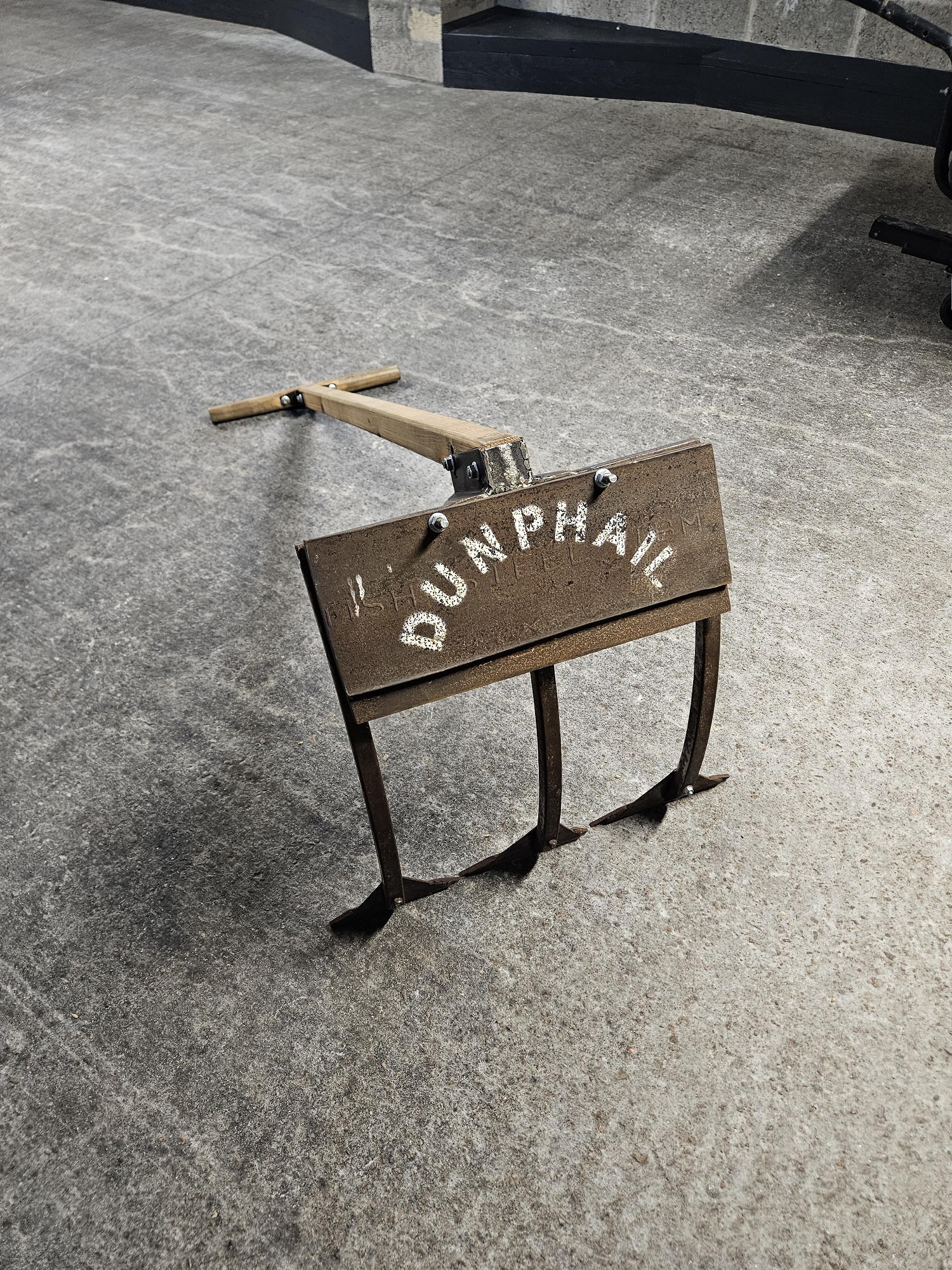
Emma Metcalfe, who runs the Visitor Centre, shows me around. She points out the malting floor with which Dunphail is reviving old traditions. ‘We don’t have any computers here, apart from the one we use to manage the tourist bookings,’ Emma says, with a good sense of humour. There are precious few places left in Scotland where the malting floor is still in use, the most famous example being Springbank in Campbeltown. Here at Dunphail, too, the entire production is malted on site. The drying and the addition of peat smoke also happens right here. Using peat from the Fraserburgh area, Dunphail dries its malt for around three and a half days, finishing with a dessert of a half day of warm air with no “peat reek” at all. By the time it is ready, the malted barley sits at roughly 45 PPM. That is pretty punchy for a non-island whisky. ‘Even so, it’s quite different, because the make-up of Speyside peat leans much more heavily on heather, bracken, beech wood and earthy notes. That gives our barley a different signature than Islay peat would.’
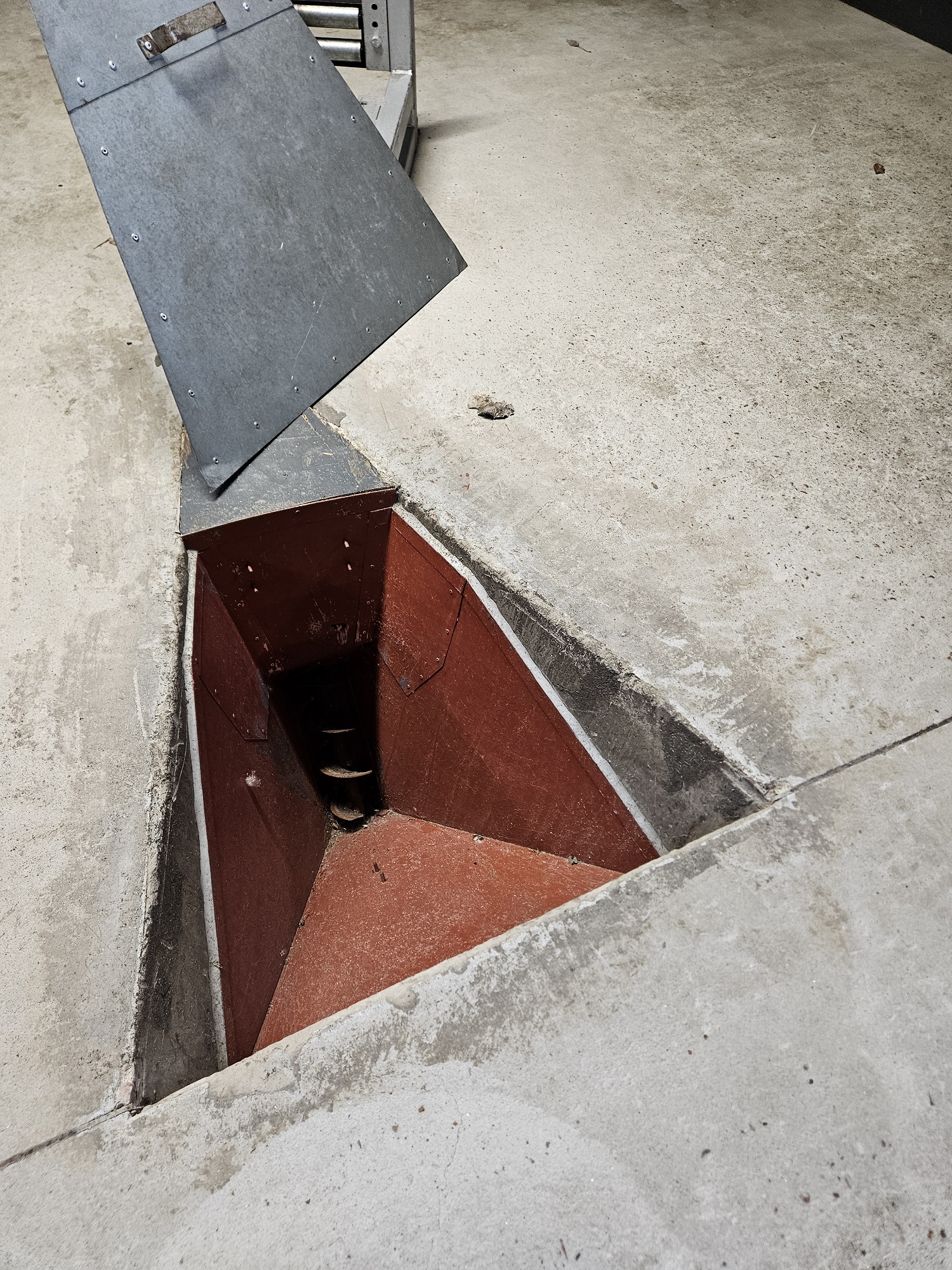
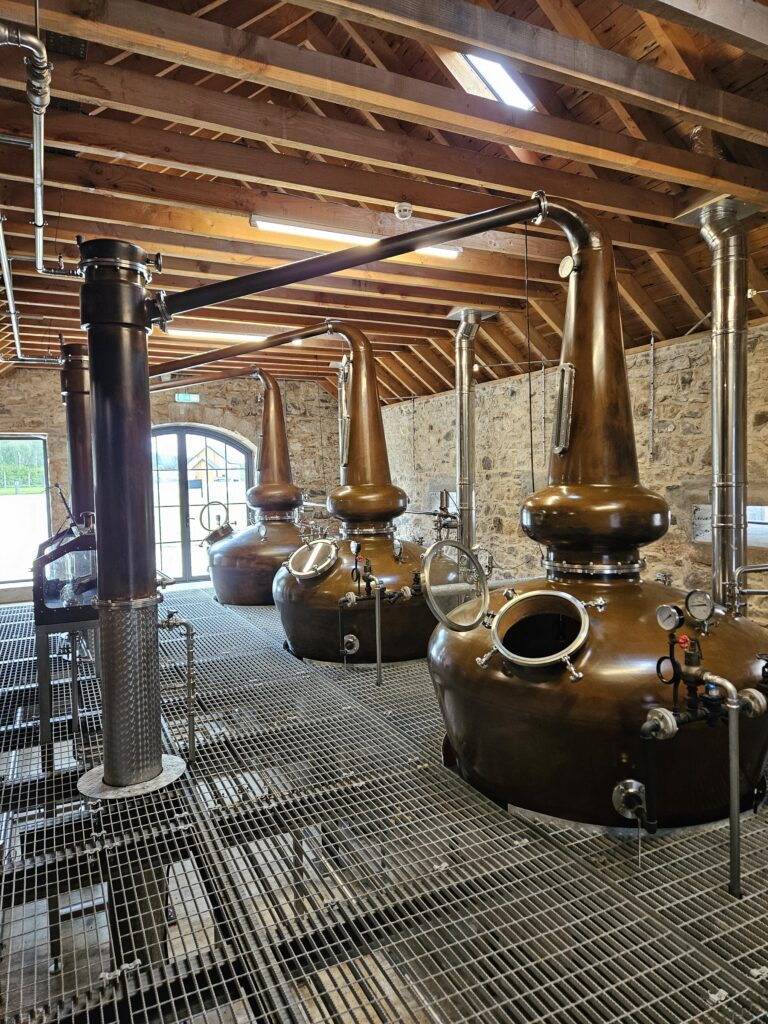
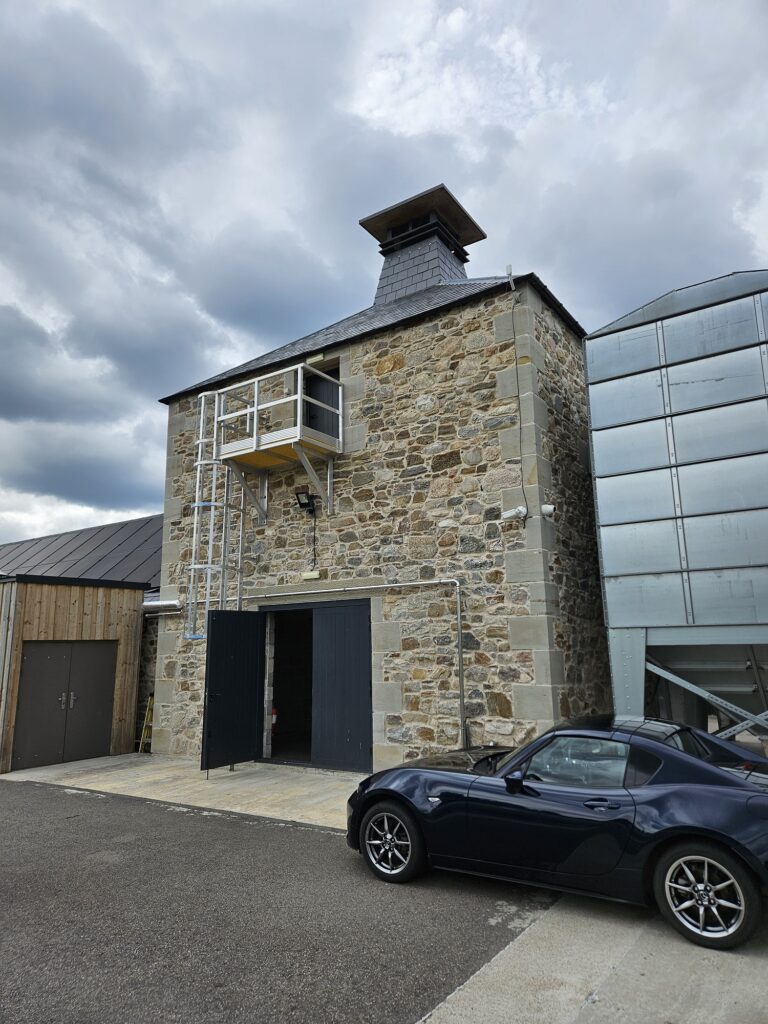
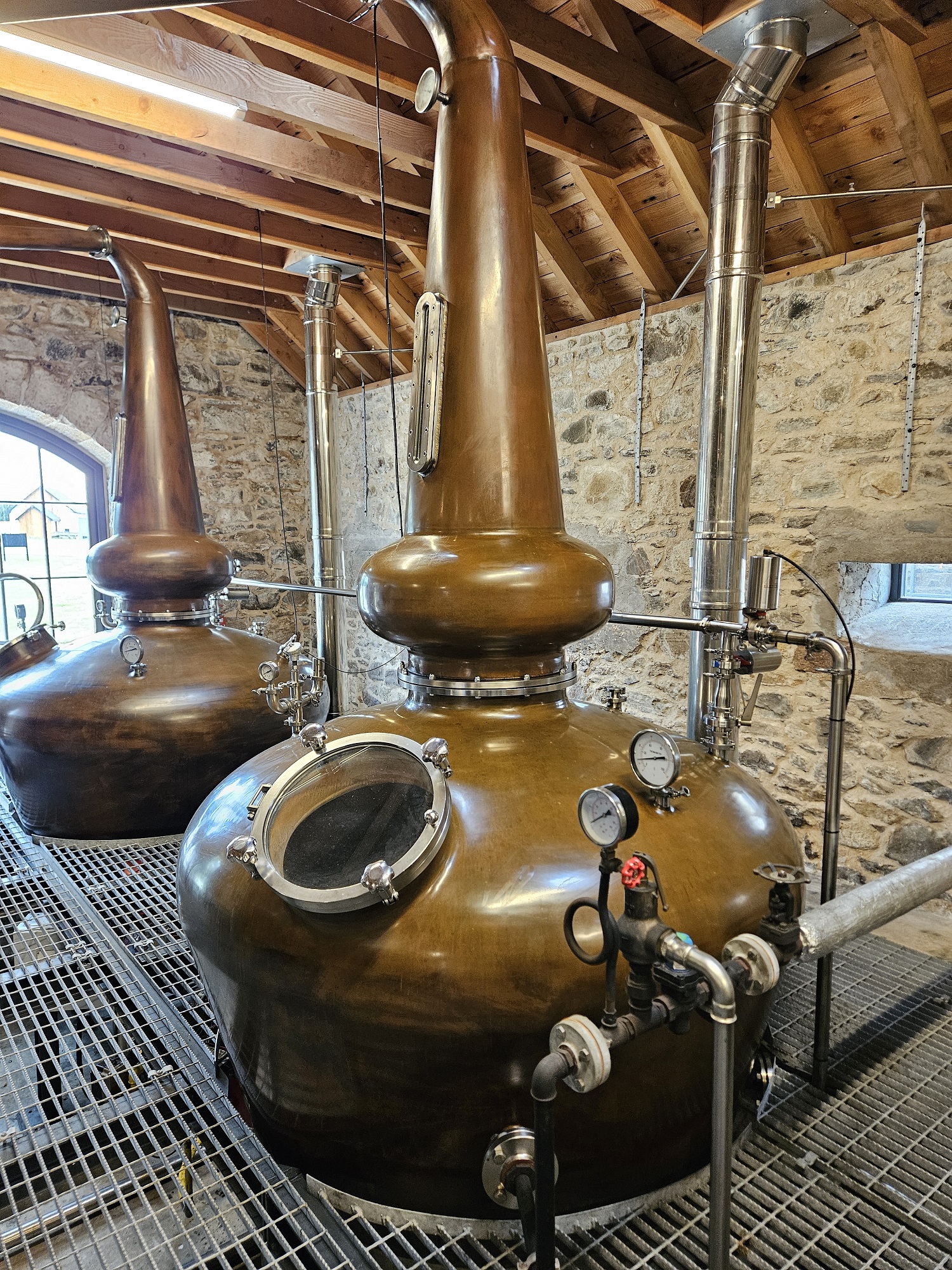
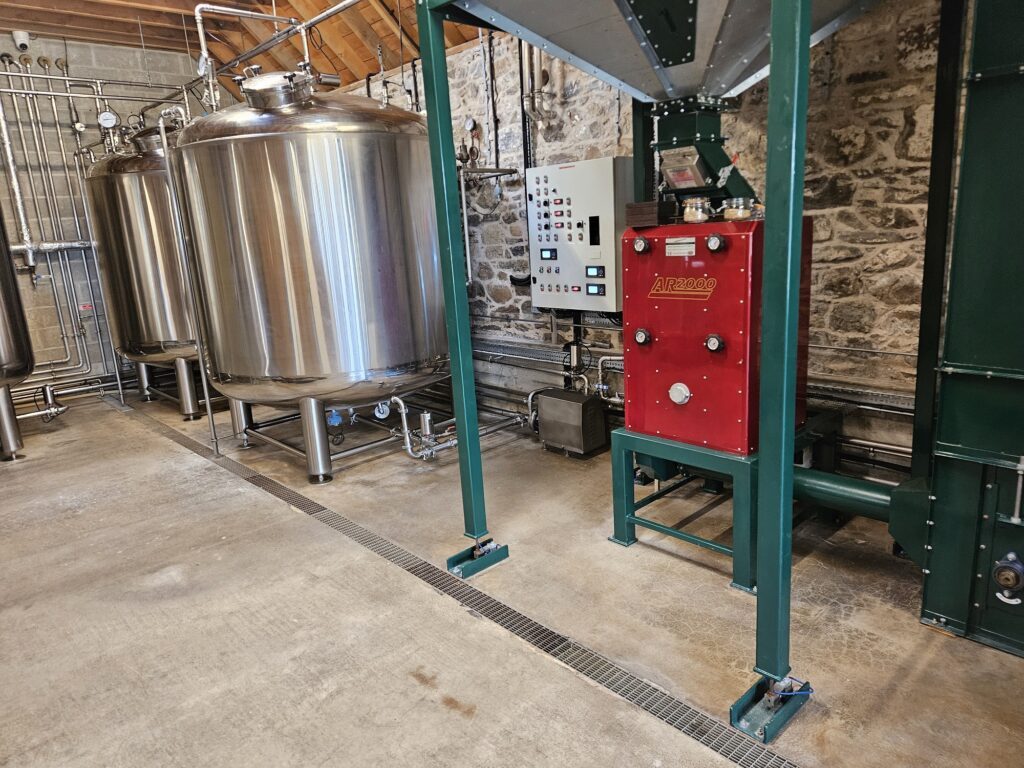
We walk around the outside of the kiln, and the site is a glorious jumble of everything at once. Someone has parked their Mazda MZ5 right next to the gas tanks, there is a cement mixer in view, and wind turbines turn in the distance. There is a real urgency to add more warehousing for maturing Dunphail whisky, as the first store is already packed to the rafters. Distillation began on 6 October 2023, so the spirit is well on its way to its third birthday. We head into the production side of the distillery. Three beautifully gleaming stills in a row are the obvious eye-catcher. Emma shows me the mill. Seasoned whisky nerds will instantly think of a Boby or a Porteus mill, but for the third time in a short while I am looking at an AR2000 from Alan Ruddock Engineering. Newcomers like Balmaud and The Cabrach use the same kit. It is a modern alternative to the great old colossi that still stand in the older distilleries.
Long, open-top fermentation
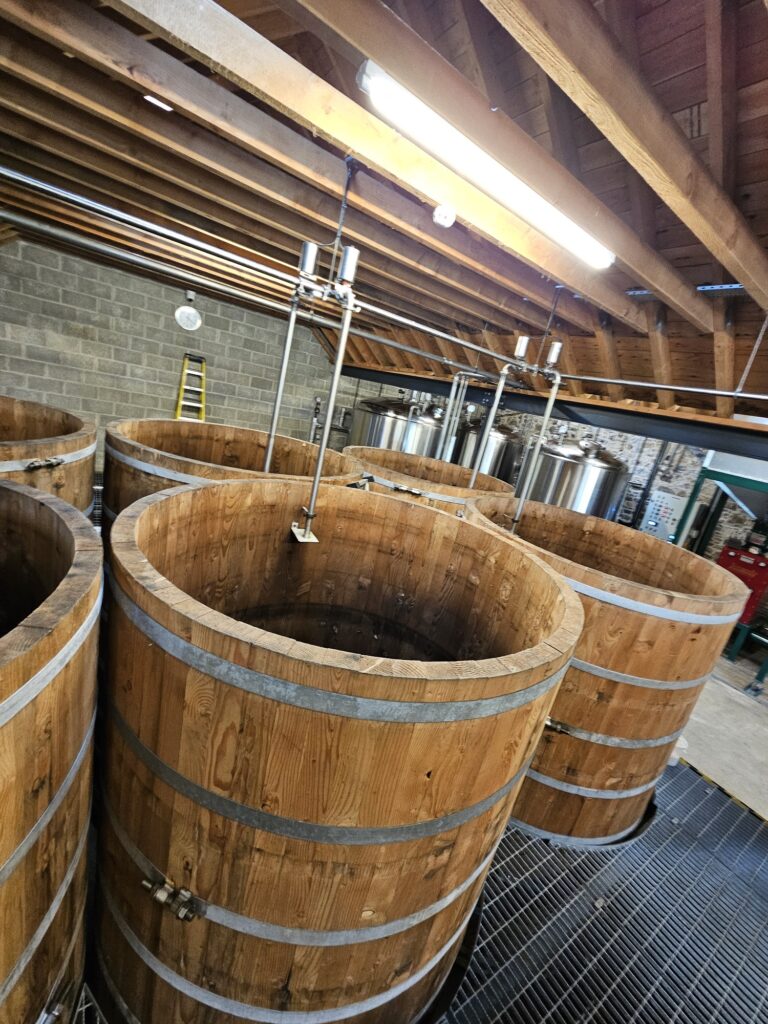
Another eye-catcher in the room is a collection of twelve washbacks, not one of them fitted with a lid. ‘We ferment for around seven days, that’s 168 hours, in washbacks made of Douglas fir also known as Oregon pine. As you can see, the washbacks are open, which is common practice in the natural-wine world, or when brewing a sour beer. Dunphail is chasing esters. We want the whole fruit basket to show up in the spirit that comes off the still. We use distiller’s yeast. We might experiment with different strains in the future.’
Distillation, according to Emma, is a matter of feel. ‘Because of the inconsistency of the live yeast infection within the wash – which is exactly what we’re after – every run is different. We don’t work with fixed cut points between heads, hearts and tails. For us, that’s the ultimate hands-on job: whoever is on shift uses their nose, takes a small taste, feels the distillate between their fingertips. When it’s right, we switch over into the heart of the run. And once that has run its course, we move on into the tails. You could say Dunphail really is trying to make the anti-consistency malt whisky! Indeed, Dunphail’s fermentations are also inconsistent between seasonal change, and our spirit therefore never has a consistent cut point. What we are consistent in is only ever taking the best quality spirit run for our fulfilment of casks.’
Towards the first whisky
As mentioned, Dunphail still has a good year or more to wait before its first production turns into whisky. The spirit is maturing mainly in oloroso sherry and bourbon casks. Emma is already able to let slip what the very first release will be, but she won’t let me write that down. Patience! A few other experiments are also sitting around waiting for their moment, such as a Dunphail single malt from a tequila cask, or a red wine cask. We will wait patiently and see. While we are in the cosy reception area tasting a few samples from The Dava Way – a range of independent bottlings of well-known classics from across Scotland, such as Ledaig, Aultmore and Inchgower – we cannot resist one more opportunity. Behind the counter, as it happens, is a peated New Make Spirit. That one is coming home with me!
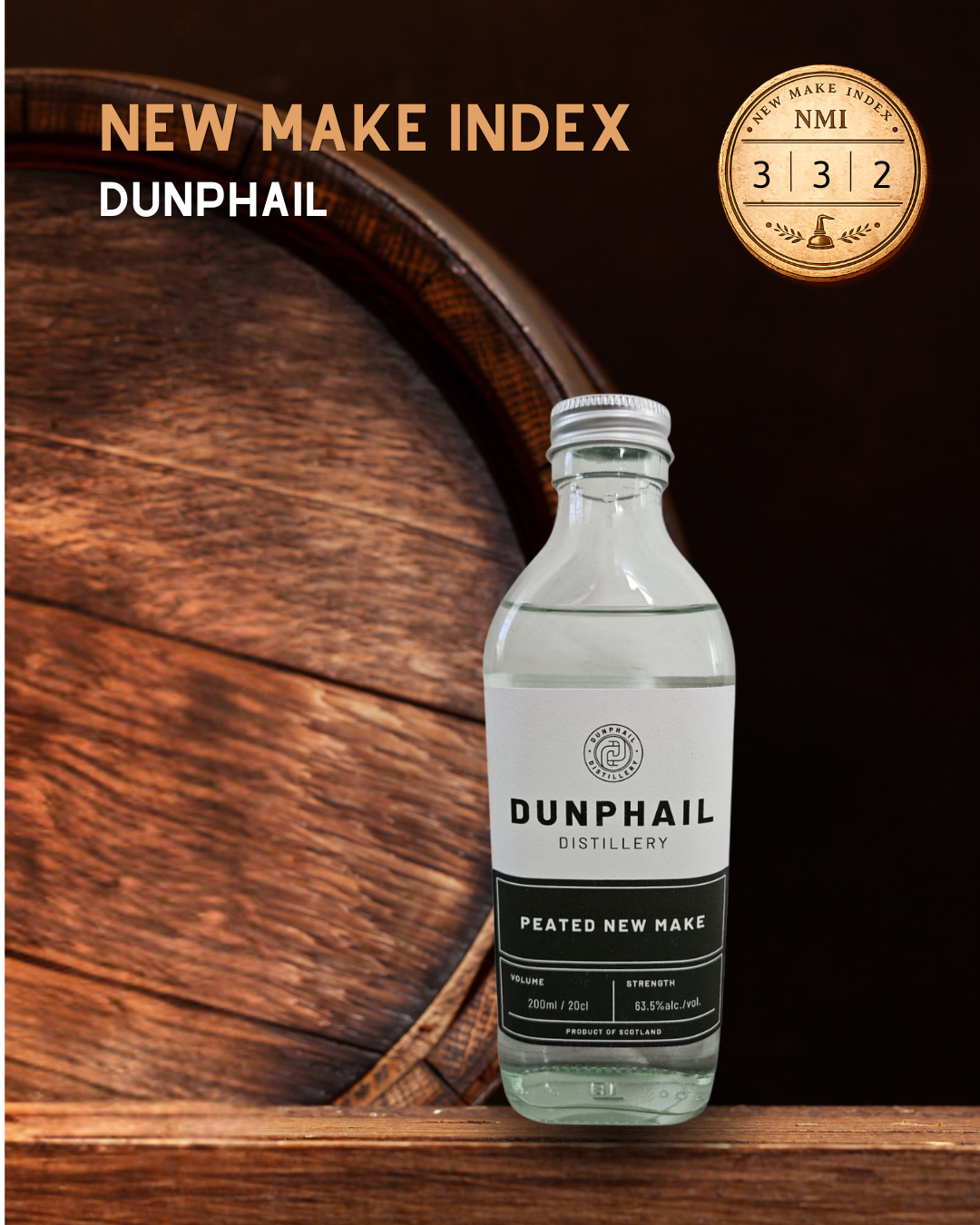
Dunphail Peated New Make, bottled at 63,5 % abv
First things first: Peated New Make Spirit bottled in 2026 at the Dunphail Distillery. This comes in a handsome 20 cl bottle. Foto 10 hier
Upon Sipping: The liquid seems really thick and oily when it flows from the bottle into the glass, which is an indication of what we are going to experience. The peat reek coming from the glass is very pronounced, but underneath we pick up the fruity notes one would expect from a lengthy fermentation. An undiluted sip indeed shows a rather rough spirit, with a bone dry smoke on the tongue. There is no room left for fruity notes in this form, so we will add some water. The nose does not change all that much, but now gives the impression of the insides of a ship’s machine room, with lots of oil and diesel fumes. Then, when you get used to these aroma’s, you start picking up the vegetal elements from the peat source, which is moorland peat, not maritime. Tree bark, decaying plants, heather, dried up mud pool, stuff like that. Not boring in any case! In diluted form, this has become easy to drink, although it lost some of its kick. Lots of dark chocolate and brine. A mouthful of dry earth. The peat smoke has now retreated to the finish, where it smoulders with an almost silent sadness, pushed back into a cubicle by the water, where it could fully shine when undiluted. But it does feel more balanced now.
Word to the Wise: This is New Make spirit that is dominated by the peat smoke, as expected, but at the cost of integration. A prime example of spirit that now needs wood to work wonders. This is reflected in the score on the New Make Index. (What is that? Explained here!)
Score: NMI 3/3/2