The New Make Index
Newest Index Entry
The New Make Index
A Scoring Framework for New Make Spirit
by Tom van Engelen • www.longpouramour.com
New make spirit is not whisky. Legally, technically, definitively, it is just not. And yet it is the origin of every single malt you have ever loved, every single cask that has ever moved you, every distillery that has claimed a corner of your palate. It is the beginning of the journey, and beginnings deserve to be taken seriously.
Most whisky bloggers do not review new make spirit. The argument is understandable: how do you score something unfinished? How do you apply a number to a promise? I disagree with the premise. A chef can evaluate a sauce at the reduction stage. A winemaker can assess a must before fermentation is complete. And a whisky enthusiast, given the right framework, can meaningfully evaluate new make spirit – not as a finished product, but as what it actually is: raw material of exceptional potential.
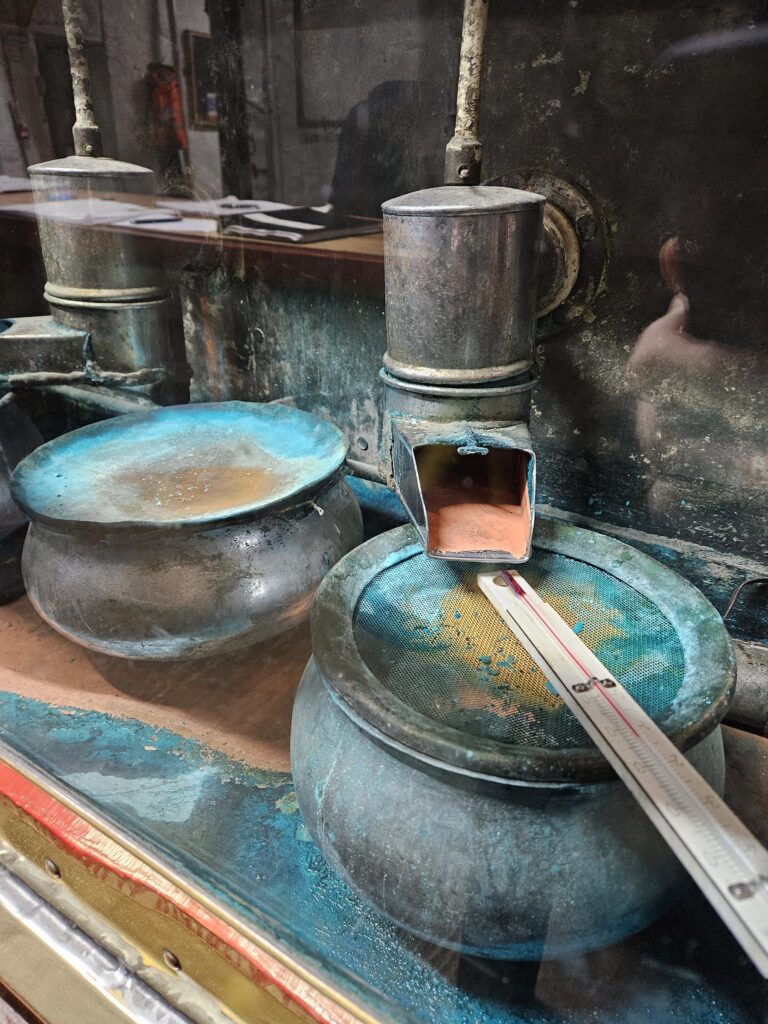
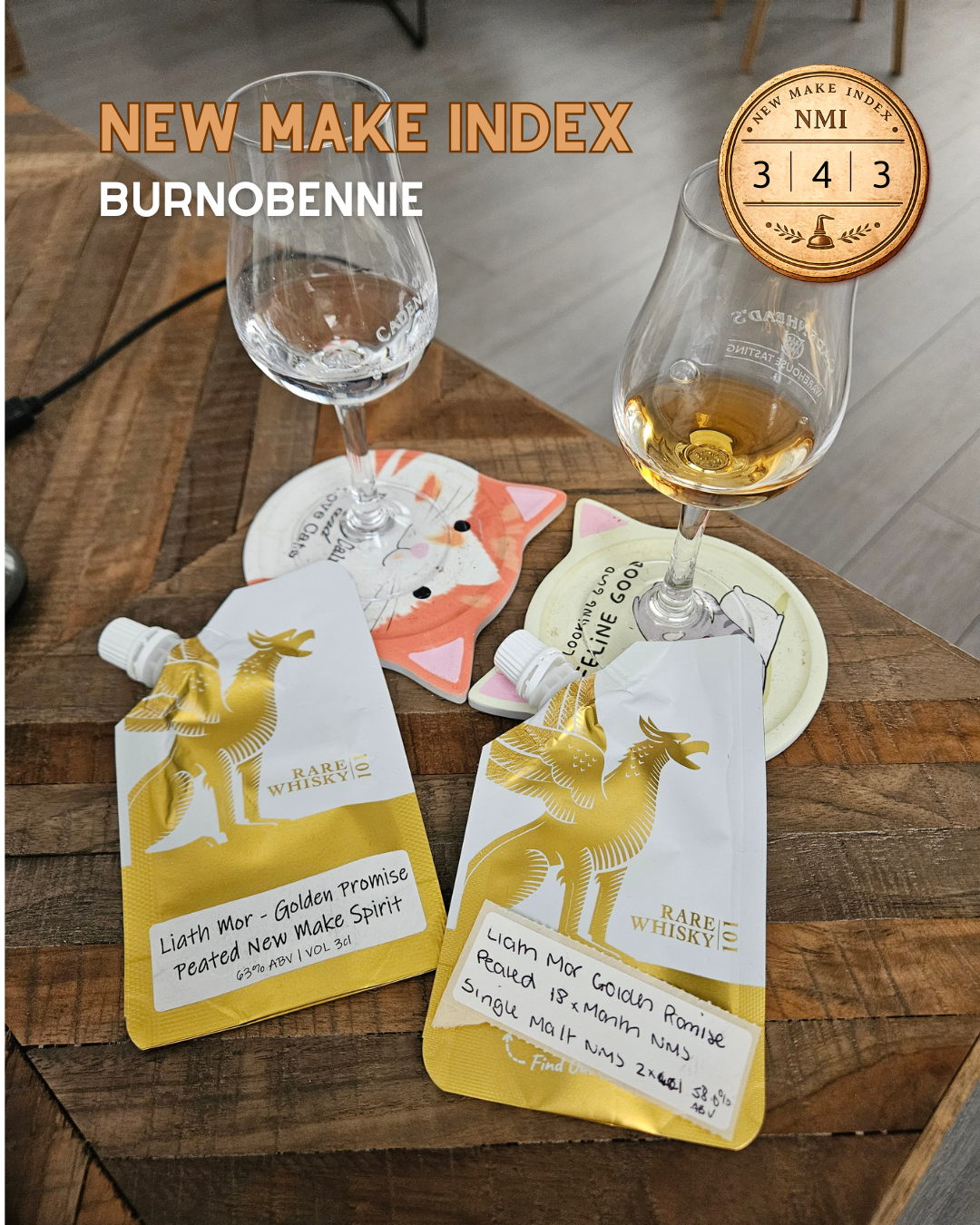
The New Make Index – or NMI – is my attempt to build that framework. Its name reflects what it actually measures: not a finished whisky, but the raw material itself, assessed on its own terms before wood and time take over. The judgement behind every score is still made by hand and by nose, visually, sometimes even feeling the spirit on the fingertips, at the same critical cut point that determines the character of everything that follows. The NMI attempts to capture that character before the cask takes over.
The NMI is expressed as three numbers, each on a scale of 1 to 5, separated by a slash. A score might read: NMI 5/3/4. The three numbers correspond to three axes, each measuring something distinct and irreducible.
Axis 1: Purity
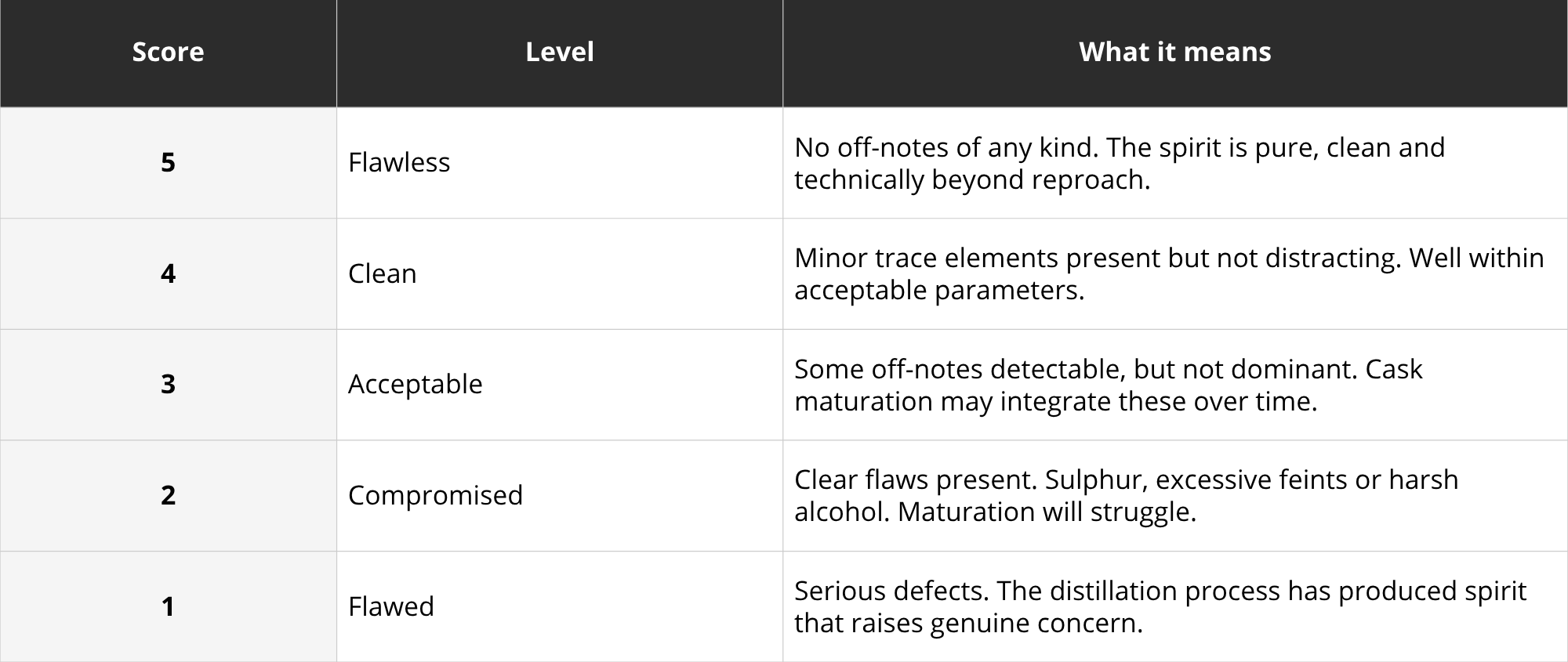
Purity measures the technical cleanliness of the distillate. Are there off-notes like sulphur, excessive feints, unwanted heaviness, or does the spirit emerge from the still without fault? This is the most objective of the three axes, and the closest to how the industry evaluates new make internally. A score of 5 indicates a flawless, crystalline spirit with no detectable defects. A score of 1 indicates serious flaws that would concern even a patient cask.
longpouramour.com
Axis 2: Character
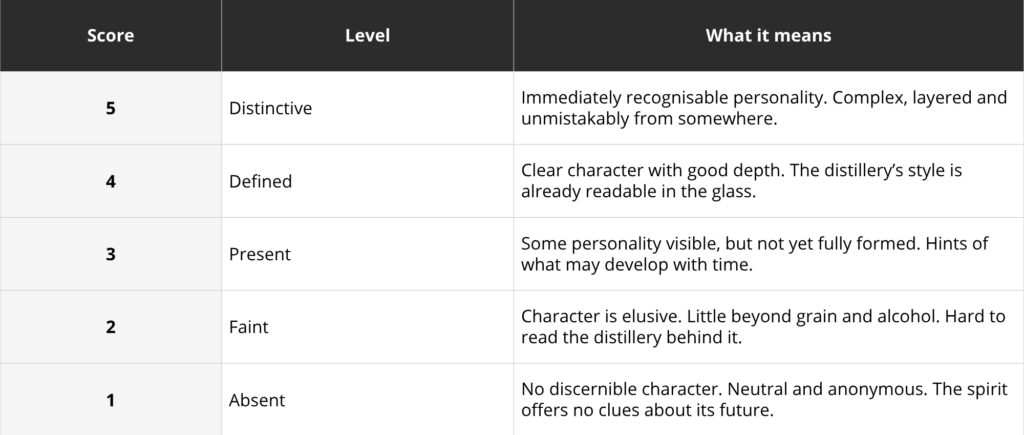
Character measures the distillery’s DNA – the personality already present in the spirit before wood and time intervene. Is there something recognisable here? Fruit, grain, oil, peat, floral notes? And is that character pronounced or muted? This axis is directly shaped by the decisions a distiller makes: fermentation length, still shape, cut points, and – as at least one distiller is now exploring – fragmented distillation, in which different fractions of the spirit run are collected separately to emphasise specific flavour compounds. A spirit with a score of 5 already has a distinct, complex and exciting identity. A score of 1 is neutral to the point of anonymity.
longpouramour.com
Axis 3: Potential
Potential is the most subjective axis, and also the most unique to new make assessment. It asks a forward-looking question: does this spirit have what it takes to become something remarkable? Is there enough body to sustain long maturation? Enough fruit to carry a first-fill bourbon cask? Enough structure to survive a sherry butt without being overwhelmed? This axis requires experience with how new make translates into aged whisky, and it is inevitably a matter of informed intuition. It is also, I would argue, the most interesting of the three.
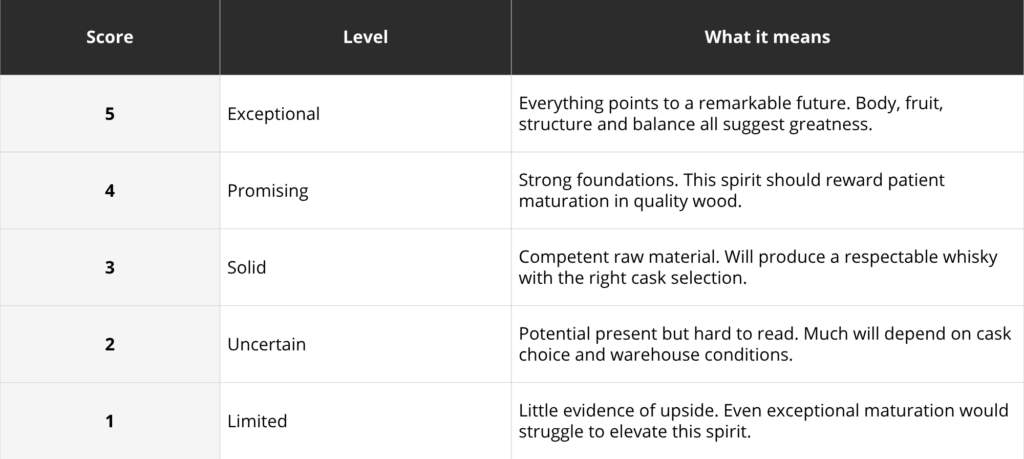
longpourarmour.com
How to Read an NMI Score
The three numbers are always presented in the order Purity / Character / Potential, and always abbreviated as NMI followed by the three scores. For example:
NMI 5/4/5 A technically flawless spirit with strong distillery character and exceptional promise. A rare score, reserved for new make that feels like it is already halfway to something great.
NMI 4/2/4 Clean and well-made but the distillery’s voice is not yet clearly audible. The potential is there, however, and with the right wood this could develop into something worth waiting for.
NMI 3/5/3 A fascinating and characterful spirit, but with some technical roughness that may or may not resolve in the cask. The character already on display makes you root for it.
The NMI deliberately avoids reducing new make to a single number, because a single number would obscure exactly the information that matters most. A technically perfect but characterless spirit and a slightly rough but electrifyingly individual spirit might both score ‘12 out of 15’ but they are entirely different propositions, and a thoughtful drinker deserves to know the difference.
A Note on Tasting Conditions
New make spirit is typically offered between 60% and 70% abv, which presents an obvious challenge for evaluation. All NMI scores should be assessed with the addition of water, bringing the spirit down to approximately 50% abv. At this strength, the raw power of the distillate remains intact, while the reduction opens up the aromatic compounds enough to make meaningful evaluation possible. The fruit, grain and structural qualities that will define the future whisky become far more accessible without losing the character that makes new make spirit what it is. Where relevant, brief notes on the undiluted spirit will also be included.
Finally
The New Make Index is a living framework. As I taste more new make spirit – from established distilleries, from ambitious newcomers, from the growing wave of craft producers who are rethinking what distillation can be (Holyrood Distillery in Edinburgh, for instance, offers various new makes), I expect to refine it. Feedback, disagreement and alternative perspectives are welcome. That is, after all, what a good dram is for.