Speyburn Distillery Tucked Away in a Secret Valley
Speyburn Distillery may not be a household name among single malt enthusiasts, but it is quietly making waves. We are seeing more and more affordable, approachable bottlings hit the market, while the 15 and 18 Years Old remain the backbone of the range – despite both being reduced to 40% abv. Long Pour Amour visited the distillery in June 2026 and here is the full report.
Text and photography: Tom van Engelen – www.longpouramour.com
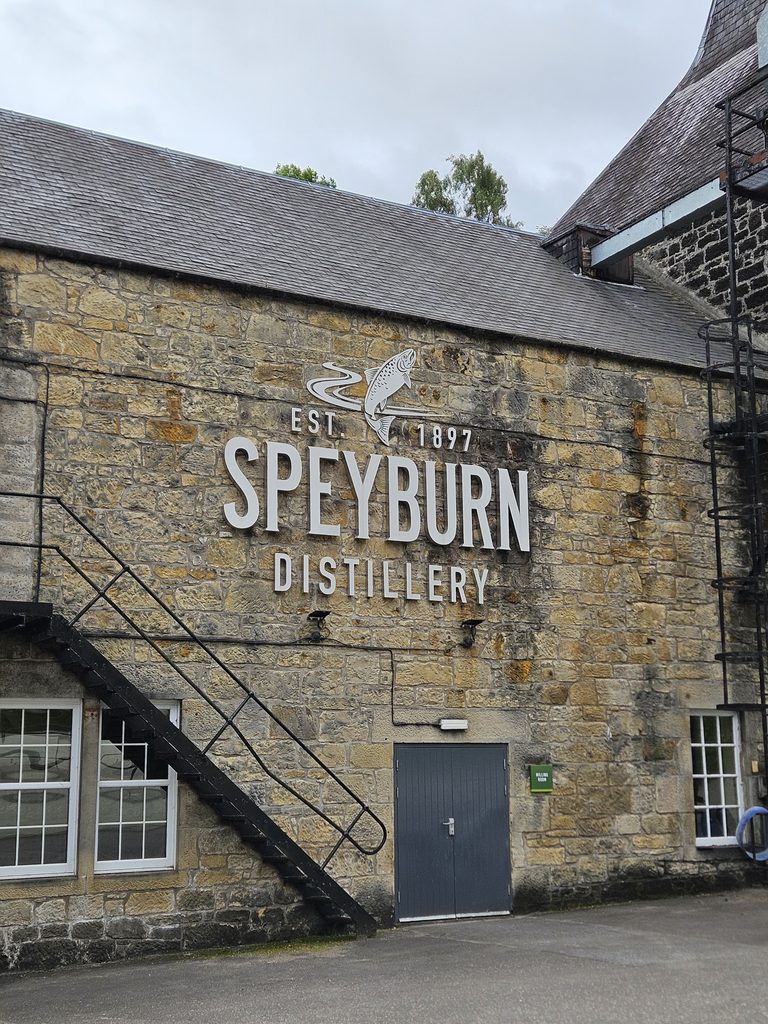
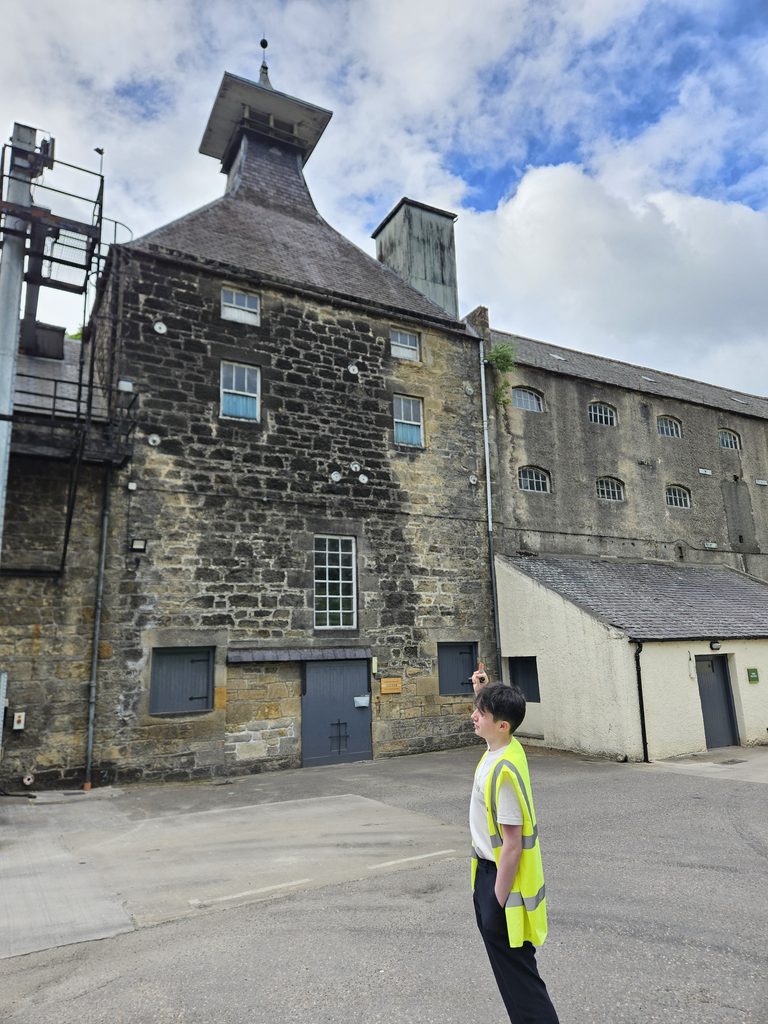
Exactly fifteen years ago, I visited Speyside with a gang of absolutely mad whisky friends. In between appointments, we would occasionally veer off the main road to get a closer look at some distillery or other. That’s how we found ourselves driving past Speyburn. It is a curious location, almost impossibly hidden from view as you pass through the landscape. Driving along the A941, an eagle-eyed passenger might just catch the tip of a classic Charles Doig pagoda poking above the treeline.
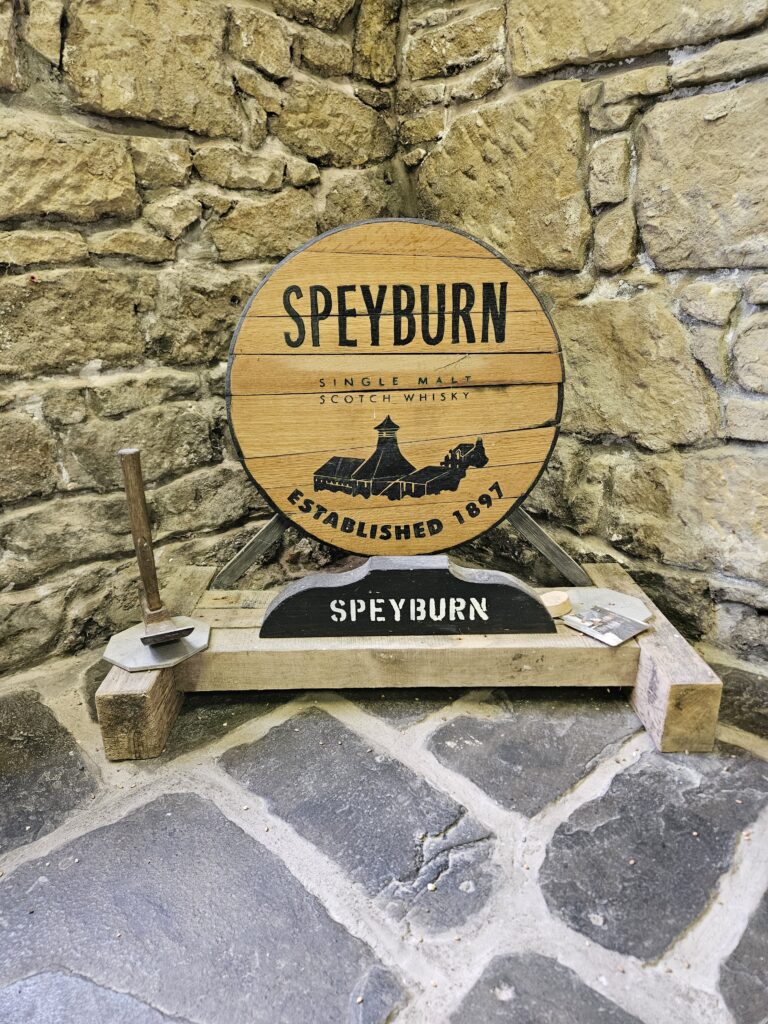
And that’s it. Nothing more. The location, though, was precisely why a distillery was built here. With the water of the Granty Burn right at the doorstep, gravity plays a natural role in the entire production process. In this modest little glen, there must surely have been some illicit whisky distilled in centuries past. Those days were long gone by the time John Hopkins worked himself to the bone to fill that very first cask with Speyburn malt. It simply had to happen before the end of 1897. That was the Diamond Jubilee year of the legendary Queen Victoria, after all. And his wish was granted: the first cask was filled at Christmas, in the midst of raging snowstorms. The founding year was secured, and it still takes pride of place everywhere you look throughout the distillery.
Staying Near Rothes
Speyburn Distillery sits on the outskirts of the small town of Rothes, which is already home to Glen Grant, Glen Spey and The Glenrothes. Distilleries in abundance! I stayed close by, at the Brylach Steading run by Louise and Janno. If you’re looking for the perfect base from which to explore Speyside, whether for whisky, salmon fishing or the great outdoors, I wholeheartedly recommend this self-catering stay. Your hosts are genuinely interested in why you’re visiting the region, and they’ll happily point you in the right direction with tips for Speyside.
On a Saturday morning I jumped in the car and was in Speyburn’s car park within five minutes. There I had the pleasure of joining a tour with two Dutch gentlemen and two American colleagues from a nearby army base. The latter two had fallen head over heels in love after tasting the Speyburn 18 Years Old. So much so that it had driven them north after a sleepless night and an eight-hour drive. Whisky does things to people!
The Drum Maltings
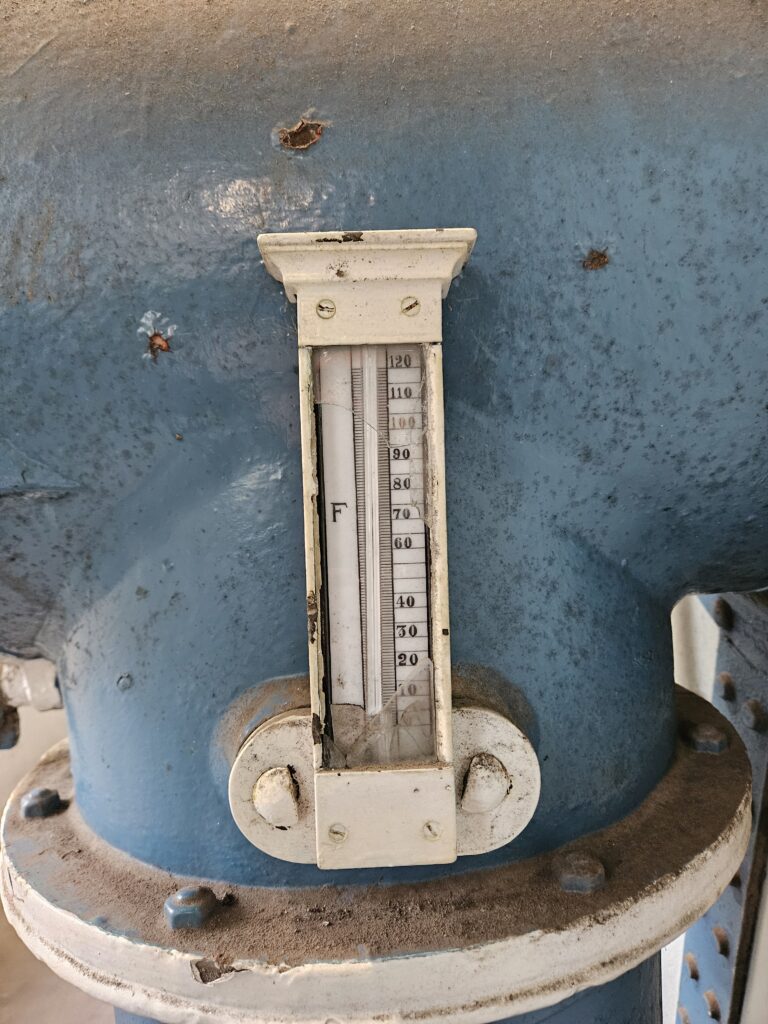
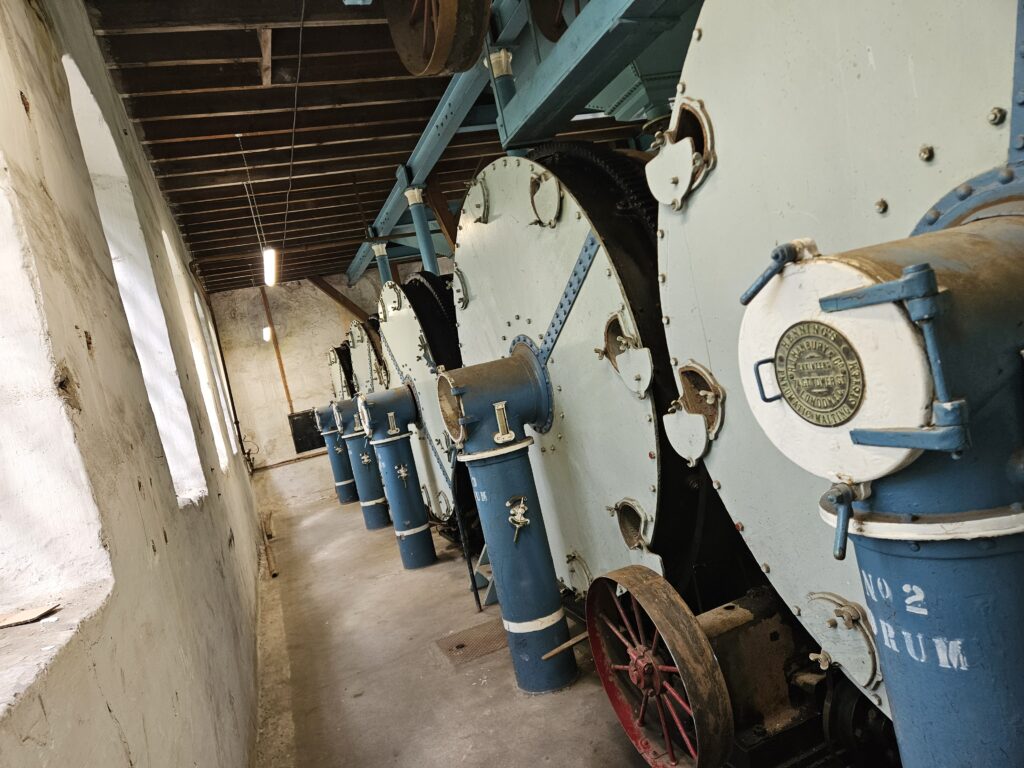
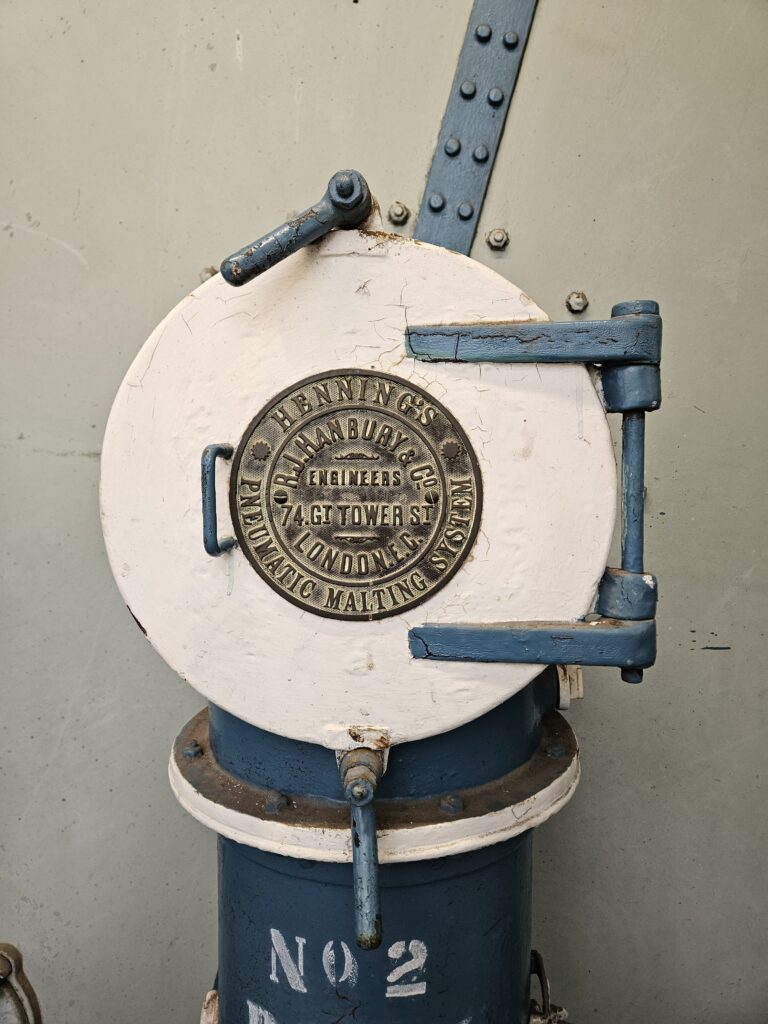
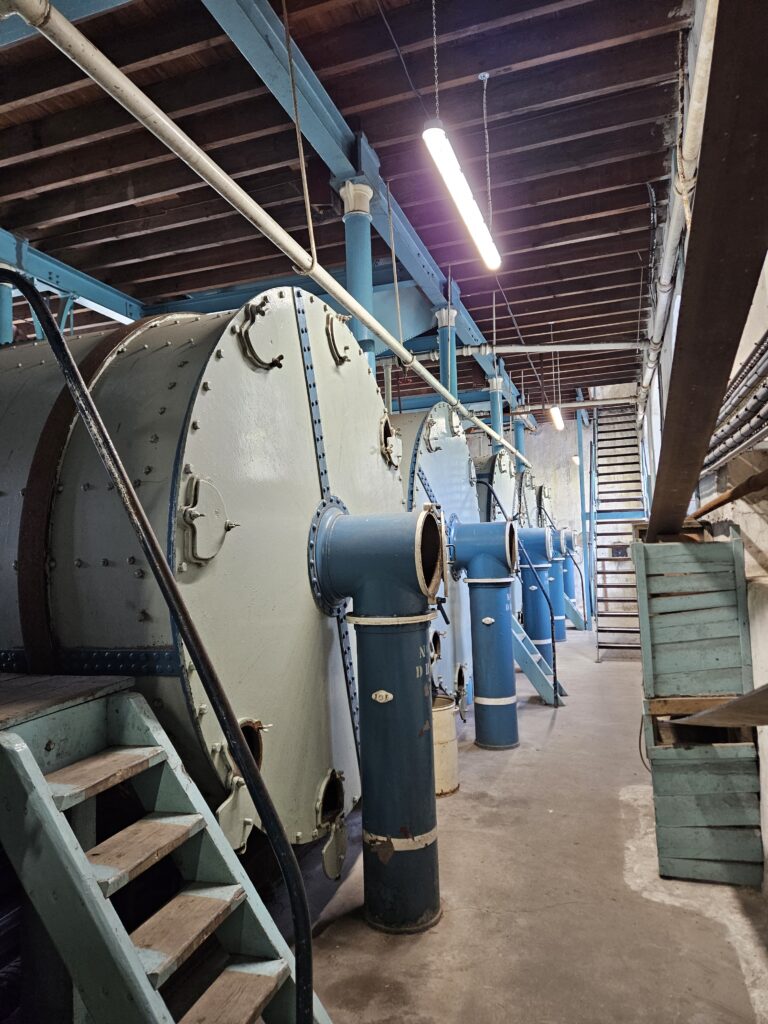
Speyburn has — to get straight to the point — an absolutely unique attraction in the form of five drum maltings. These are large steel drums that can rotate on a gear mechanism. Packed with wet malted barley, they allowed producers to halt the germination of the grain at precisely the right moment before moving on to the mashing and distillation stages. The enormous drums were acquired from a German brewery. The “Henning’s Pneumatic Malting System” was manufactured by R.J. Hanbury & Co. Engineers of London. From the very beginning, Speyburn never had a traditional malting floor. Instead, this process was mechanised from day one. More than that: the building housing the five drums was literally constructed around the maltings. When the drums were decommissioned in the late 1960s, nobody moved them. Getting rid of those gigantic things would have meant tearing down the building with them. Today they stand as something unique for us whisky nerds to stare at.
Running the Distillery
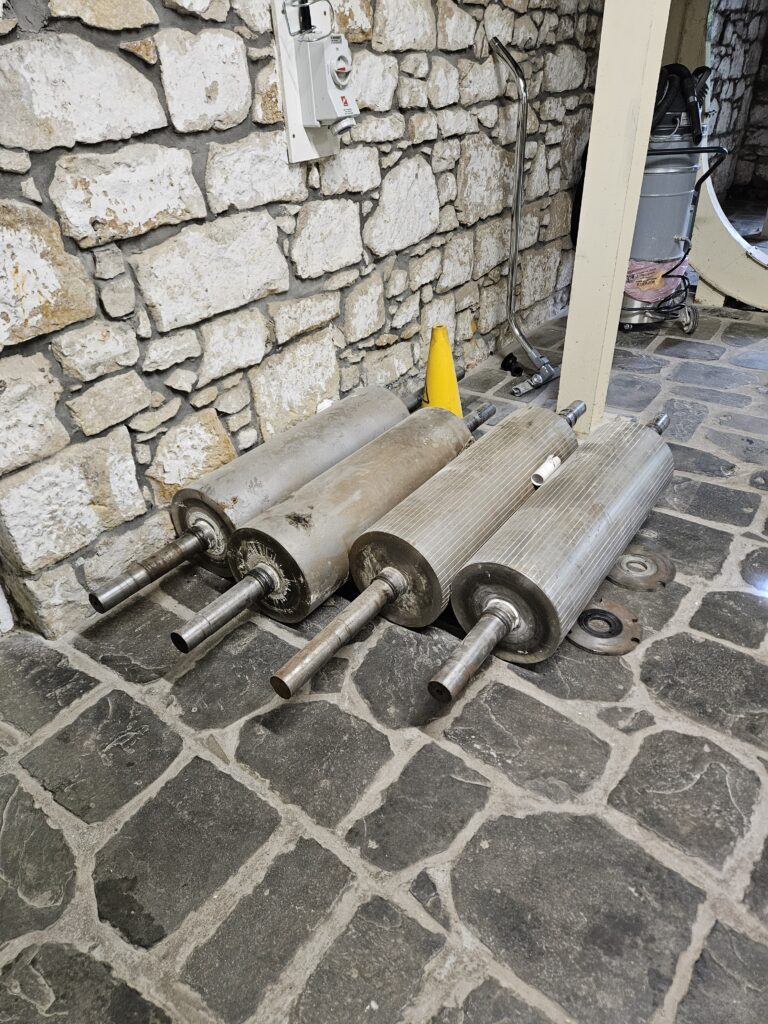
The drum maltings are a highlight right at the start of the tour, but there is plenty more to see. In the next room, close to the mill, lay four rather large roller mills on the ground. They have done their job. Every forty to fifty years or so, you need to replace these things once it becomes clear the malt is no longer being ground properly. That happened recently at Speyburn. According to our young guide, it was quite an operation that took several days. Sourcing replacement rollers is no straightforward order either, as distilleries like Speyburn (now nearly 130 years in operation) use very old mills. Speyburn runs a traditional Boby twin-roller mill. One that has been here since 1897. Try getting a spare part for that. But they managed.
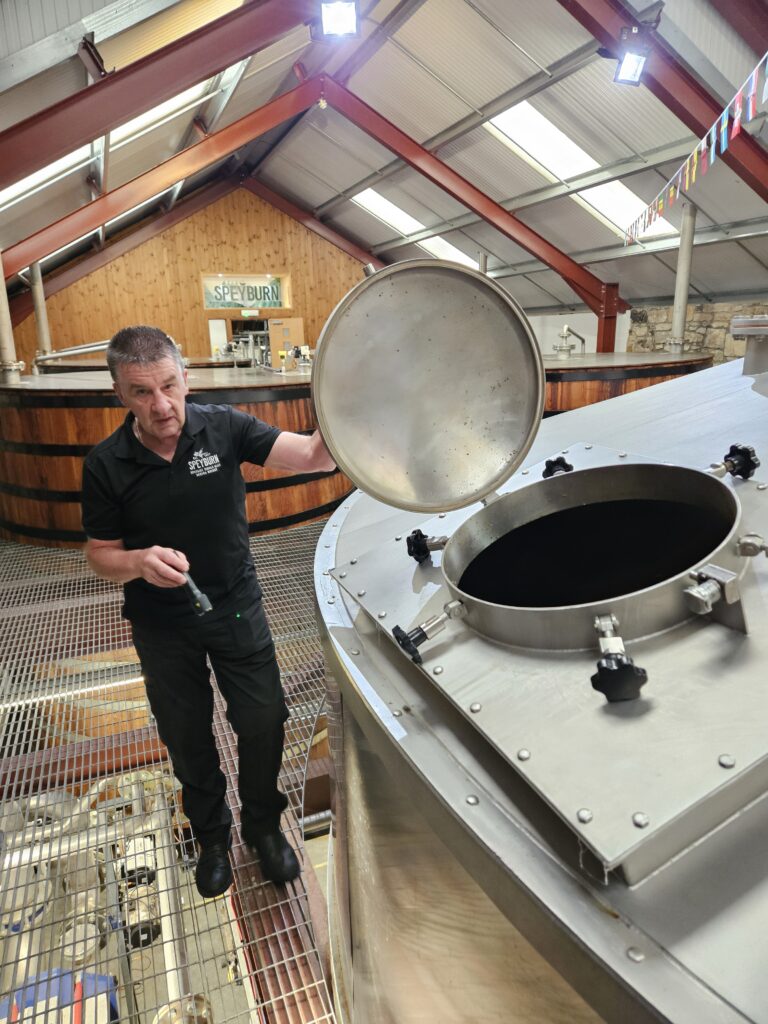
Production at Speyburn is going from strength to strength. The distillery is running at full capacity, as becomes abundantly clear during the tour when we spot a colleague working at the washbacks, where Speyburn’s wash is fermenting away. Alarms go off. The noise is deafening. Nothing to worry about, apparently, just the normal sounds of production, but still rather intimidating. Above the washbacks, football World Cup flags are hanging. Scotland would beat Haiti 1-0 that very night. Running at full capacity means Speyburn is producing 4.5 million litres of spirit per year. In 2014 there was a significant expansion, though the cramped confines of this little valley by the Granty Burn left limited room for manoeuvre. In practice, it mainly came down to adjusting working hours: the distillery now runs seven days a week, twenty-four hours a day. Production at sister distilleries in the portfolio, including Old Pulteney, Knockdhu and Balblair, has been scaled back though.
Tasting Time
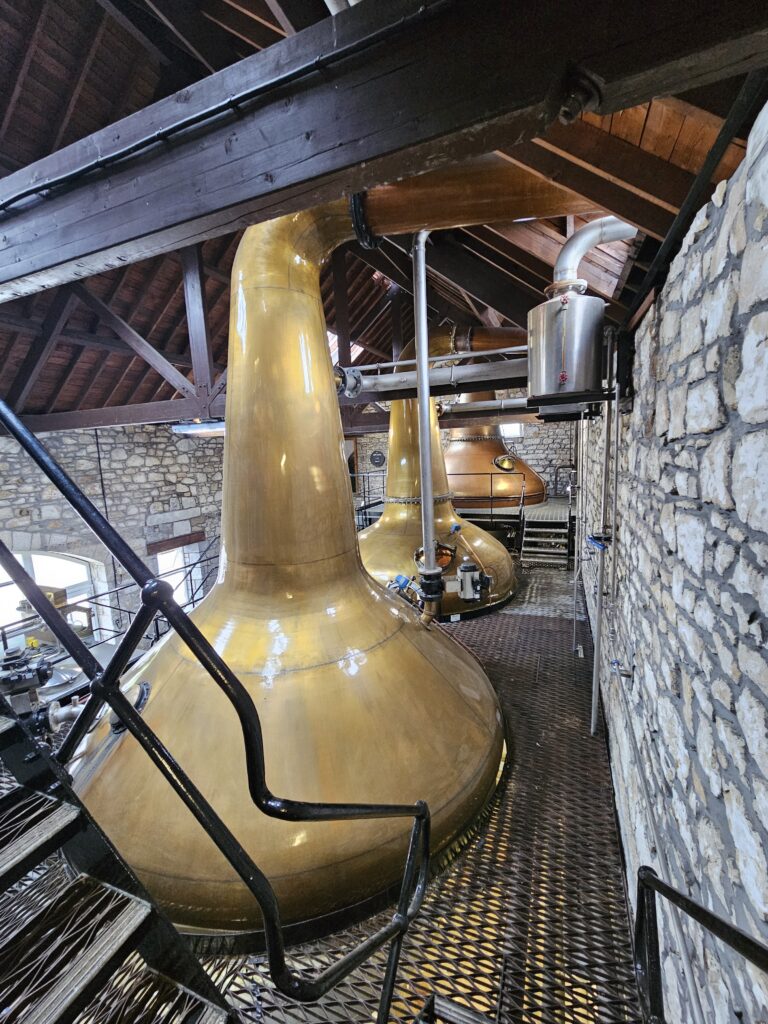
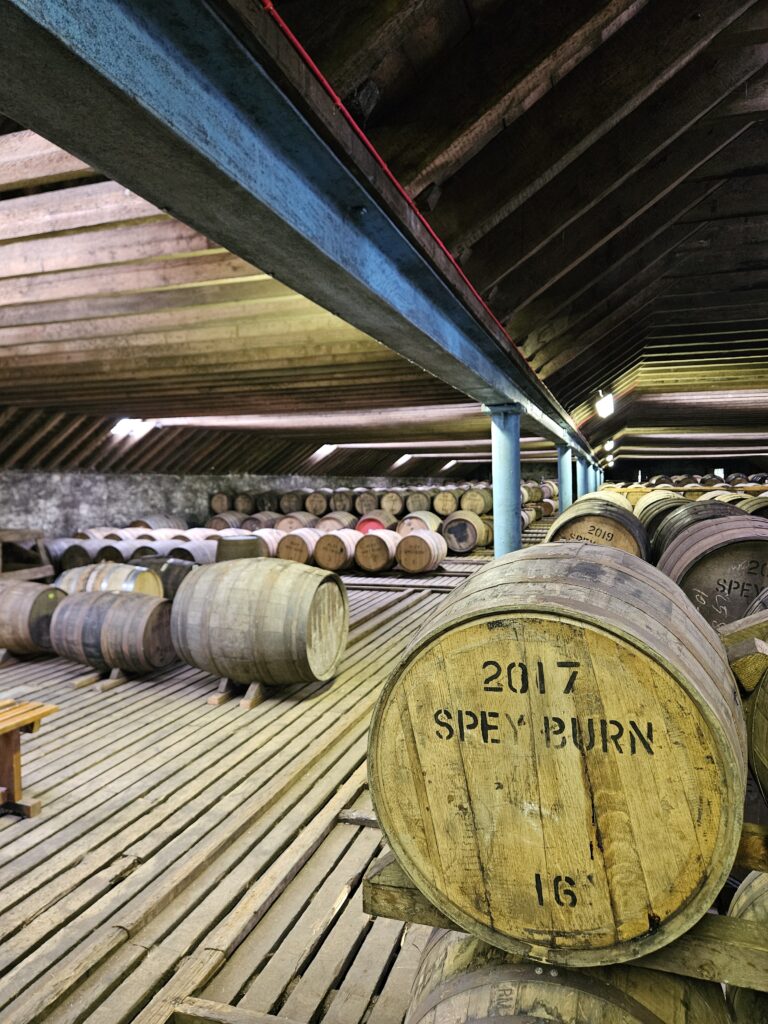
The tour takes us past the stills, which look magnificent. We get to stand outside on a grate above two enormous steel worm tubs. Then we walk on to the warehouses, where casks are lying in wait. Most of the production is transported elsewhere, but whisky is also maturing on site. Our guide points out a cask from the 1978 vintage which, funnily enough, I had brought a sample of back to its birthplace after writing a blog about it. A nice way to let the other guests and the guide have a taste. Back in the shop, we take our seats at a long table and sample a few drams from the standard range: a Rum Cask, a Bourbon Cask and the core 10 Years Old. The trick with the 1978 vintage works wonders, as we are generously offered a drop from a distillery-only bottling. As I still had to drive, I was able to take my sample home.
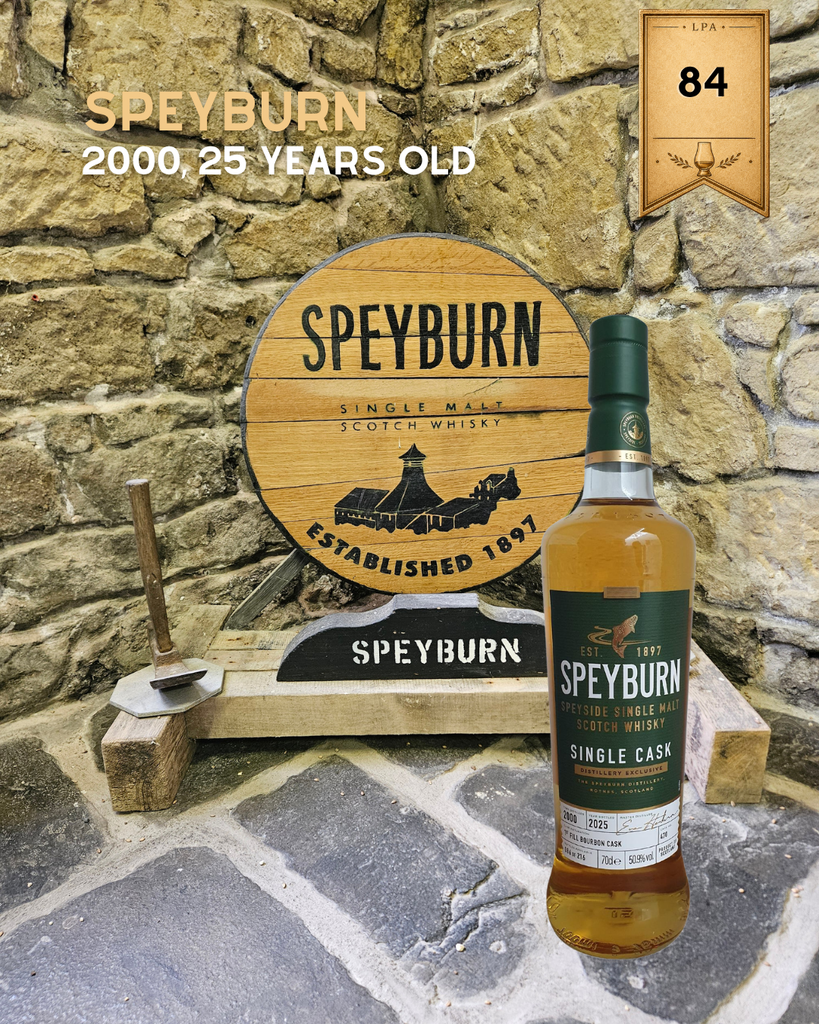
Speyburn 2000, 25 Years Old, bottled at 50.9% abv
First things first: Distilled in the year 2000, from first fill bourbon cask #470, this distillery exclusive for the Visitor Centre yielded 216 bottles. The cask was bottled in 2025, making this a 25 year old.
Upon Sipping: Enjoyable tropical fruits on the nose, without getting too woody or too heavily driven by vanilla, which was my main concern given this is a first fill barrel. The spirit has held its own very well. Granted, there might be a suggestion of sawdust in the air. Soon enough the banana takes over and it becomes properly fruity again. On the palate, the first sip delivers a sharp, oaky liquid with some interesting spices, though the fruit is unfortunately dialled back a touch too much. Add a little water, however, and this 25 year old becomes considerably more pleasant to drink. More fruit bursts forth, like someone opening a bag of gummy bears right under your nose. Yellow apple skin, a hint of mint, and finally a wave of vanilla. Well-hidden until now, but at this point it feels most welcome. There is a touch of waxiness and hints of limestone. A very summery dram, without a doubt. On the palate, the wood steps back in favour of banana and dry cheese crackers, almost with a pinch of salt. The finish remains typically bourbon-cask warm, if you know what I mean. You keep wanting just a little more fruit.
Word to the Wise: A rather peculiar choice as a distillery exclusive, and it does not knock me off my feet. The ambitious £250 price tag had me expecting more. Taste before you buy!
Score: 84 points.