How the Lights Are Coming Back On in Remote Cabrach
The first cask of spirit at The Cabrach Distillery was filled by men whose grandfathers shared not only a lifelong friendship but also a heartfelt vision of bringing back whisky distilling to The Cabrach. The story of this (future) whisky is about far more than the distillate itself. The Cabrach Distillery, a community-interest-company, was established to provide a lifeline for a region that has long been deserving of regeneration. This is the remarkable tale of the fall and rise of a fiercely independent corner of Speyside, set on the edge of The Cairngorms.
Text and photography: Tom van Engelen – www.longpouramour.com
It is just over twenty years ago that the spark jumped and I became a passionate whisky lover. With my student debts paid off, I kept trying new bottles, kept pushing into new corners of the whisky world. Just about every single malt came with a story on the back label or the tube that fired the imagination. I devoured those texts, hungry for knowledge and impressions. Where had these beautiful spirits flowed from the still?
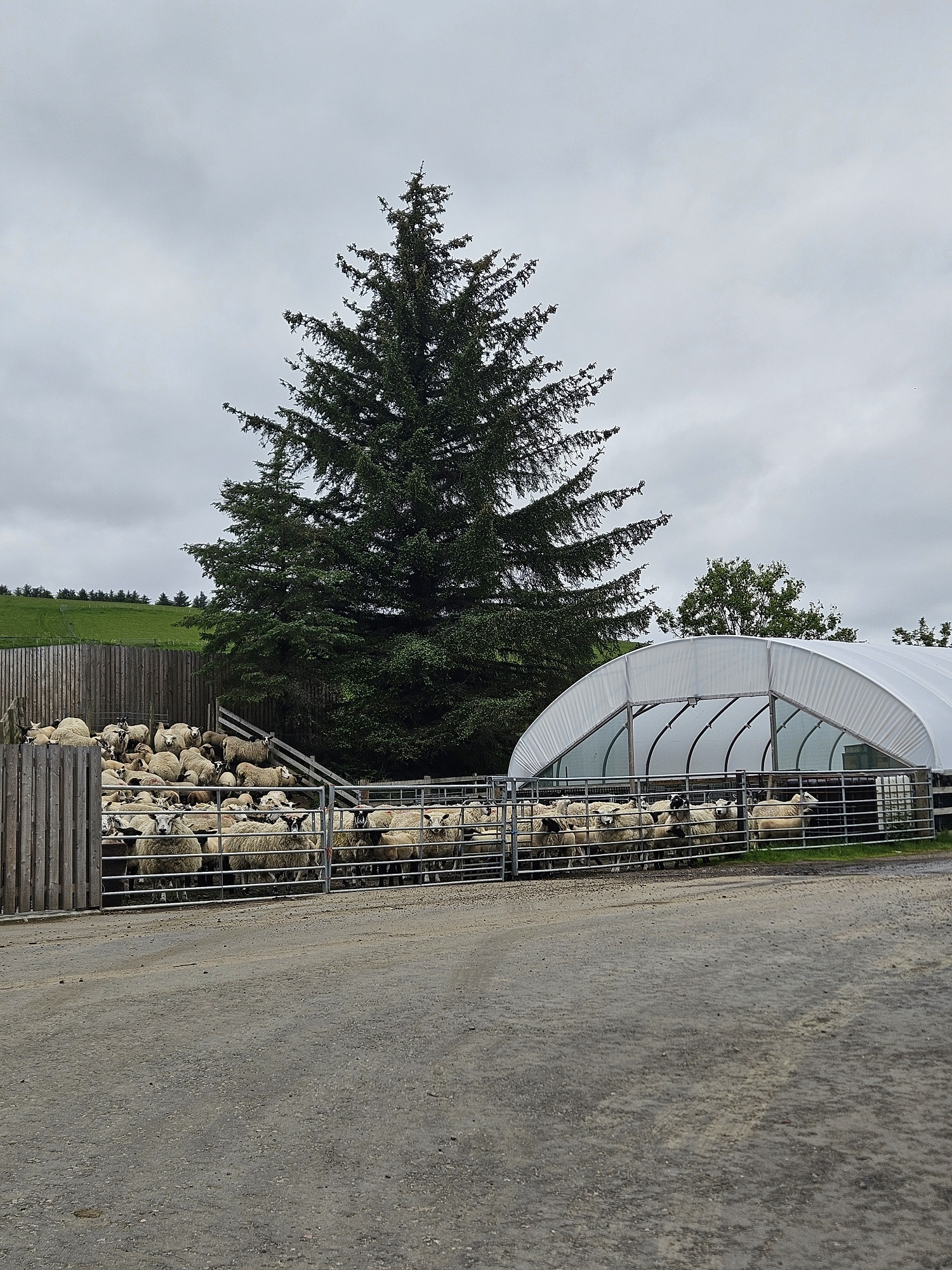
From the Strath of the Isla, from the shadow of Ben Rinnes, or from small buildings tucked along the burns that feed the mighty River Spey? On a clear Monday morning in June, I drive out of Dufftown, passing The Balvenie and Mortlach distilleries, heading into what may well be one of the most famous glens in all of Scotland. I follow the Glen of the Fiddich for a while, and as the kilometres slip by under me, the hills rise higher, the grasslands grow greener, and the houses become fewer. Then I arrive in The Cabrach. The name inspires a kind of awe. I zigzag along country lanes, dozens of rabbits and hares darting into the verges ahead of me. Then I arrive at historic Inverharroch Farm, sitting proudly on the top of the hill, now home of The Cabrach Distillery. The story I hear here reveals the deep connection between community, whisky and a glorious past.
The Lights Went Out in The Cabrach
The Cabrach is a remote and fragile Highland parish situated in a valley just over from the Fiddich Glen. Around 1900, a thriving highland community of about a thousand souls existed. They were mostly farmers who made their living from the land. They had their annual celebrations (the Cabrach Picnic) and looked out for one another. By 2026, the number has diminished to around 61 people. The Highlands are no stranger to the impact of clearances, but the depopulation of Cabrach was a slower, more painful process. The diaspora out of The Cabrach was fuelled by change in land use and not last the effects of the two World Wars. Having a disproportionate impact on this fragile community, historians refer to The Cabarch as ‘the biggest war memorial in Europe’. Fathers, brothers, sons – never came back from the battlefields in Europe. Where once lights had burned in the windows of farmhouses, over the past 100 years ‘The lights went out in The Cabrach’ – and the few inhabitants left still watch for their neighbours’ lights coming on at dusk.
In recognition of a century of depopulation, decline and underinvestment and with the ambitious vision to regenerate The Cabrach, ‘aiming to turn the tide’, the Cabrach Trust was formed in 2013. Since its inception, wonderful projects have been achieved, creating innovative well-being assets for the community: the restoration of the Old Smiddy – now the home of the Trust’s Rural Skills and Wellbeing programme; the installation of a 2 kilometre all accessible Discovery trail; the creating of a wildflower meadow and two nature ponds, complimented by the planting of 3000 native trees as well as willow to restore the banks of the river Deveron, one of the main water courses of The Cabarch. The community is beginning to flower again. The Cabrach Tweed and Cabrach Tapestry are further community-led projects, facilitated by Community and Development Manager Sam Dowdall, both ‘artistical documentation’ to preserve The Cabrach’s unique tangible and intangible heritage. Light by light, stitch by stitch, however it happens, the glow is returning to The Cabrach.
A Flourishing Illicit Trade
The history of whisky making in The Cabrach is recounted to me by Constanze, the Distillery’s Experience Lead, who welcomes me warmly at the latest project of this region’s renewed vitality: a whisky distillery that has been in production for just over a year. It is a small, charming operation. The yearly spirit volume it produces could be matched by Glenfiddich (its nearest neighbour) in a single day. But that is entirely beside the point. Here at The Cabrach Distillery, everything serves the purpose of breathing life back into what had seemed utterly withered. After 170 years of silence, once more, distilling Whisky with a mission; whisky with purpose.
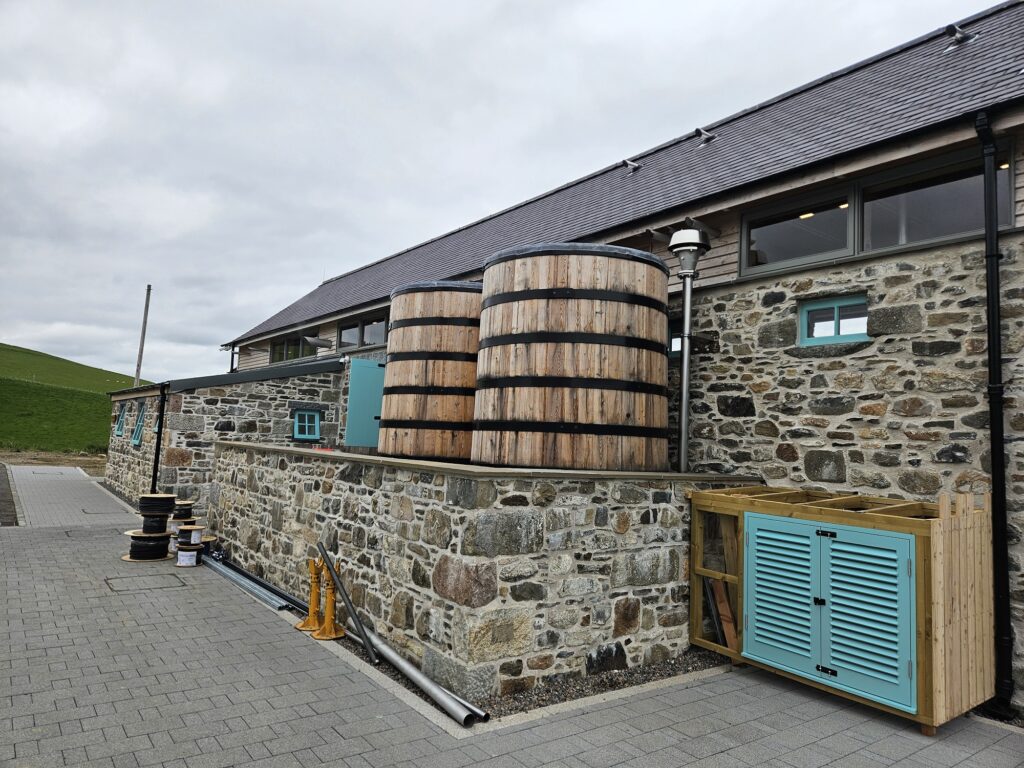
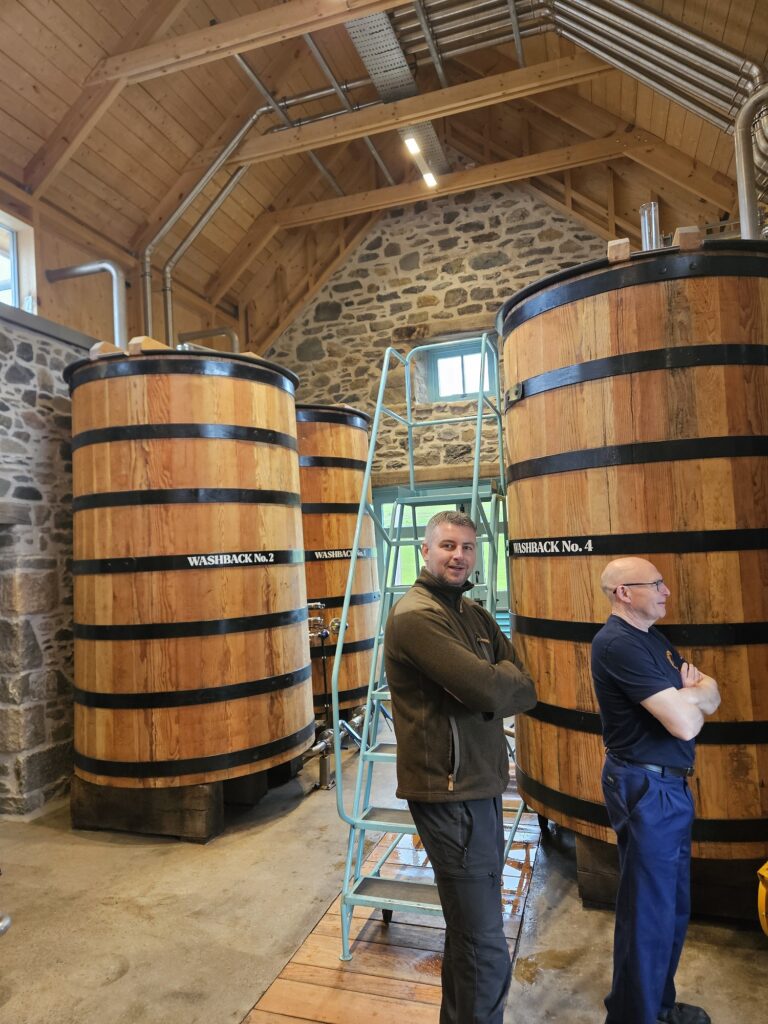
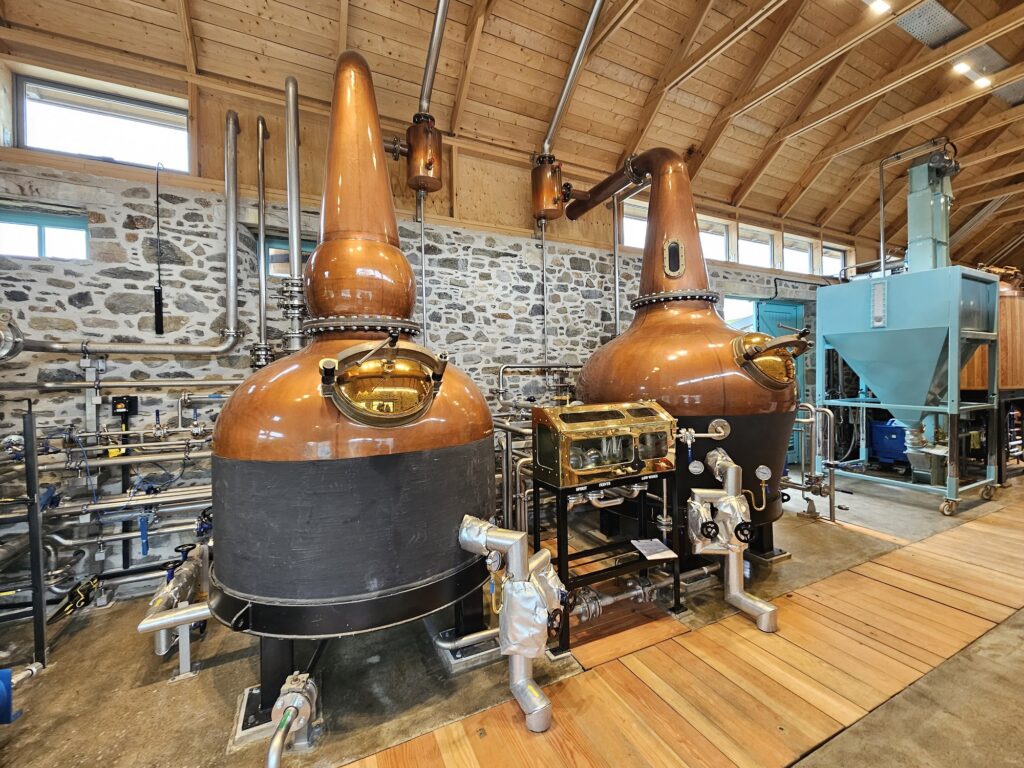
“The distillery, a one of its kind community-interest-company, is phase one of what The Cabrach Trust wants to build here at Inverharroch Farm,” Constanze explains. She walks me through the steading building that houses the entire operation, from mash tun and wooden wash backs to stills. The historic farm steading buildings have been carefully restored, the walls perfectly re-appointed by local stonemasons. “We did have to raise the roof slightly so the new stillhouse equipment would fit inside. Everything else is kept original. The farm’s history can be traced back to the 700s, though the building itself dates from 1849. Chief Executive Jonathan Christie reflects on a remarkable journey with The Cabrach Distillery’s architecture already winning awards: “There are moments in any long journey that encourage us to pause and appreciate distance travelled. Learning that The Cabrach Distillery has received the Aberdeen Society of Architects’ Commercial Award is one such moment. This award is a recognition of outstanding design and architecture, but it is also recognition of a community’s ambition, perseverance, and belief in itself.”
Next to the historic farm steading stands a brand-new building, The Peat Shed, which is where the malted barley is milled, as well as housing the boiler room. A forklift carries the grist bin from a specially adapted storage area towards the mash tun in the stillhouse.
Constanze is not exaggerating when she says that this region was once a worthy rival to the Glenlivet. “Our approach to distilling whisky is absolutely a tribute to the days of illicit distilling in these hills – once home of up to a hundred pot stills. In terms of quality, The Cabrach’s was considered on par with Glenlivet. Strategically on the drovers’ roads from The Black Isle, The Cabrach and its ingenious farmers benefited from a roaring trade in its heyday. We have some wonderful stories passed down generations about how the government excise men were outwitted. Such as a farmer riding a white stallion to warn his neighbours whenever the taxmen came over the hills. And when something subtler was needed, they would hide their illicit goods in a coffin, or the families would hang their laundry in a particular way. This was an unmistakable signal to hide your equipment at once. There are records that show that if men were caught in illicit activities, it was never in The Cabrach but in the markets of Aberdeen, at one time up to 80 men at once.
Challenges with Local Grain
For a small distillery like The Cabrach, working with local grain sounds like the obvious choice. The team is indeed proud to say they use Firefoxx, a barley variety grown on the slopes below the distillery itself. But Constanze is quick to add that home barley comes with its challenges: “Firefoxx grows particularly well here, although the growing season can be short. We aim to plant early in April and harvest, as opportunity allows, in September. When everything aligns, the result is a beautiful harvest allowing us to make a single farm whisky in The Cabrach. We won’t sow barley every year, as we believe it’s important for our soil to rest.” All production associated with The Cabrach’s home barley carries additional significance and is separately matured. “Volume is not our priority,” says Constanze. “Our home-grown barley accounts for approximate 20%. For core production, The Cabrach sources Historic Banffshire malt from farms across the wider region.”
The Cabrach has chosen to lightly peat their malt, as tradition demands. For this they use peat sourced from St. Fergus Moss (Peterhead, Aberdeenshire) with the barley malted in small batches at Glen Esk Maltings in Montrose, Angus. Highland peat, with its heather-rich vegetation, bears no comparison to Island peat. “We malt to 12–14 ppm, of which around 3–4 ppm remains in the distillate. Subtle, like a signature, but definitely perceptible.” We speak with John Stephen, Head Distillery Operator, who made the leap from the oil and gas industry into distilling. The technical side appeals to him. “There are no automated processes, and we can get involved in all production steps which is quite rare.” By his side is Distillery Operator Iain Duncan, who earned his spurs at Allt-A-Bhainne Distillery in the heart of Speyside.
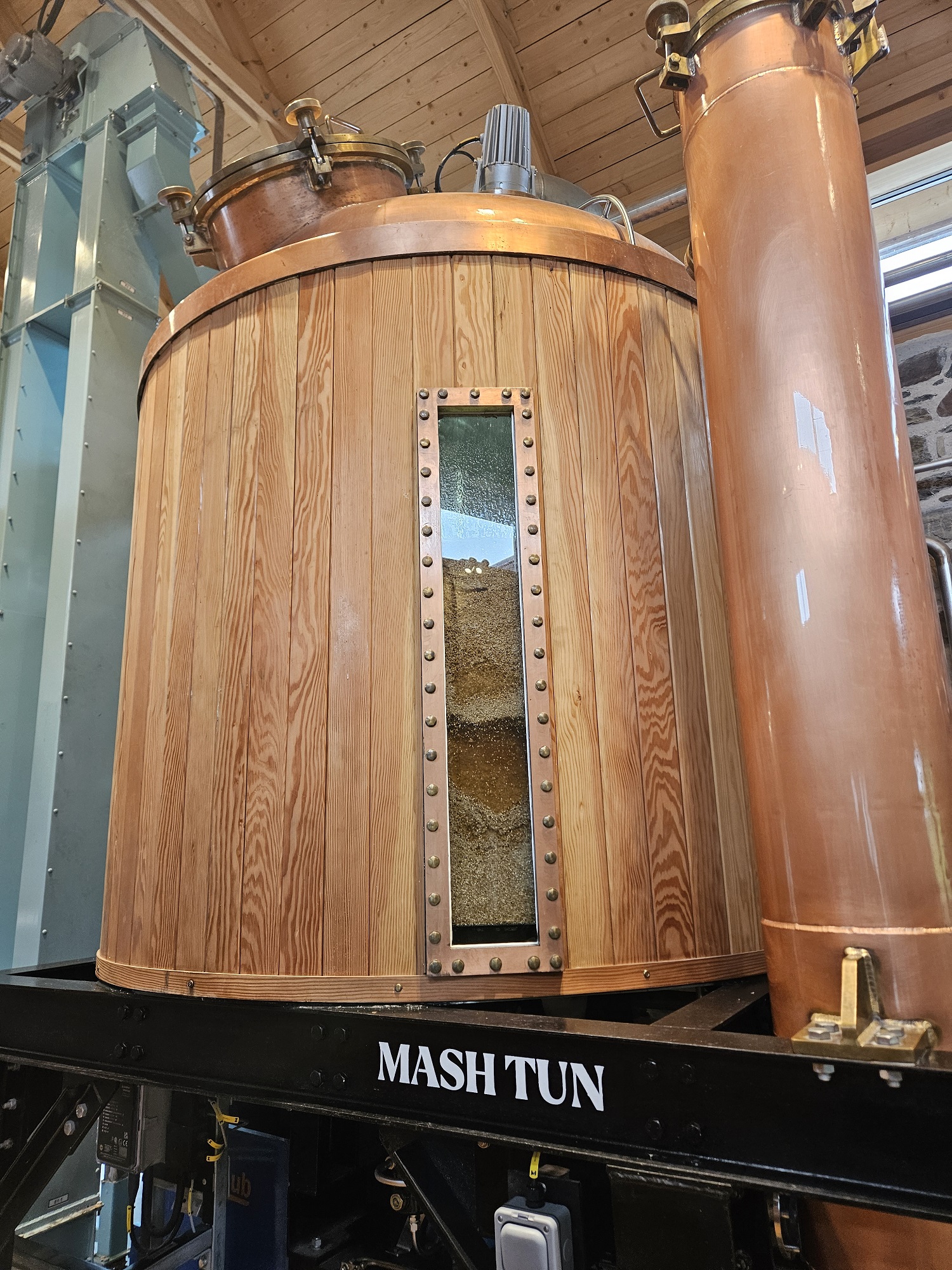
Meanwhile, we watch a mash being carried out. Unlike other distilleries, you stand at the foot of the equipment here and look up at it. The mash tun features an unusual addition: a small vertical window showing how the mash behaves as the sugars are extracted from the grist. All production water comes from a private well. Nothing is drawn from the three rivers surrounding Inverharroch Farm, naturally, also to avoid any impact on the local environment. The wooden washbacks are compact. The Cabrach lets fermentation run a comfortable 168 hours, with two types of yeast, distillers as well as brewers being used to aid the desired fruit-forward character of the spirit. “We have one cask filled with a distillate fermented for 1,000 hours. That is indeed over forty days.”
Distilling and Maturing
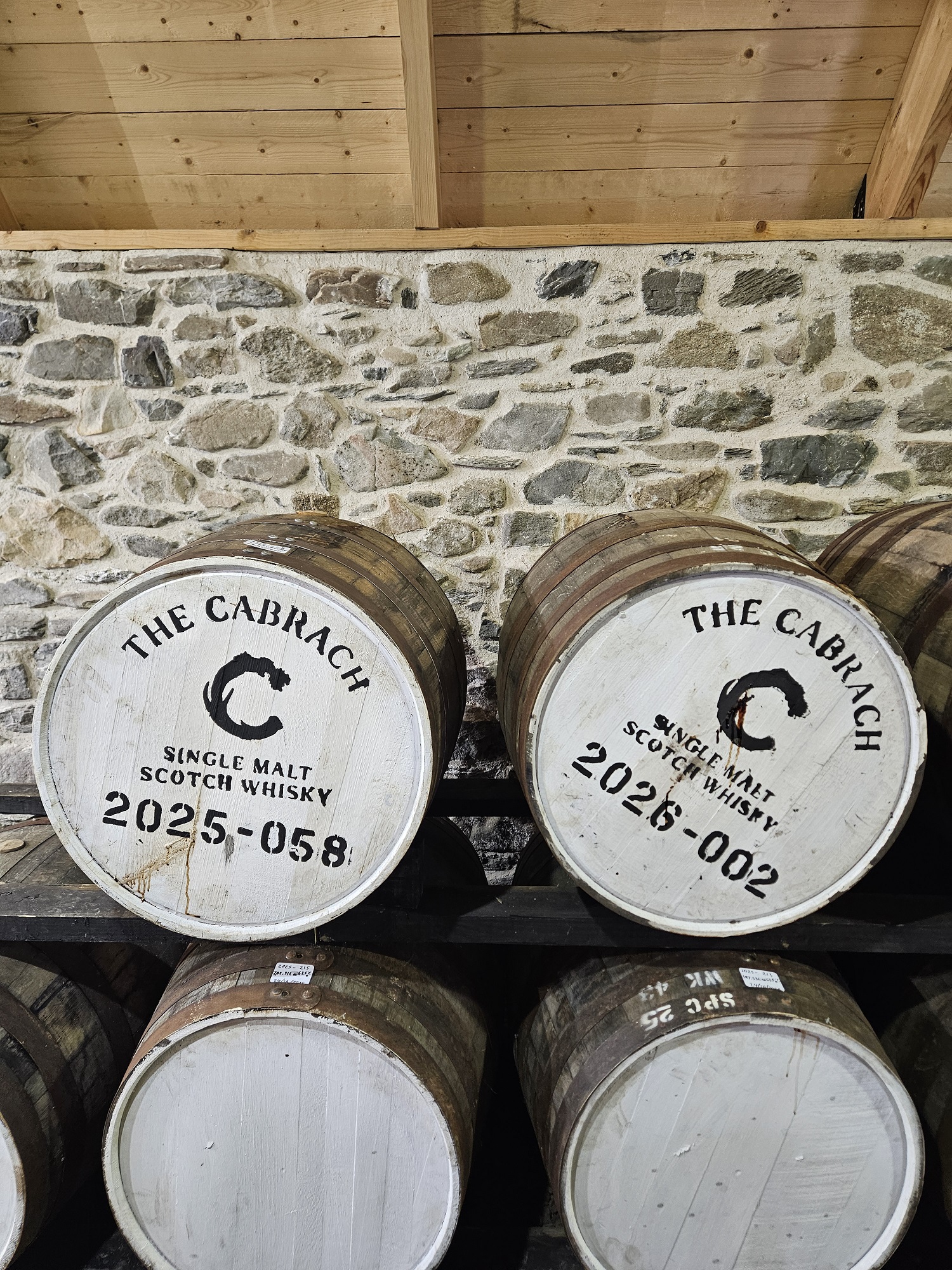
All equipment at The Cabrach Distillery was made by the renowned Forsyths, including obviously the stills. After an initial trial period, around 40,000 litres of new make were produced in 2025. The target for 2026 is 60,000 litres. The wash still holds 2,100 litres, the spirit still 1,800 litres. Distillation is deliberately slow, at 1.5 to 4 litres per minute. “With retired master distiller of The Glenlivet Alan Winchester, we have a giant in the house who steers us in the right direction. A team of advisors is also involved. For the past twelve months we have been genuinely delighted with what we’re producing,” says Constanze. As of mid-June, 438 casks have been laid down.
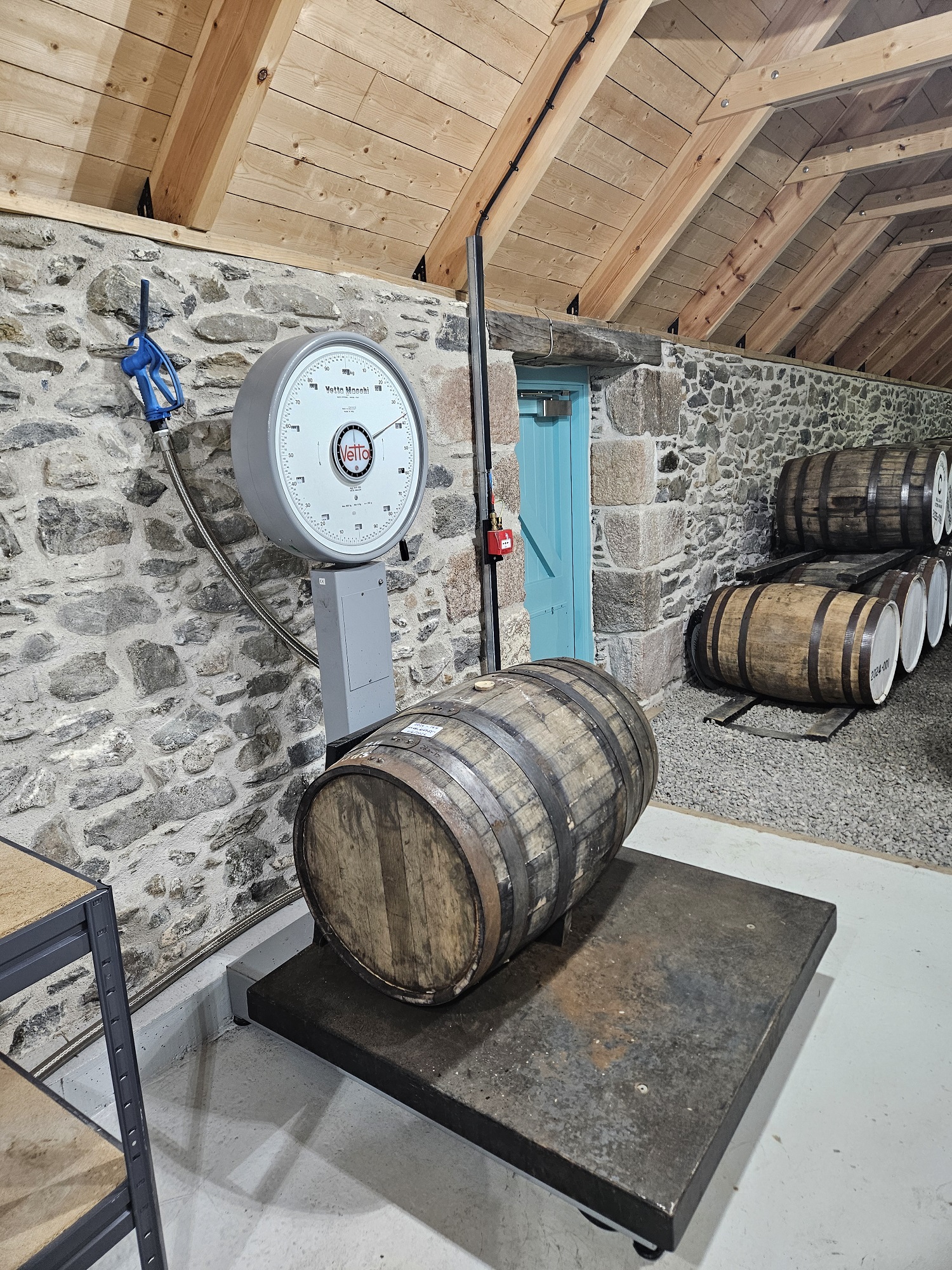
That their distilling neighbours have a soft spot in their hearts for The Cabrach is clear from the ‘second to none’ generosity with which help has been offered. The distillery received a donation of no fewer than 35 casks from four Speyside distilleries. As my tour concludes in the distillery’s dunnage warehouse, a bulky sherry butt from Glenfarclas stands out, bearing a writing that it was a gift. “The Grant family of Glenfarclas said they would only come to our opening ceremony if they were allowed to donate a cask,” recalls Constanze with a smile. Shortly afterwards, we taste a wee sample from this cask. The sherry tones have already set the fruity spirit of The Cabrach firmly on the right path. The distillery aims to release their first Single Malt Whisky in 2030 or 2032, being no younger than 8 years old. However, the whisky will determine this decision, so patience is still required.
Cabrach in Scottish Gaelic, albeit different translations exist, refers to the land of antlers and trees, and this is reflected in the distillery’s beautiful logo: a deer antler, within the curve of the C, slowly transforms into a native Rowan tree sapling on the verge of blossoming. Fresh new leaves, symbolic of returning life to this remote corner of the Highlands. We step outside the dunnage warehouse, leave the casks to sleep on, and Constanze points out to me, there in the courtyard, the other two 1849 steading buildings to house phase two and phase three of the Inverharroch Farm project: a heritage and visitor centre, and a tasting room with bistro. All in good time, this is a long-term vision. There is no shortage of ambition, and The Cabrach is already delivering on it. Slowly, the lights are coming back on in The Cabrach.