The Pearl of Speyside, Polished to a Shine!
The Tormore Distillery’s nickname is The Pearl of Speyside, and anyone who has ever driven from Grantown-on-Spey towards Aberlour knows exactly where that name comes from. As you glide through that glorious bend in the A95 and the majestic buildings drift past, you cannot help but gawp at the architectural splendour before you. But the whisky? Respectable Speyside malt, making no waves, doing what it needs to do. Until recently, that is. Under new stewardship by Elixir Distillers, a bright future awaits Tormore.
Text and photography: Tom van Engelen – www.longpouramour.com
Today I am approaching Tormore from the direction of Aberlour. As I drive along the A95, stopping here and there for traffic lights marking roadworks, my mind wanders back to my first encounters with the single malt whisky produced at this distillery. Years ago I picked up a 30 Years Old single cask from the 1980 vintage (my birth year) at auction. Stunning fruit notes. Other experiences? Oh yes, one of the finest whiskies I have ever tasted was also a Tormore: a 1966 vintage bottled at 16 years of age by Italian legend Silvano Samaroli. But was that bottling so extraordinary because it was Tormore, or did the astonishingly brilliant sherry cask in which the Speyside malt had been allowed to mature deserve most of the credit? On balance, Tormore has great potential that has rarely been truly fulfilled.
We are greeted by Mr. Oliver Chilton, Head Blender at Elixir Distillers, who lives next door to the distillery. Since Elixir’s takeover of Tormore, Chilton and his team have been digging energetically into the relatively short but rich history of the place. Short by whisky standards, that is. “Although it was clear from the outset that Tormore was going to supply liquid for blended Scotch such as Long John and Black Bottle, there were immediate compliments for the quality of the malt being distilled here. We found letters in the archives to support that. So casks were being filled here quite early on with single malt releases already in mind.” Anyone who regularly browses auction sites will indeed have noticed that official Tormore bottlings stretch back several decades. Charming Speyside whisky, very well suited to the American palate. Success on the scale of The Glenlivet, however, was never on the cards. In the end, Tormore became primarily a bulk supplier to the famous Ballantine’s blend.
New Energy in an Old Complex
Walking alongside Chilton, it is impossible not to notice that the air around the distillery’s offices crackles with energy. That may have something to do with the fact that days before my visit, a fresh core range was unveiled: a no-age-statement expression called “Timeless”, a pale-coloured 12-year-old, and a 16-year-old bearing a clear sherry signature. People are bustling past each other in every direction. In a small room we briefly meet Distillery Manager Polly Logan. Outside, it is frantic. “It’s silent season, but there’s nothing quiet about it,” Chilton remarks, sliding his name on a large board to ‘present’. Outside, the smell of tarmac hangs in the air as a hired work crew carries out repairs.
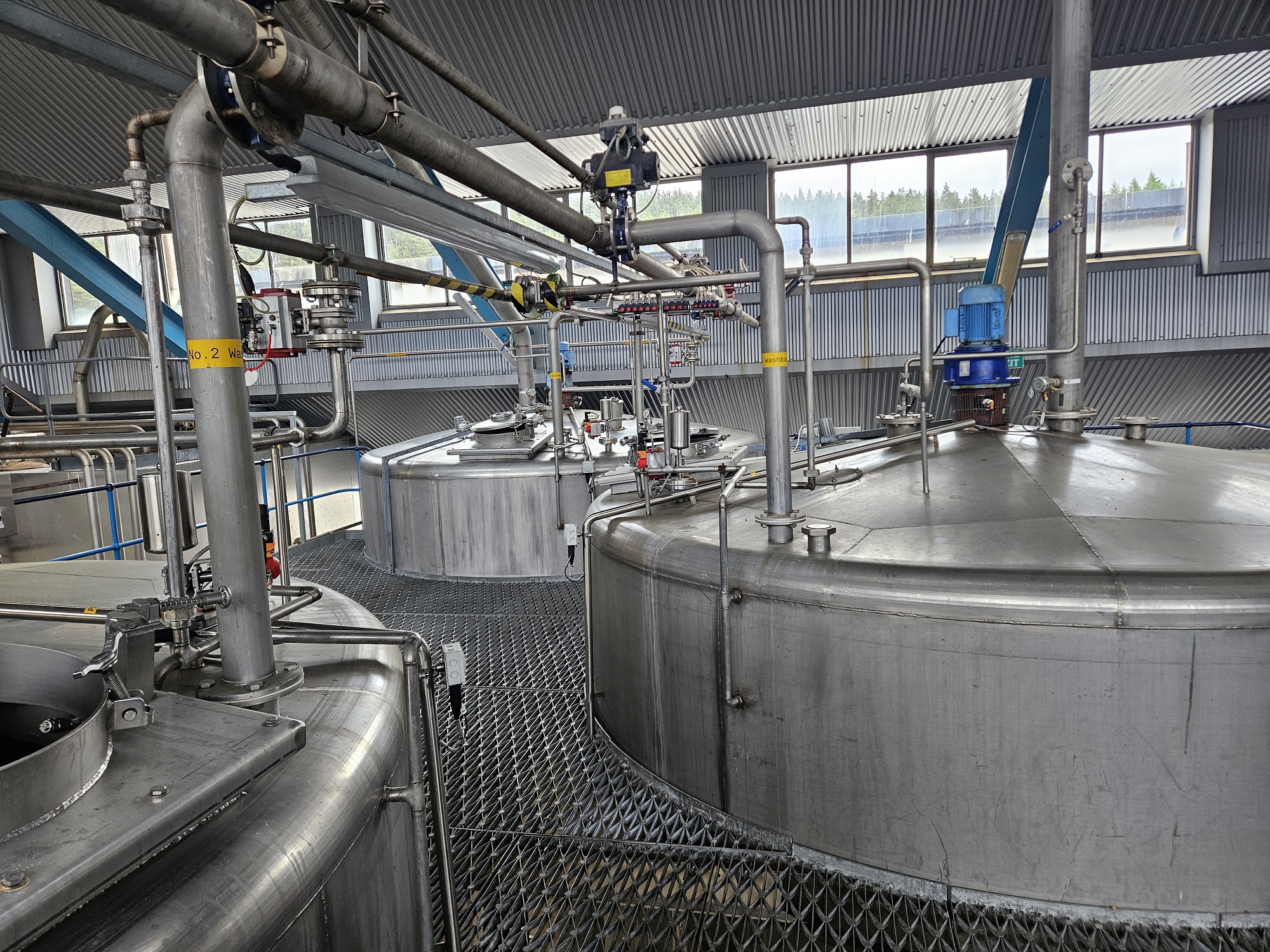
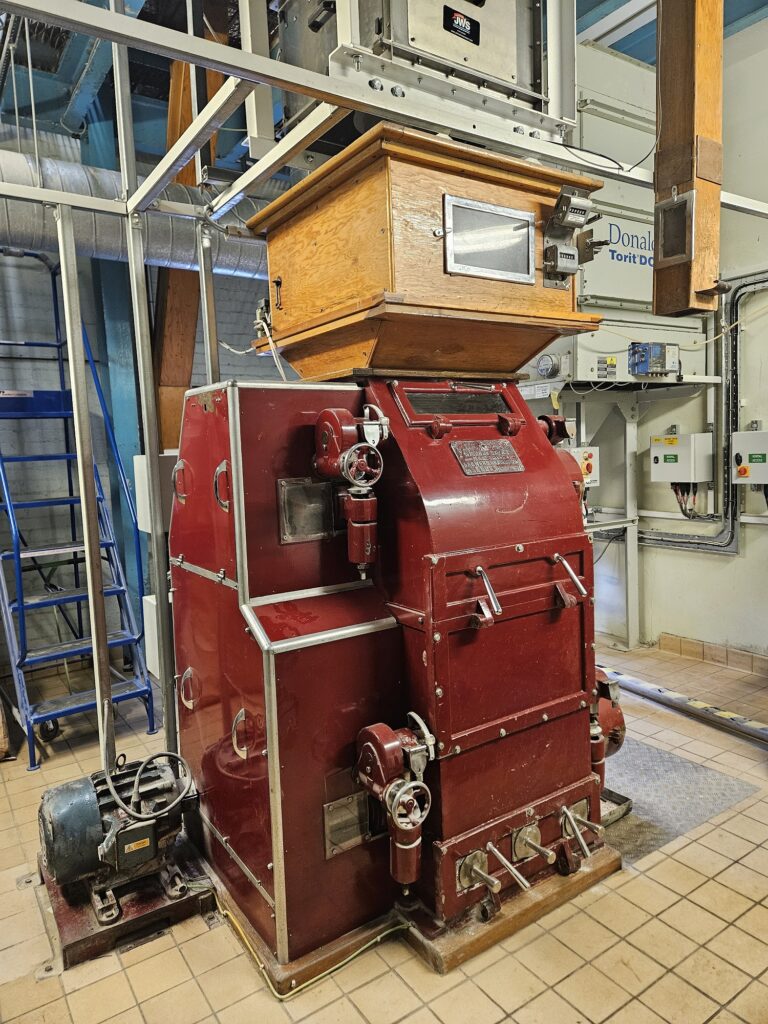
As we step into the space housing the large grain bins, Chilton begins to talk. “The biggest change since Elixir took Tormore under its wing is the arrival of far more people. There are now close to thirty staff on site. Previously, the distillery was run by two people per shift. Tormore must have felt like a ghost town back then. Things look rather different now. We have plenty to keep us busy, especially carrying out repairs.”
A History of Tormore
Tormore was the first new Scottish distillery to be built in the twentieth century. Around 1958, the ground was broken and the striking building rose from nothing. The commission came from American company Schenley Enterprises, owners of Long John Distillers. Ironically, chairman Lewis Rosenstiel had amassed his vast fortune during Prohibition. Now he needed liquid for blended whisky. Global demand was rising sharply. Architect Sir Albert Richardson was brought in, and he was going to do things rather differently. If you look at distilleries built at roughly the same time, you see ugly concrete boxes. Think GlenAllachie or Allt-a-Bhainne, buildings from which charm does not exactly ooze.
Tormore took a different path, though at the expense of the functionality of what actually needed to happen on site: making whisky. This is where a link with Winston Churchill enters the picture. His former Minister of Information, Brendan Bracken, was closely involved in attracting the right people for the design of Tormore – both Richardson and Scottish writer Neil M. Gunn. “The initiators wanted to reinvent the distilling of malt whisky. But Richardson was ‘completely mental’. He worked by candlelight and had a fondness for community buildings,” says Chilton bluntly. “The first sketches for Tormore looked more like a lighthouse than a distillery.” Ultimately, those old Romantics, Richardson and Gunn, created a building that does indeed have the feel of a rather grand village hall. There is in fact a sort of community room where, in other times, badminton was played.
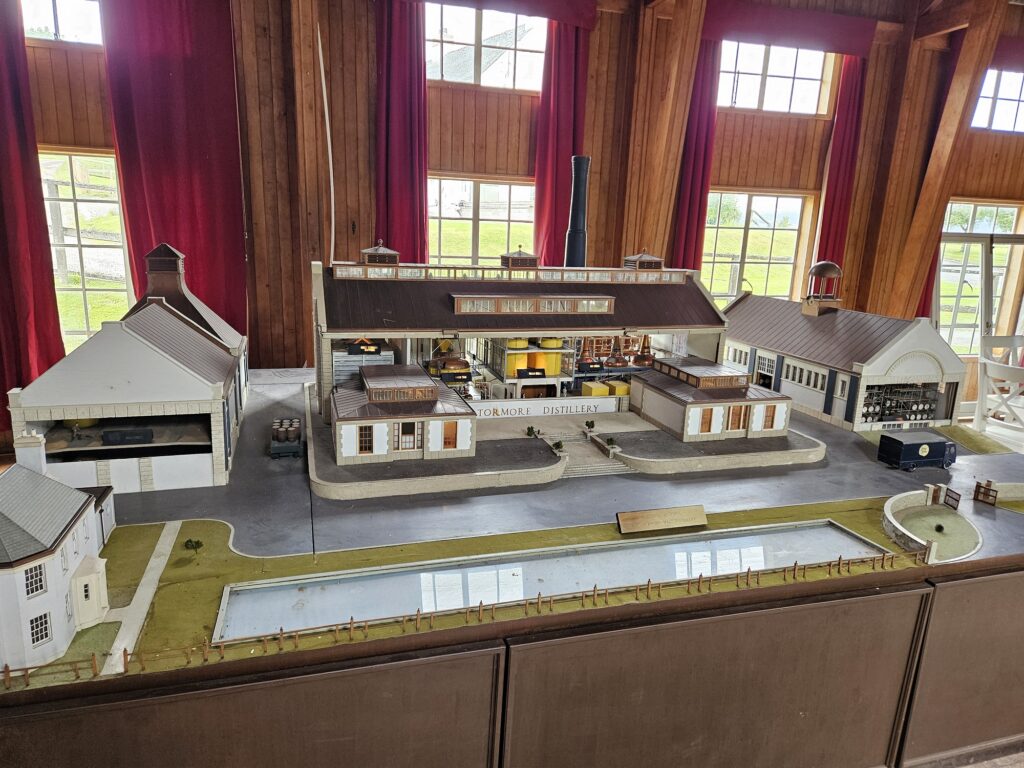
We step inside. Old posters of Tormore bottles as they appeared in the 1990s line the walls. By a window stands a working scale model of the Tormore distillery, once used at an exhibition. When Chilton presses a button, the entire front drops down to reveal the inner workings of a distillery.
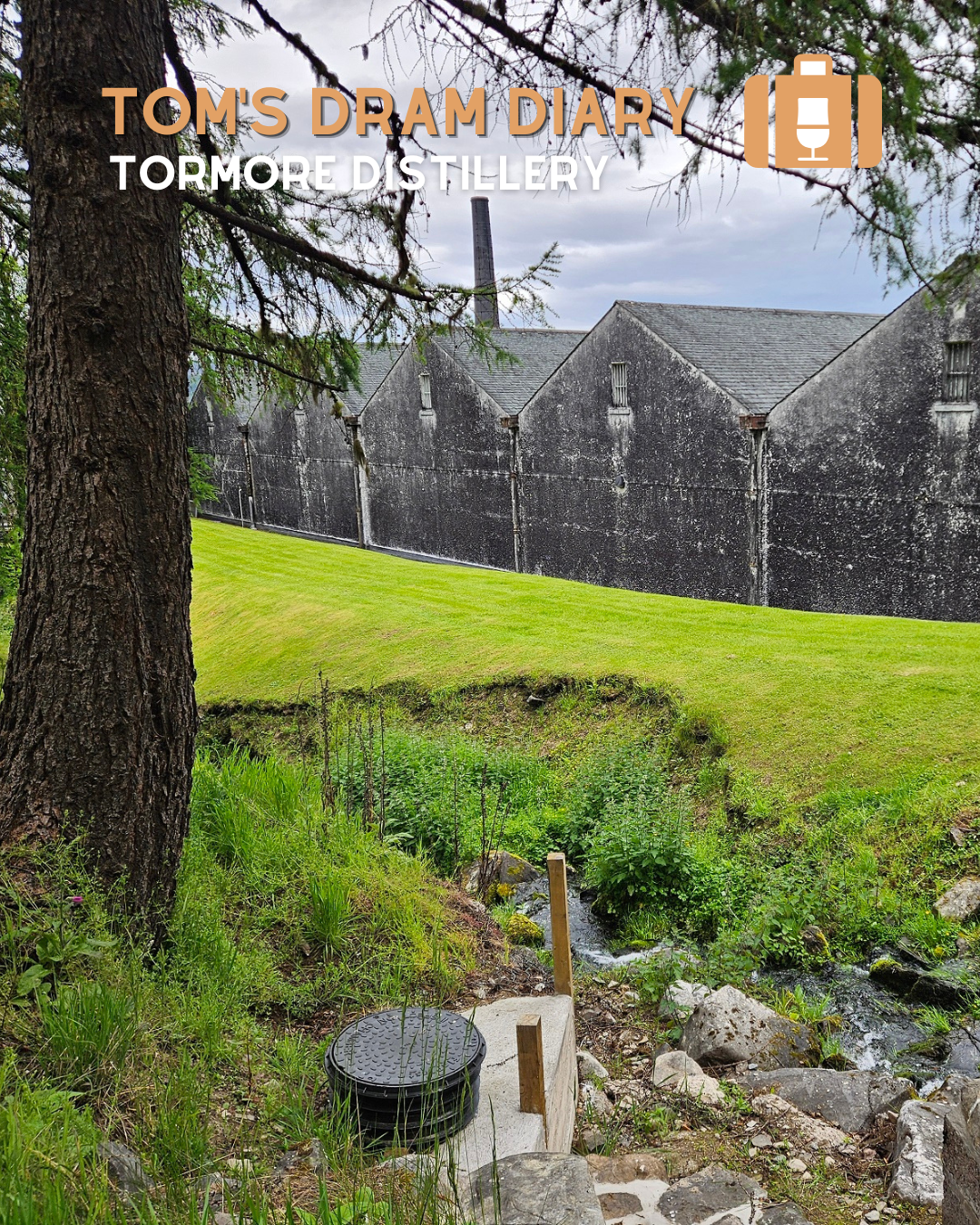
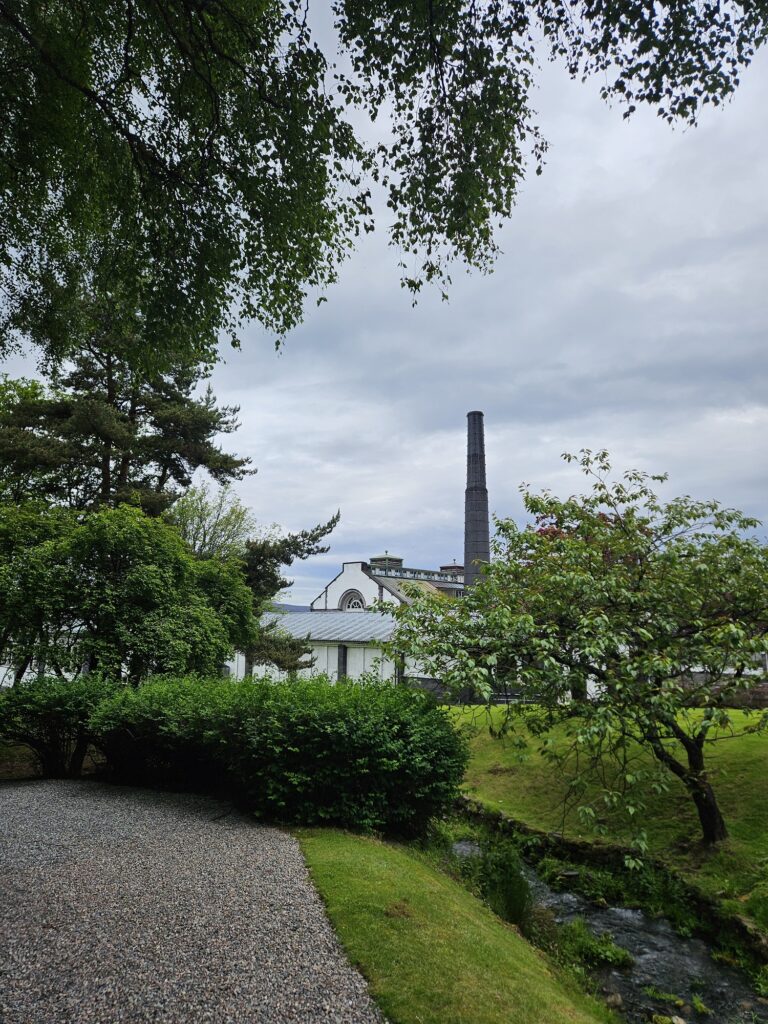
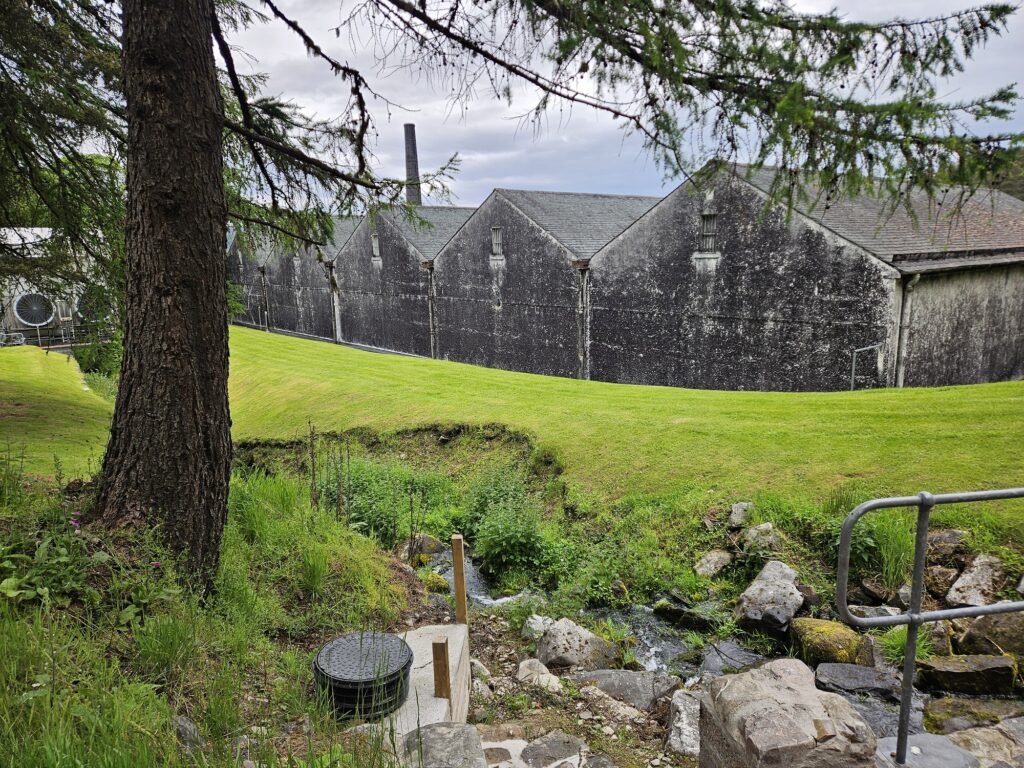
Outside, the eye is drawn to the large granite façade bearing the words ‘Tormore Distillery’. In front of it lies a rectangle basin. “Not a swimming pool,” Chilton corrects, “but a curling rink. It could do with some love,” he adds, pointing to flaking paint. The green copper roof of the distillery also catches the eye. Impossible to miss is the clock tower, from which a different Scottish tune chimes every quarter hour throughout the day. “That starts quite early in the morning,” Chilton notes, from personal experience as a next-door neighbour. Later we wander through a lush garden behind the distillery, past the warehouses where whisky sleeps. Flowers are in bloom, a stream trickles slowly downward. All of it was laid out for a community that practically did not exist. In time, Elixir hopes to do something beautiful with this garden. It deserves it.
The Taste of the Whisky
Let us talk about the flavour of Tormore whisky. Even in the technical areas of the distillery, it is hard to miss that aesthetic considerations took precedence over practical ones. Chilton traces the route followed by the malted barley. The journey of the key ingredient goes up and down through the distillery three times – to storage, to the mill, to the mash tun. Not exactly efficient, no. “The mash tun is a full lauter and has been in operation since 1970. Chivas Brothers were primarily looking for a more nutty spirit. We have adjusted the regime and moved to a very slow mash, aiming for a very clear wort and maximum esterification. We are looking for peaches and pears, but we don’t just want more flavour. More body for our Tormore spirit is also something we are after.”
The eleven washbacks are spread across three rooms. Four smaller ones are visible from where we stand; four large ones occupy the boiler house, and three more are located in the clocktower. Chilton does not take me to see the boiler, as there is quite a bit of work to be done to get things ship-shape, and the smell does not help matters. “We run fifteen mashes every five days, alternating between sixty-hour and one-hundred-and-ten-hour fermentation times. That is three washes fewer than before. We blend them for balance before distillation. We still use cream yeast but an older strain of distillers yeast, and we co-pitch with a dried brewer’s yeast that is put directly into the washback. Small details to fine-tune; on the whole we have not changed a great deal.”
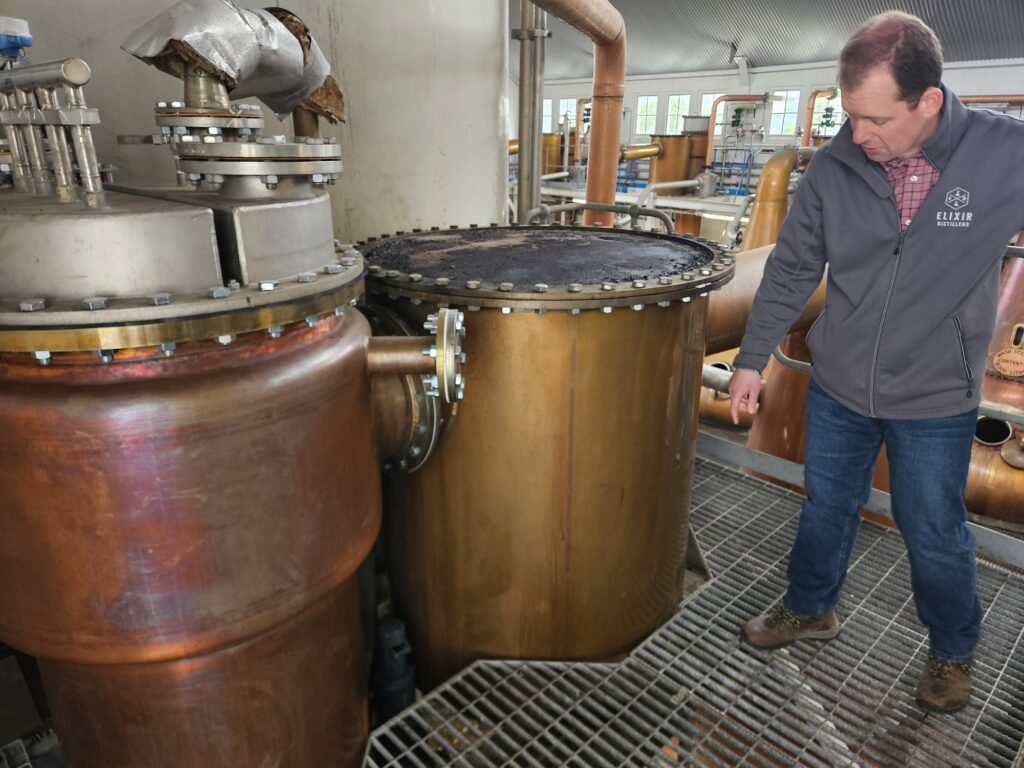
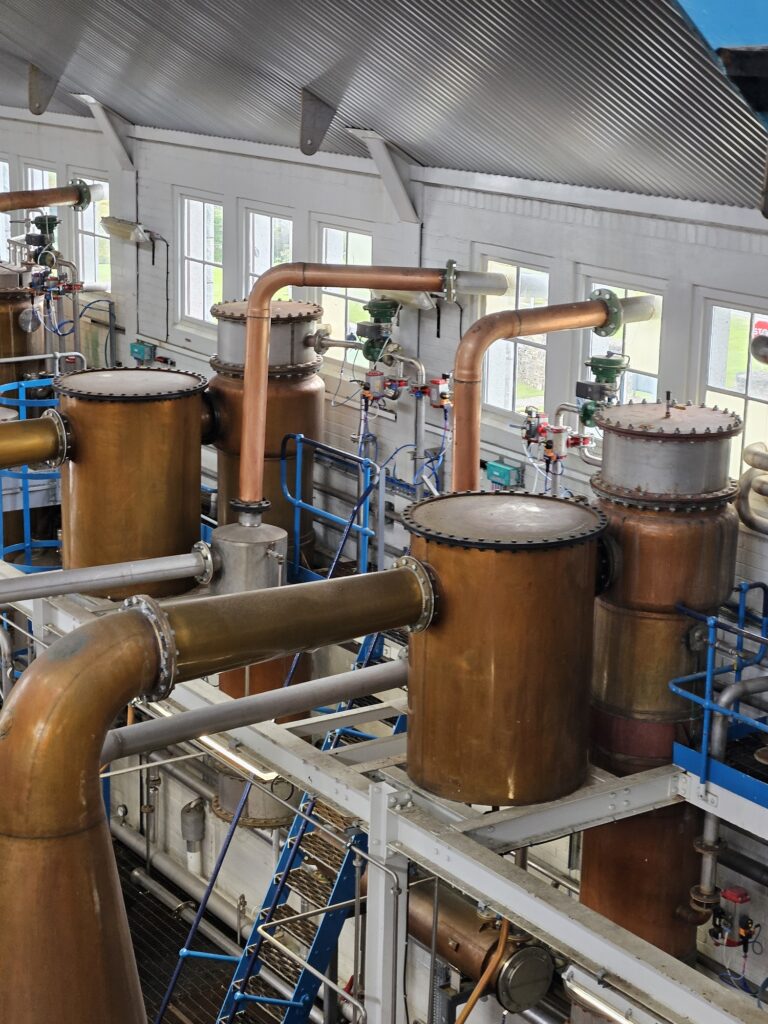
The stills at Tormore are a story in themselves. Originally the distillery operated with four pot stills, but that number doubled in the 1970s. When Chilton leads me to the top of the still room, I notice a large copper pot attached to the arm of the still, before the arm carries the distillate into the shell condenser. A remarkable purifier, with a copper plate inside, which certainly deals with the heavier compounds. Further evidence that Tormore goes to considerable lengths to extract only the purest and most fruity spirit from the still. “Quite a different world from distilleries that produce heavy spirit, such as Macallan and Mortlach,” Chilton adds. He then points to a silver cap on the condensers. “State-of-the-art TVR (Thermal Vapour Recompression), but from the 1970s. People always talk about TVR as if it’s something brand new, but that’s nonsense. We had an energy crisis in the 1970s too, and Tormore was already responding to it back then.”
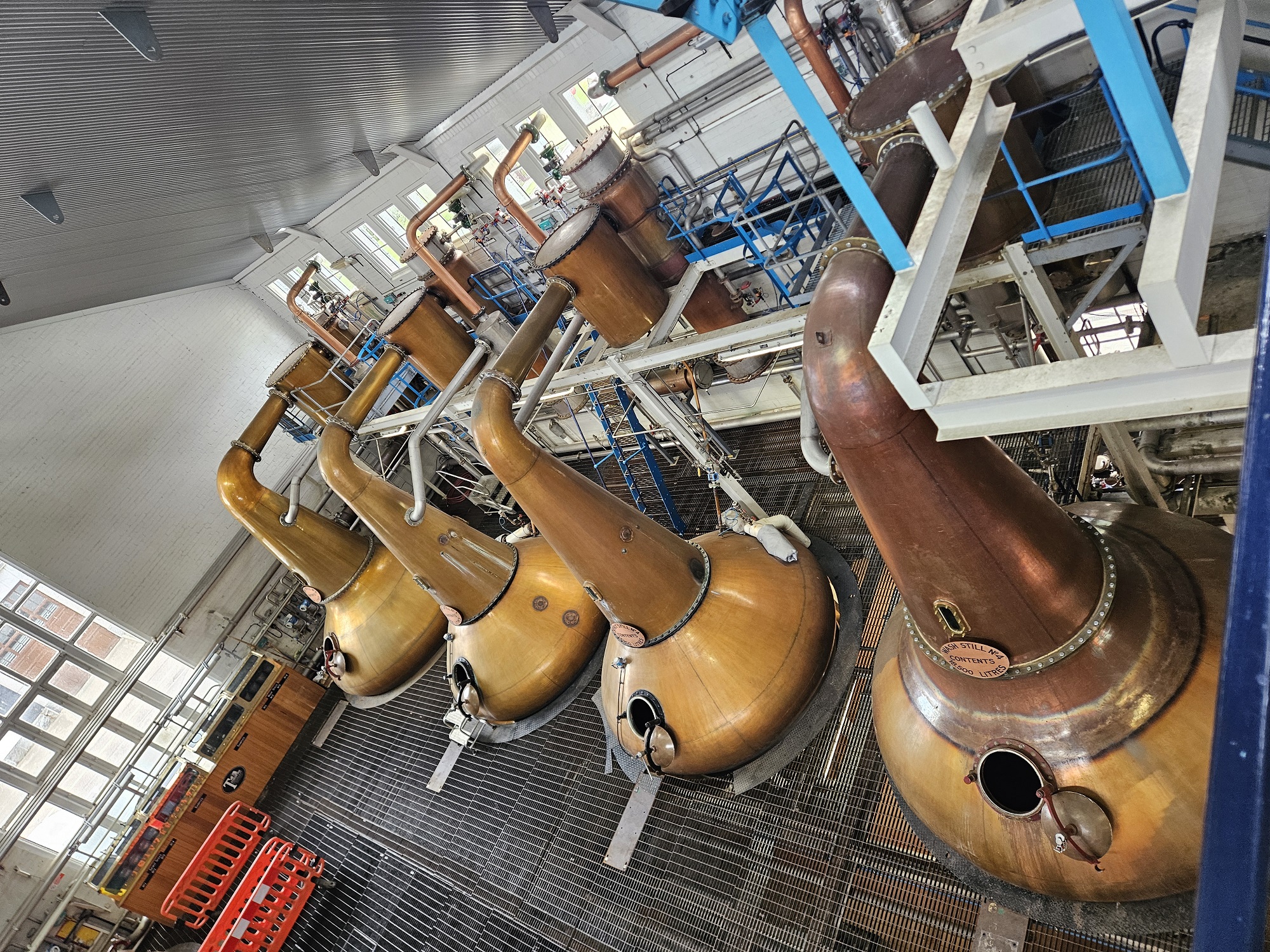
The stills at Tormore are never filled to the brim, more like half-full, followed by a slow distillation. A number of stills are lined up for replacement later this year. Some have already exceeded their lifespan and the copper has worn thin.
Since Elixir takeover, there has been little time to make major changes, as a supply contract with Chivas for distillate was still in place, running into millions of litres. That demand is now easing, which gives Elixir more breathing room to focus on its own priorities.
From Retail to Distilling
The chances are good that you already have an Elixir Distillers product in your home. Lovers of Islay whisky cannot overlook Port Askaig single malt or Elements of Islay when searching for quality. More recently, the Elixir Trails were launched: a journey of flavour around the world. Developments in recent years have seen owners Sukhinder and Rajbir Singh make moves that were not without surprise. The scarcity of Islay malt for their Port Askaig, for example, sparked the idea of building a distillery on Islay itself. The Portintruan distillery is expected to start production later this year.
Meanwhile, the Singh brothers sold their successful enterprise The Whisky Exchange to drinks group Pernod Ricard, owners of, among others, The Glenlivet, Aberlour, and until recently Tormore. “Sometimes opportunities come your way,” says Chilton on the acquisition of Tormore. “Now that the Singh brothers had stepped away from retail, there was still the dream of running a Speyside distillery. Sukhinder is a great admirer of the style Tormore produces, the building is iconic, and the contacts were already there from the sale of TWE.”
Chilton has his own thoughts on why Pernod Ricard decided to sell Tormore. “If you look at their portfolio, with the arrival of Dalmunach and the expansion of Miltonduff and Aberlour, Pernod has more than enough capacity to produce bulk spirit. Parting ways with a smaller distillery is not illogical in that context. You probably would not see Diageo take the same step. They have Roseisle, yes, but beyond that primarily distilleries with a lesser maximum capacity.”
The acquisition of Tormore came with a substantial inventory of casks. “We are keeping ourselves busy with that, most of it is genuinely blending stock. At the moment we are transferring around 2,500 casks a year into different wood types, mostly first-fill bourbon and various sherry variants. We work with what we have.” If the tasting notes for the new core range are anything to go by, that is something of an understatement. The Pearl of Speyside is polished to a shine.
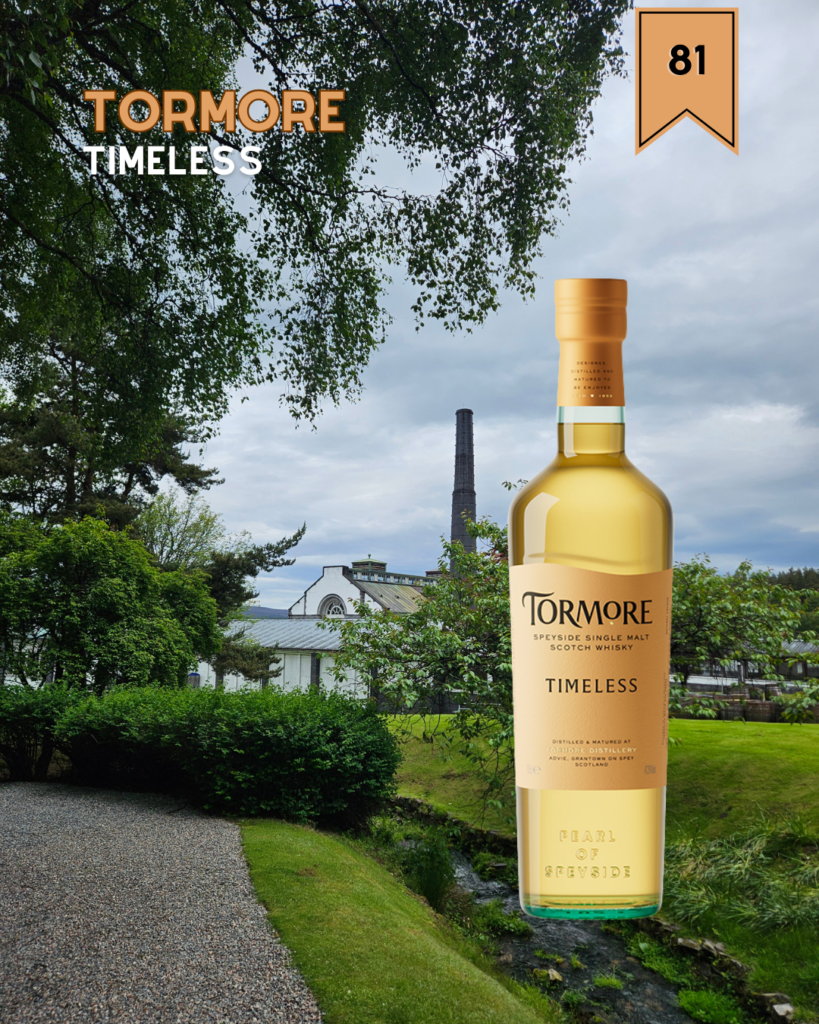
Tormore Timeless, bottled at 43 % abv
First things first: On the Tormore website we find this description: ‘[…] predominantly matured in first-fill and refill bourbon casks that let the spirit shine. We use older vintages to add richness and structure and younger expressions to bring waves of fresh, fruity flavours.’ Some sherry casks are said to be used as well.
Upon sipping: This is a summery fresh creation indeed, like pouring a good glass of lemonade, with emphasis on the lemons. Thirst quenching, by just sniffing the aroma from the glass. Between the lemons, I also find hints of freshly mown lawn. Lots of honey and a dash of spices. Chances are you will be wearing your summer hat when sipping from this. The palate feels light and pleasant and is followed by a very short but ultraclean finish. Then, as it lingers, vanilla and oaky notes emerge, giving this Tormore Timeless a surprisingly thorough epilogue. Is this where the older vintages speak to us? The lightness of this Speyside whisky is so delightfully nostalgic! This kind of style had disappeared a bit out of view, but Tormore is sure to resurrect it.
Word to the Wise: The Tormore soul is very present in this Timeless expression. It can be seen as a more accessible version of the 12 years old, which is my favourite of the three new releases. Read my notes for the 12 and 16 here. Light, fruity, enough backbone to rise above the playing field. This is a bottle which will go empty in the blink of an eye.
Score: 81 points.