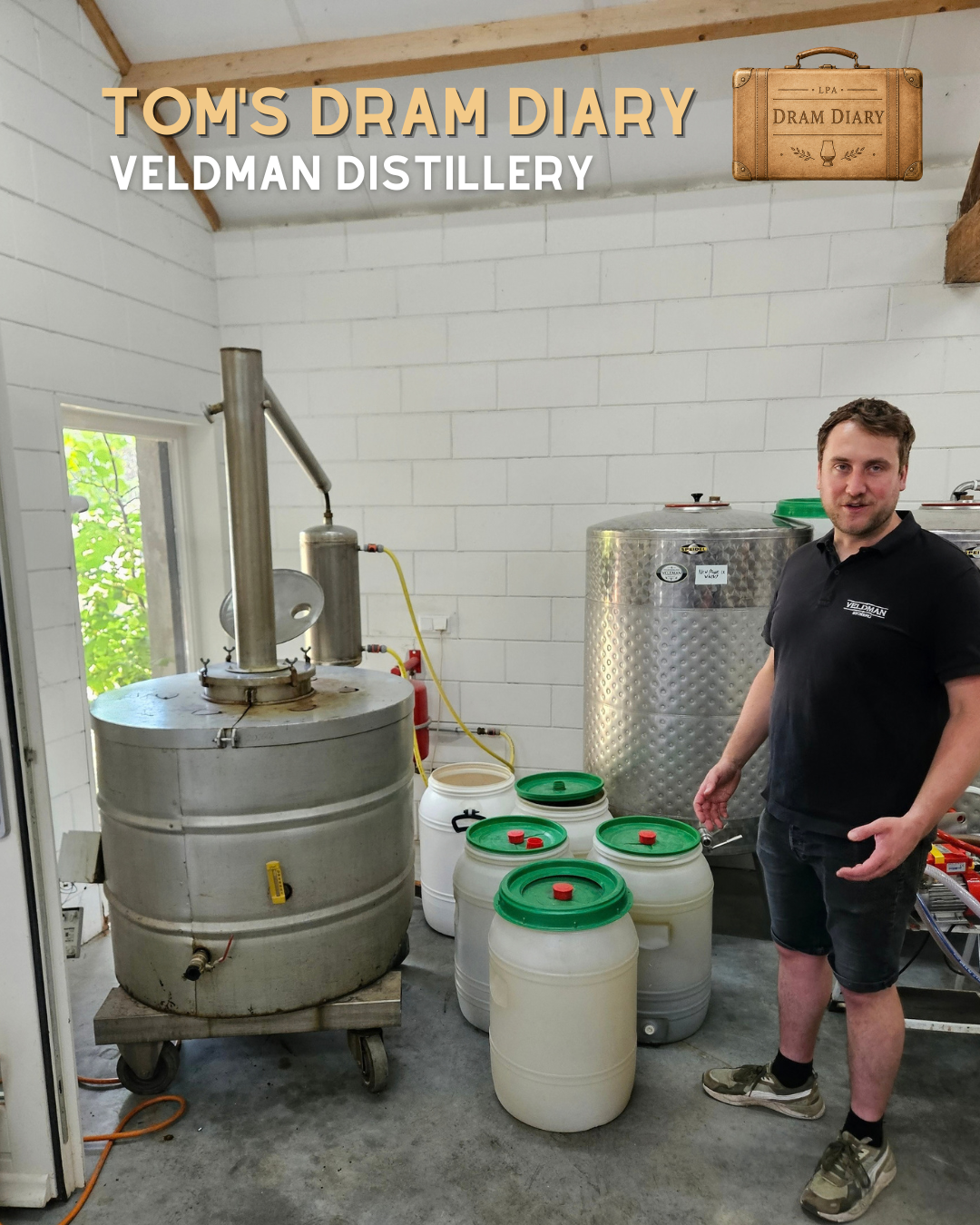
Visit to Veldman: A Farmer’s Still with Serious Ambition
My visit to the Veldman Distillery in the Dutch province of Limburg came hot on the heels of a trip to the most famous whisky region in the world: Speyside, Scotland. Somewhere in the back of my mind, I’d expected it to feel like a bit of a comedown. The dusty drive up to the old farmhouse where whisky now flows from the still. Nothing could be further from the truth. There’s a saying that distilling is a sport and that farmers play it best. Veldman makes an emphatic case for that claim!
Text and photography: Tom van Engelen — www.longpouramour.com
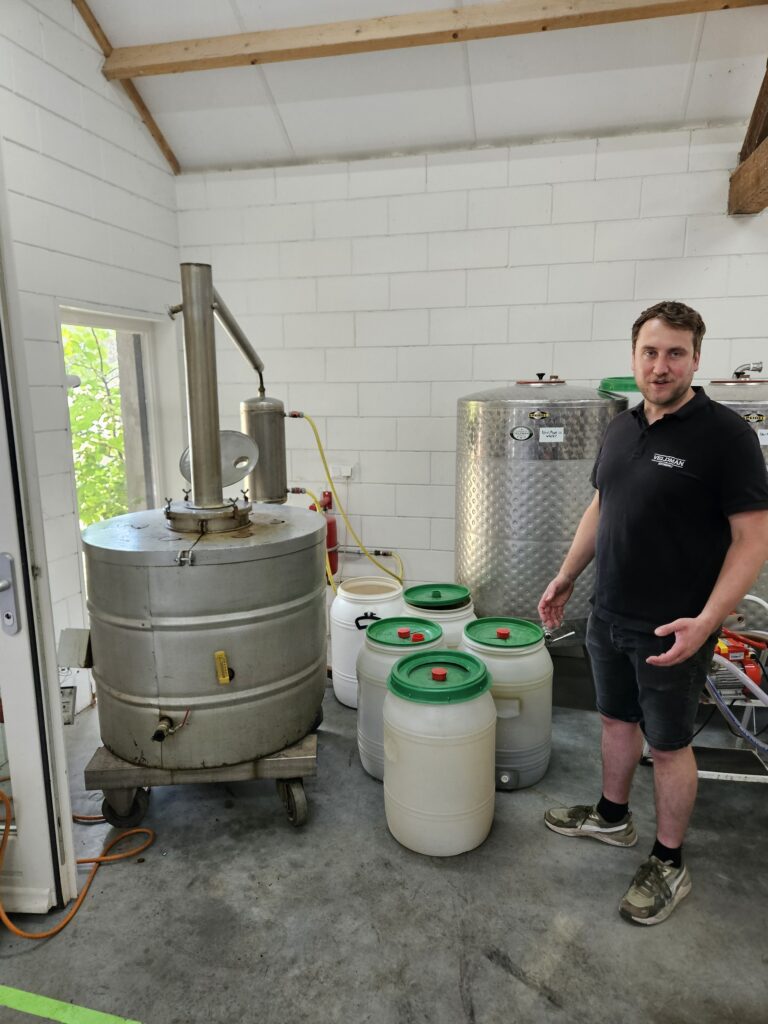
So once we’d parked the car and the dust kicked up in the warm morning sun had settled, we found ourselves in a tiny space: the Veldman Stokerij (Dutch for distillery). Owner Willem had to be tracked down first, which gave us time to poke around among the bags of Crisp malt, the wonderfully makeshift-looking still and other kit, and outside, under a slanted lean-to: some twenty to thirty casks of Limburg whisky, locked away behind serious padlocks.
The moment Willem appears, an animated conversation breaks out at once. About the homemade still, and how he picked up the tricks of the trade from his uncle Fons. “Really, every village in Limburg used to have its own still for making home distillates – think liqueurs and brandewijn. As a young lad (I was born in 1992) I was curious early on about how it all worked. From 2014 I started distilling as a bit of a hobby. By 2016 we’d already filled a cask with new make spirit, which became our first whisky in 2019.” Willem’s background is in food technology; he never trained formally as a distiller. “I learned it from an old hand!”
The Homemade Still
The homemade still is a sight to behold, as if someone had stacked two cast-iron washtubs on top of each other. It turns out to be stainless steel, with a copper coil inside to deal with the sulphites. The whole set-up runs on both gas and electricity (from solar panels). “My wish is to build a bigger one,” Willem tells us, “so I could perhaps increase production from 12 to 24 casks of whisky a year.” He explains how crucial the game of temperatures is to making a good new make spirit. “Take it easy, that’s the motto. In fact, we try to work as inefficiently as possible, so the natural processes can find their own way, without obstacles.”
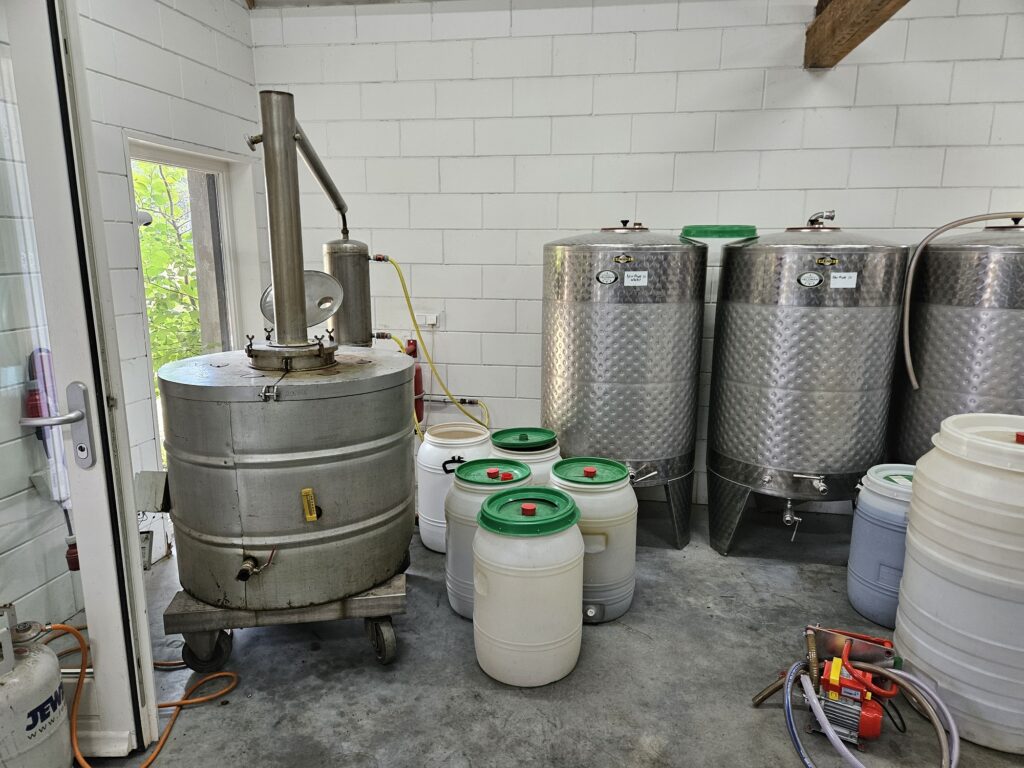
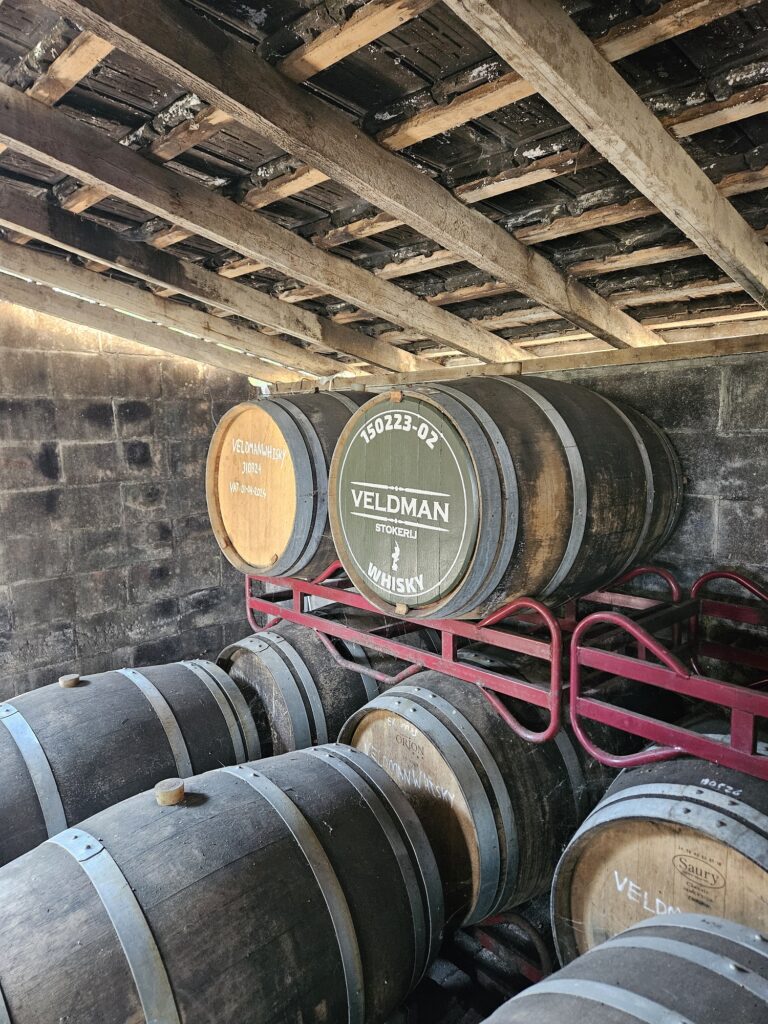
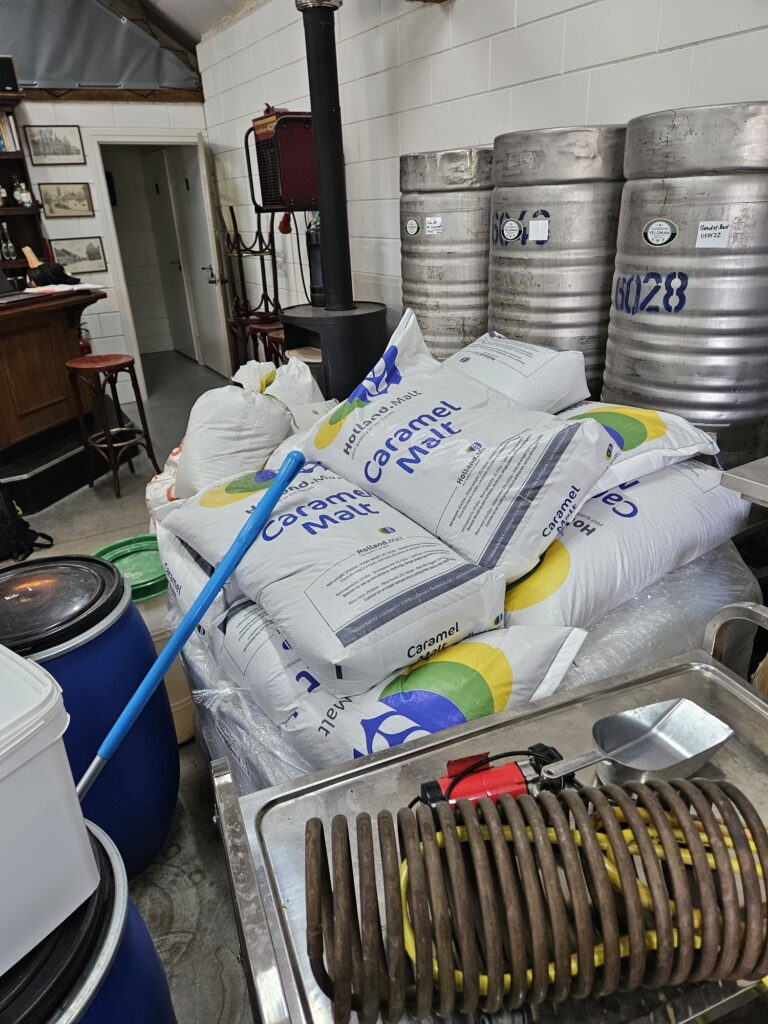
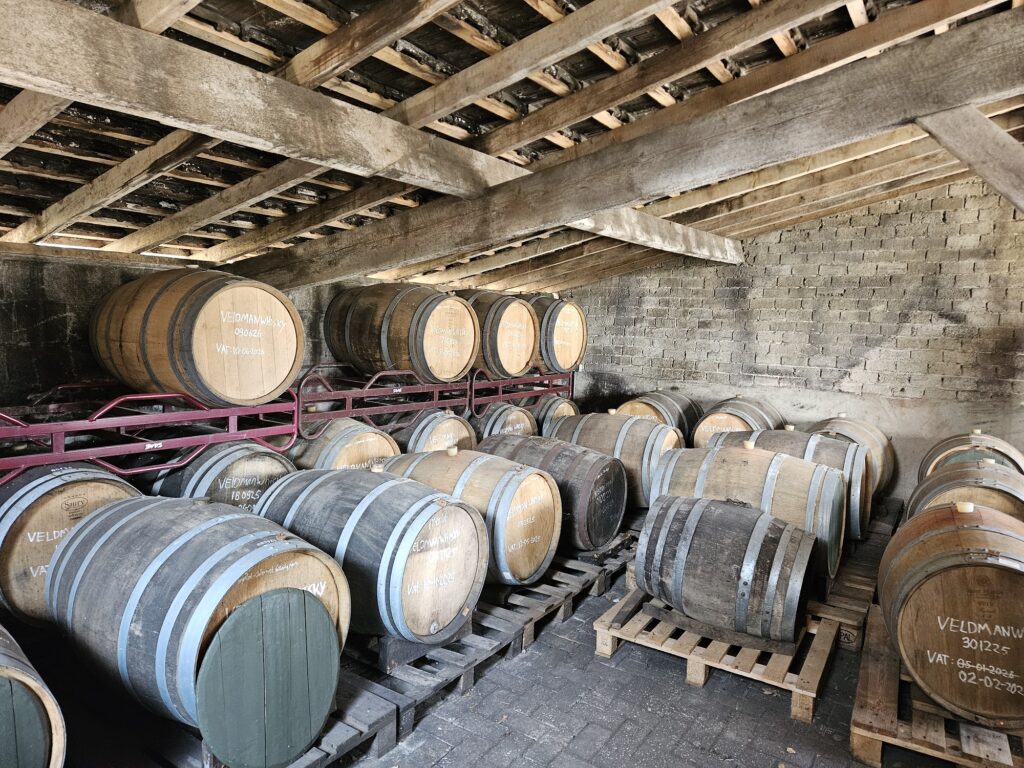
Limburgse Whisky from the Veldman Stokerij is distilled mainly from regular barley malt, mixed with a smaller portion of malt peated up to 50 ppm and Caramel malt. A mill in nearby Beesel grinds the malt; everything else happens at the distillery. The casks mature one room over, where evaporation is a real challenge. It may mean the whisky matures faster, but plenty is lost along the way too. A recent run of bottlings comprises three more or less identical styles, with subtle differences in maturation time. All are 3.5 years old. Willem prefers to finish his Limburgse Whisky in wine casks after an initial spell in bourbon wood. “The new make is always consistent, the foundation of the product, and after that the cask does the work. That’s what makes it so nice to taste the differences and nuances. We tend to avoid sherry casks; here it’s mostly Merlot, Pinot Noir and Cabernet Sauvignon. We release our bottles under the name Okshoof – roughly the Dutch equivalent of the English word “hogshead,” a reference to the size of the cask – “which I might be a bit particular about, but the whisky has to come from a good, regular cask, and it has to go into a 70cl bottle. Of course, I could opt for half-litre bottles for a bigger spread among enthusiasts, but to my mind, whisky belongs in a standard-size bottle.”
Anyone keen to taste Limburg Whisky should join Klup Veldman for priority access to what are, understandably, rather limited releases. Head to veldmanstokerij.nl for more information. If any bottles are left over, you may find them at select specialist liquor stores.
Tasting the Veldman New Make Spirit
Willem Veldman is a genuine fan of Long Pour Amour’s New Make Index. “New make spirit is the foundation of everything, otherwise we wouldn’t be putting so much energy into turning it into something beautiful!” Willem says. “Just give me all the facts: the abv of the cut, the type of still, the use of copper, how many times we distil, and which materials were used.” With that in mind, below we taste the new make spirit that Willem generously made available to LPA.
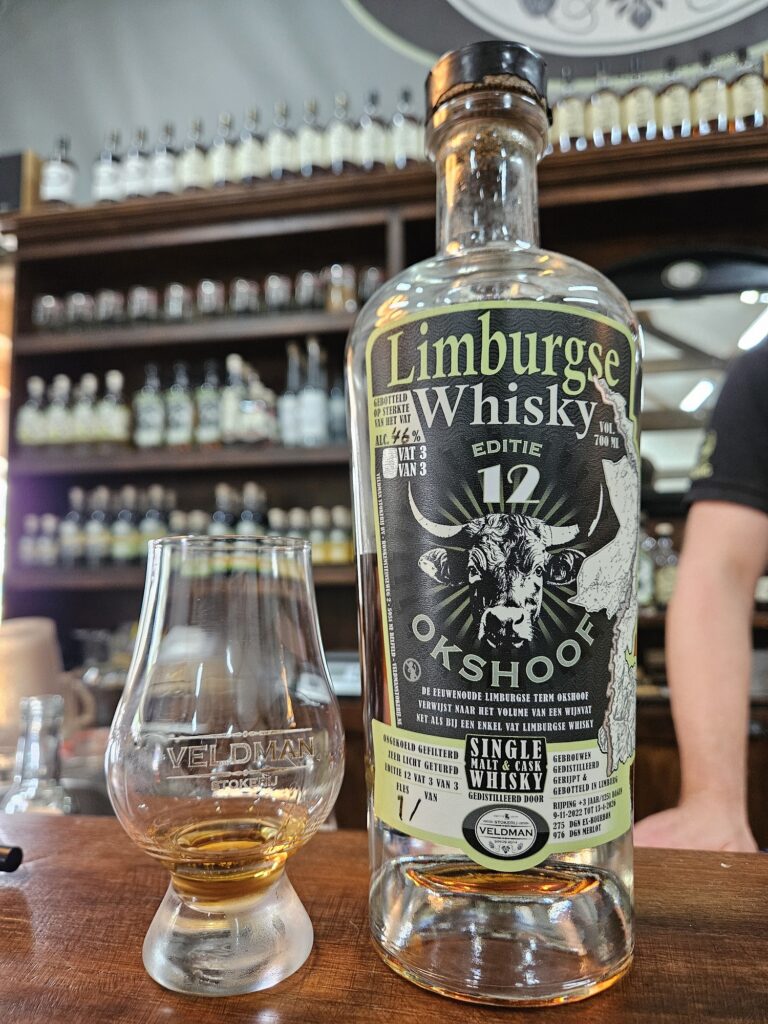
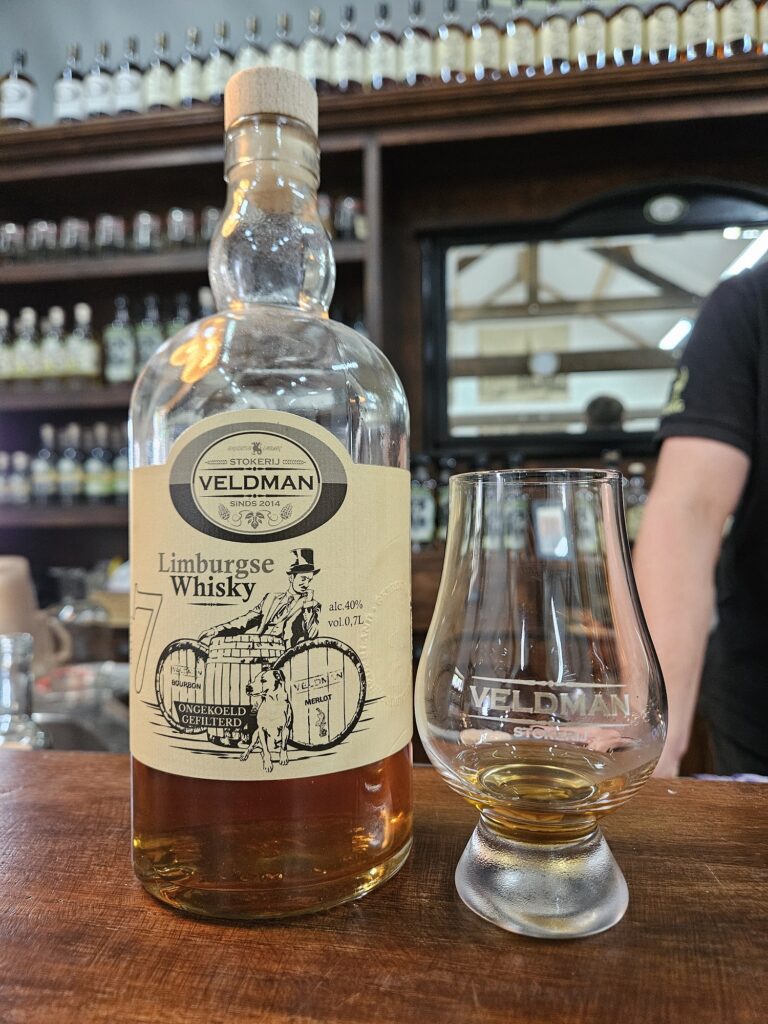
Veldman New Make Spirit, 55% abv, sample drawn on 17 July 2026
This new make spirit has never been commercially released. Willem explains: “We distil our new make three times. Where I end up cutting it off depends a bit on the peat. The peaty notes only really come through towards the end, somewhere around 60% alcohol. Depending on the aroma and/or taste, that’s roughly where I cut it. Our still is an absolutely unique Limburg still. Just like back in the day, we too built our own, in this case modelled on a pot still, or alambic. Perhaps not the most efficient still, but definitely the one with the most flavour. The still is made of stainless steel, but has copper worked into the column to get enough copper contact. As a ‘warm’ distillery, we also brew our own mash, with barley malt as the base. Just like every other step, we take our time here too. The longer brewing times let the malt flavour really come into its own. Fermentation always runs for at least five days, so that every step gets enough time and the sediment has settled on the bottom.”
On pouring, the nose of the Veldman spirit was still a touch fruity, but as the glass breathes on the table, the character shifts into a strong farmhouse signature. Dry hay, mud underfoot, or perhaps more accurately: rubber wellington boots. Running through it is a whisper of caramel and praline. The base ingredient unmistakably stamps its strength on this spirit. Plenty of grass, grain, and deep dark German rye bread. The spirit is beautifully oily, leaving gorgeous tears trailing down the glass. Take a sip, and you find mostly the promise the aromas make good on. Dark and robust like rye bread, with a toasted edge of Waldkorn. Thoroughly drinkable at this strength. Add a splash of water and the aromas are only amplified. It’s not hard to picture the inside of a cowshed if you close your eyes. On the tongue, the toasted character of the malt seems to grow, but now more spicy elements join in, adding real richness. Gingerbread, black pepper on a good steak, but always that lovely edge of slightly charred bread (without the whisky ever coming across as smoky).
Score: NMI 5 / 5 / 3